
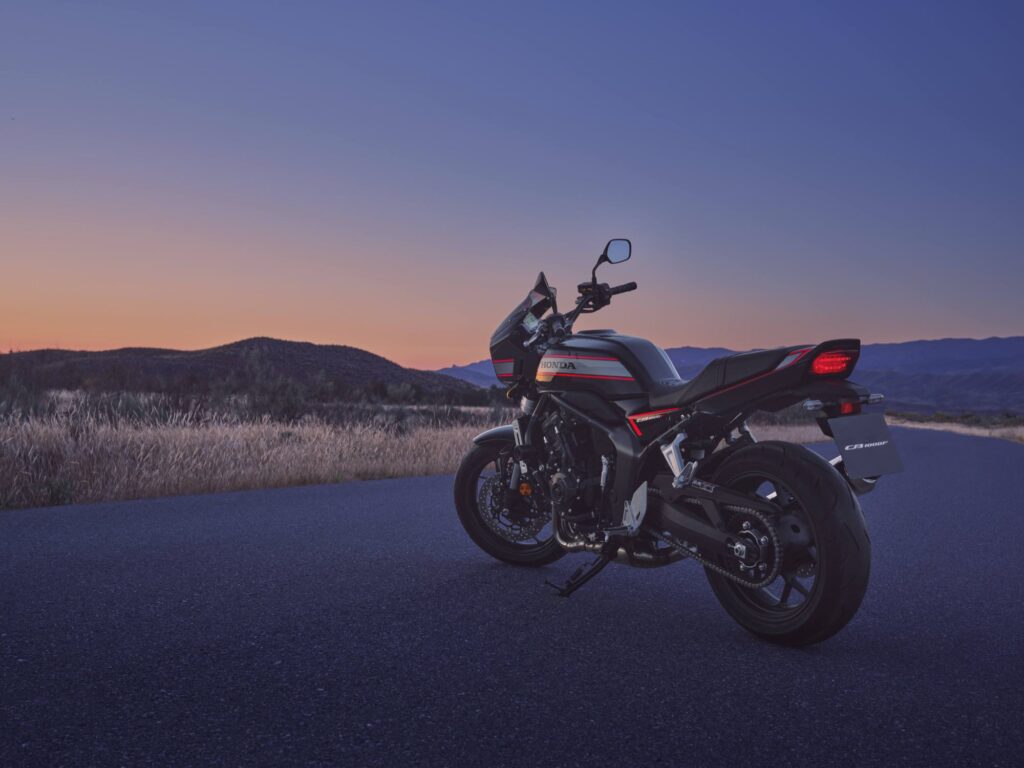
The Honda CB1000F is much more than just another retro motorcycle. The Japanese manufacturer wanted to bring back the spirit of the legendary CB750F and CB900F models of the 1970s and 1980s, while creating a thoroughly modern and versatile motorcycle. The development was led by Takayuki Haramoto, who also headed the CB750 Hornet and XL750 Transalp projects and grew up surrounded by classic Japanese motorcycles himself. In Honda’s Beyond the Bike series, he shared not only the story behind the CB1000F’s development, but also the motorcycles, films and some rather surprising influences that shaped his thinking.
More Than Just Nostalgia
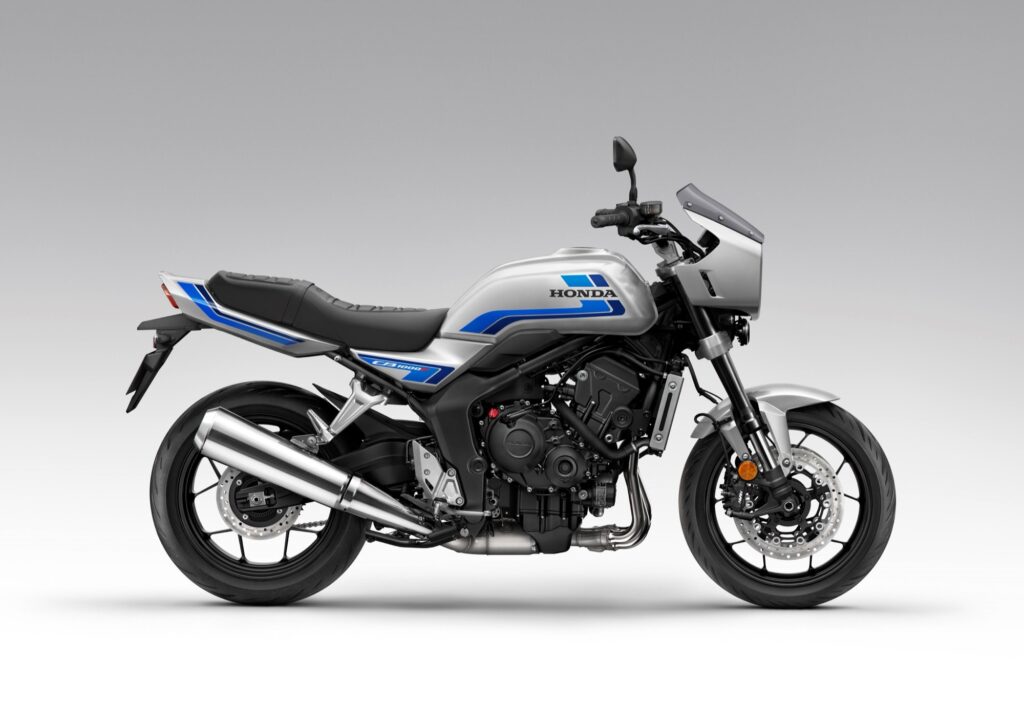
As a child, Takayuki Haramoto witnessed Freddie Spencer competing on the legendary Honda CB750 in the 1981 AMA Superbike Championship. The world has changed considerably since then. Haramoto-san has become one of Honda’s respected project leaders, playing a key role in bringing the CB1000F to life. The result is a retro-styled naked bike that carries the unmistakable design cues of “Fast Freddie’s” iconic machine.
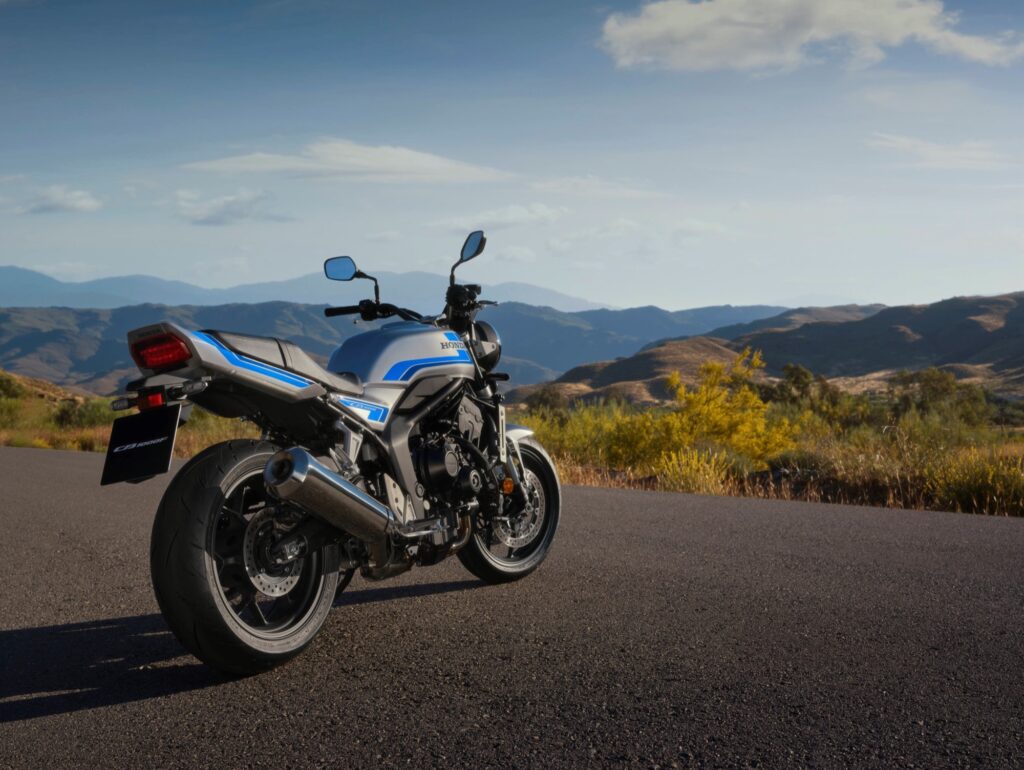
It radiates the energy of the 1980s, but it is far more than a simple imitation dressed in vintage styling. With its modern suspension and frame, Fireblade-derived engine and numerous technological innovations, the CB1000F fully meets the expectations of today’s riders, and the first examples have already arrived at European dealerships. Haramoto-san discussed the challenges he and his team faced during its development.
“Our primary goal wasn’t to create a replica of the CB750F or CB900F,” he emphasised. “We were determined to build a thoroughly Japanese, versatile naked motorcycle that would be an ideal companion in any situation. We wanted to find out what the CB of the future should look like: a naked bike equally suited to everyday riding and touring. The clean, Bol d’Or-inspired interpretations of the early F models provided the answer,” he explained. These iconic café racers of the 1970s and 1980s, built around powerful engines, took their name from the 24-hour FIM endurance race, reflecting Honda’s rich racing heritage.
“There’s no denying that the CB750F and CB900F are truly captivating motorcycles. Their dynamic styling and slim construction made them particularly significant, with every element, from the fuel tank to the tail section, forming a harmonious whole. I can confidently say that they represented a genuine milestone in motorcycle design,” Haramoto-san explained. “Even today, they turn heads and remain incredibly appealing, thanks in part to their distinctive and stunning paint schemes. But what matters most to me is that they were genuine sportbikes, bringing the technology of the racing RCB1000 to the road,” he added.
Where Classic Styling Meets Modern Technology
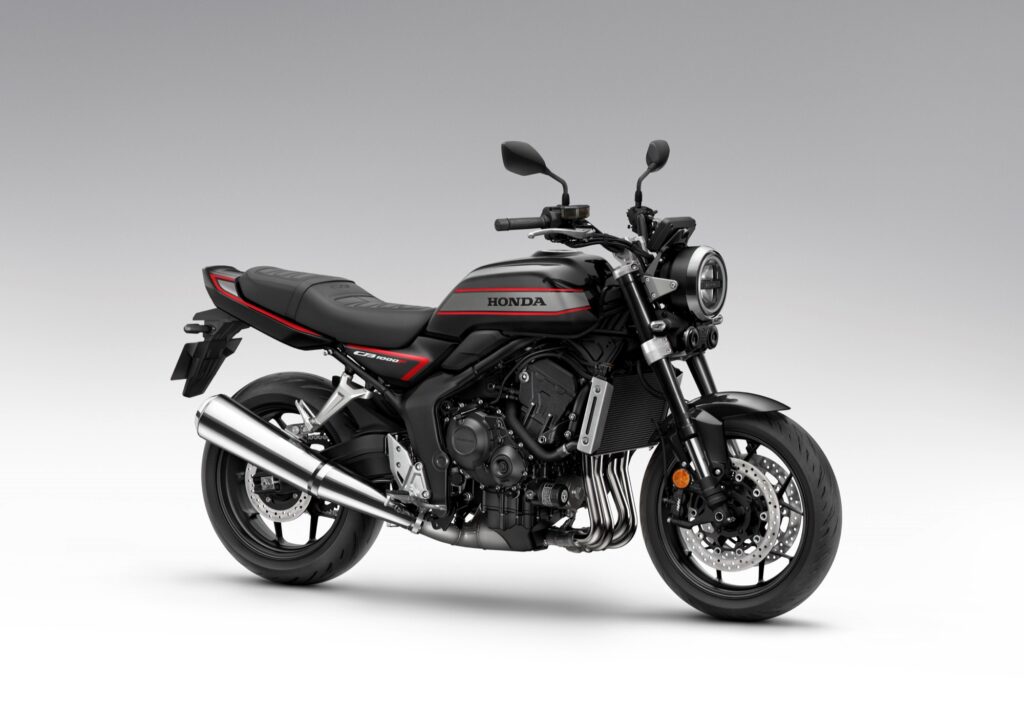
The CB750F and CB900F were therefore reimagined, and the project began with an important question: how could their distinctive design be brought into the modern era?
“Yes, that was our starting point. We wanted to wrap forward-looking engineering in a timeless, universally appealing design,” Haramoto-san confirmed. The result of their work is the striking CB1000F, which, like its predecessors, has a harmonious appearance because it was designed according to the principles of the old school. In other words, every component, from the front wheel to the rear, fits perfectly into the overall design.
Of course, nostalgic styling alone is not enough to guarantee success, so the new motorcycle also had to excel technically.
“Before starting development, we had to establish exactly what the CB of the future should be: a versatile roadster,” Haramoto-san explained. The designers were guided by two main objectives. Alongside the effortless handling that has become a hallmark of the CB family, they wanted to preserve the confident, dignified presence of a large motorcycle. This is reflected in the CB’s overall appearance, inspired by the F series and built around clean design elements. A bold yet compact front end is complemented by a slender rear section that conveys lightness and versatility.
Achieving this was far from straightforward and presented considerable engineering challenges, as the construction of the original models from the 1970s and 1980s differs significantly from that of the CB1000F.
“We had to overcome numerous difficulties because many of the distinctive components used on the models introduced in 1979 and throughout the 1980s differ substantially from modern solutions,” Haramoto-san recalled.
Back then, motorcycles were built around double-cradle frames, their engines were fed through horizontally arranged intake ports, and their electronic systems were extremely basic. Today, the foundations are completely different. A twin-spar frame surrounds the engine, the intake ports are arranged vertically, and sophisticated electronics monitor the rider’s throttle inputs.
“The different frame structure presented a major challenge, particularly when designing the iconic fuel tank to resemble the original,” Haramoto-san noted. He explained that every component was designed from the inside out, working around the technical foundations while ensuring that the classic appearance would be instantly recognisable.
The Man Behind the CB1000F
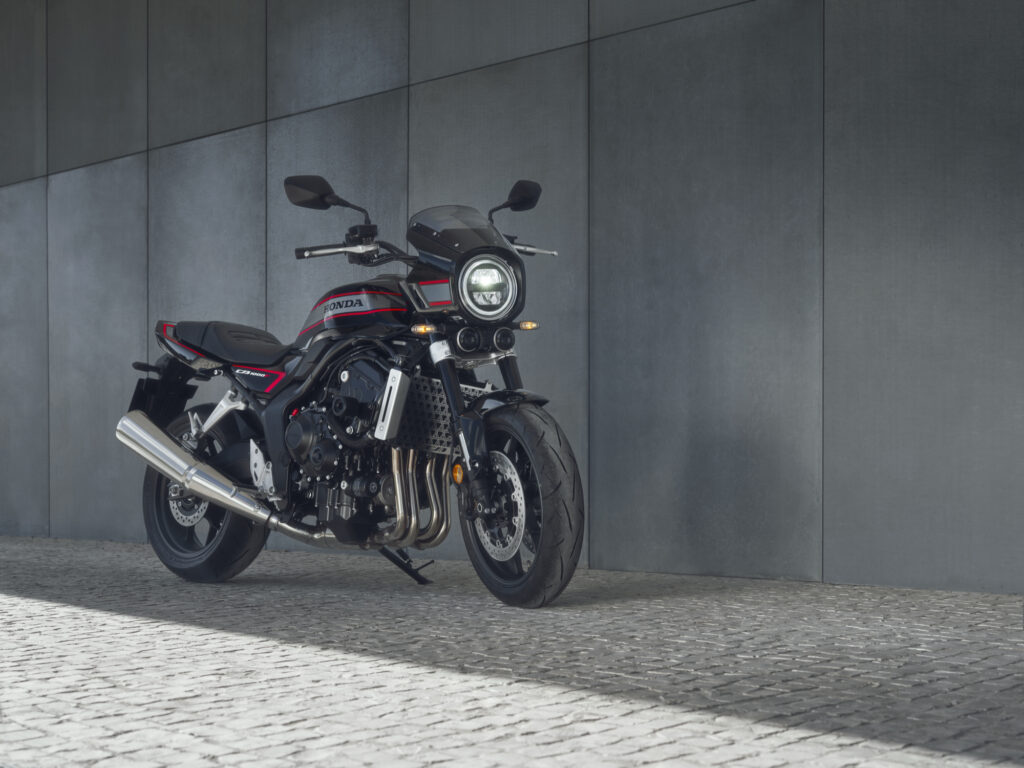 It’s fair to say that bringing the CB1000F to life represents something of a personal achievement for Haramoto-san. He fell in love with motorcycles long before beginning his career, and today he has the opportunity to develop some of the finest machines in the world.
“My passion for motorcycling began with my father’s Monkey,” he recalled, speaking with great affection about the family’s little motorcycle. His enthusiasm grew even stronger thanks to the manga series Bari Bari Densetsu, whose main character also began his motorcycling journey on a CB750F. Unsurprisingly, Haramoto-san himself spent much of his free time riding winding mountain roads.
He also spoke about the turning points that shaped his work and career.
“As a project leader, developing the 2023 CB750 Hornet and Transalp was a particularly important milestone for me,” he reflected, speaking with great respect about Masatoshi Sato, who led the development of both parallel-twin models as well as the CBR1000RR Fireblade. “I learned an enormous amount from Masatoshi Sato. He had a major influence on me as an automotive engineer, designer and leader.”
Although many professionals look to the great designers of the past century as mentors, Haramoto-san cannot recall any particular brand or designer who served as a defining role model for him.
“My work has primarily involved engineering, and I can’t think of any particular manufacturer or designer who had a significant influence on my thinking when I was young,” he replied when asked about his inspirations. Instead, he drew inspiration from very different sources, with his personal interests and hobbies playing the greatest role in shaping his taste. For him, the vehicles featured in the 1988 animated film Akira were a clear benchmark, but he also drew inspiration from the lines of Fender Stratocaster guitars and Jazz Bass bass guitars. “I suppose that’s why I ride an NM4,” he added with a smile.
Movement, music and exploration: Haramoto-san’s personal life is just as varied as his professional work.
“I really enjoy relaxed, leisurely motorcycle rides, just as I enjoy playing the guitar and tinkering with modular synthesisers. These may be fairly ordinary hobbies, but all three help me develop a deeper connection with the objects and machines I love so much.”
Finally, he was asked which motorcycle, from which era, he would most like to experience.
“Well, I’d love to experience what it was like to ride a Z1, Z2 or CB750F/900F in the 1970s. I’d be fascinated to experience the atmosphere of that era and understand what life was like when these machines represented the pinnacle of motorcycling. I could ride them today, of course, but it wouldn’t be the same. We live in a different world now, and compared with modern contenders, they’re simply ageing motorcycles,” Haramoto-san replied without hesitation. A simple test ride could never recreate the full experience, because the admiration and excitement that surrounded these machines back then would be missing.
And that is precisely why Honda’s engineers created the CB1000F. It is more than just a familiar name returning to the lineup: it was born to give today’s riders a chance to experience the true spirit of the 1980s.