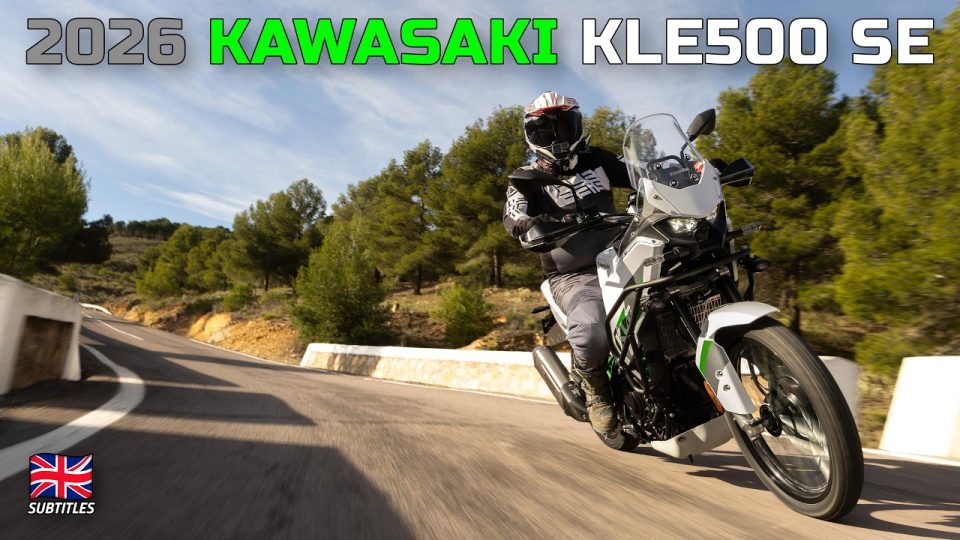
The Legend Returns! On and Off the Road in Andalusia
In 1991, Kawasaki came up with an interesting idea. They believed there was plenty of room between aggressive single-cylinder enduro bikes and heavy road-going tourers for a lightweight twin-cylinder motorcycle that could handle commuting during the week, weekend trips and even longer summer tours. A motorcycle that wouldn’t have any particular trouble when the tarmac ran out. That’s how the KLE500 was born. It remained in Kawasaki’s range from 1991 until 2007, earning plenty of fans thanks to its simplicity, reliable construction and versatility. It wasn’t really a dedicated off-road motorcycle, nor was it a traditional road-going tourer. It was a friendly, do-it-all adventure bike for riders who weren’t necessarily looking for the fastest or most challenging route. They simply wanted to enjoy motorcycling.
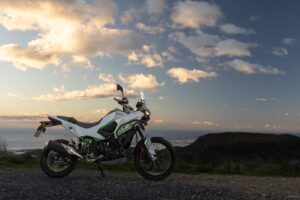 Almost twenty years after production ended, Kawasaki revived the KLE500 name for 2026. The timing could hardly have been better, as the market for twin-cylinder adventure motorcycles in the 400–500cc category is thriving again. New competitors are arriving one after another, and buyers now have plenty of options to choose from.
At Kawasaki’s invitation, I had the opportunity to test the new KLE500 SE at its international press launch near Almería in southern Spain. Over two days, we enjoyed plenty of winding mountain roads, ordinary country roads and off-road riding on the rocky, dusty tracks of the Tabernas Desert. I’d been looking forward to this encounter all winter. I wanted to find out how successfully the new KLE could combine road comfort with off-road capability, whether its 45 horsepower would be enough, and what could be achieved with a relatively simple suspension system offering limited adjustment. I already suspected Kawasaki would approach the challenge in its usual way: traditional engineering, carefully considered details and no unnecessary complications. By the end of the test, it turned out that my expectations hadn’t been far off.
An Old Name, an Entirely New Motorcycle
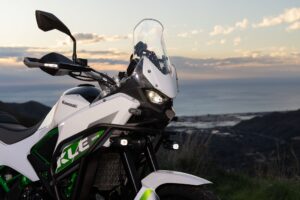 The new KLE500’s styling is clearly inspired by classic rally racing. A tall, narrow front fairing, adjustable windscreen, slim fuel tank, 21-inch front wheel and spoked wheels create its distinctive adventure-bike appearance. But the design also reveals a great deal about what the engineers intended. The 21-inch front wheel, long suspension travel, narrow tank and substantial engine protection are all designed with off-road use in mind. Meanwhile, the comfortable two-piece seat, 17-inch rear wheel, smooth-running twin-cylinder engine and wind protection favour road riding.
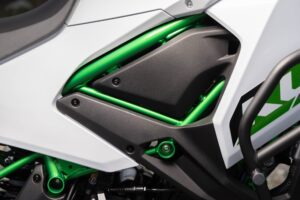 Kawasaki has developed a new frame made from high-strength steel tubing. The engine has been positioned as low as possible and tilted slightly forward to achieve a favourable centre of gravity. The frame itself weighs just 19 kg, while the complete motorcycle has a kerb weight of 194 kg in standard form and 195 kg for the SE version I tested. These are kerb weights according to Kawasaki’s definition, meaning the motorcycle is filled with the necessary operating fluids and has at least 90% of its fuel tank capacity.
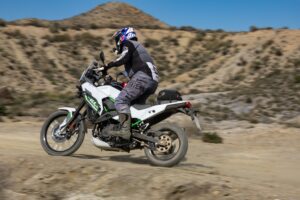 The 185 mm ground clearance isn’t particularly generous in this category, but Kawasaki has managed to keep the centre of gravity pleasantly low. That makes a considerable difference when riding, especially during slow manoeuvres or when trying to maintain balance on uncertain surfaces. The KLE is also surprisingly narrow. Instead of having to work around a huge, wide fuel tank between my legs, I found a slim motorcycle with a natural shape. That’s comfortable when seated and allows considerably more freedom of movement when standing.
The test bike was the SE version, which adds several features over the standard KLE500, including a larger windscreen, handguards, more substantial skid plate, colour TFT dashboard and LED indicators. The fundamentals are identical, however, so my impressions of the engine and suspension should be relevant to both versions.
The Suspension I Was Worried About
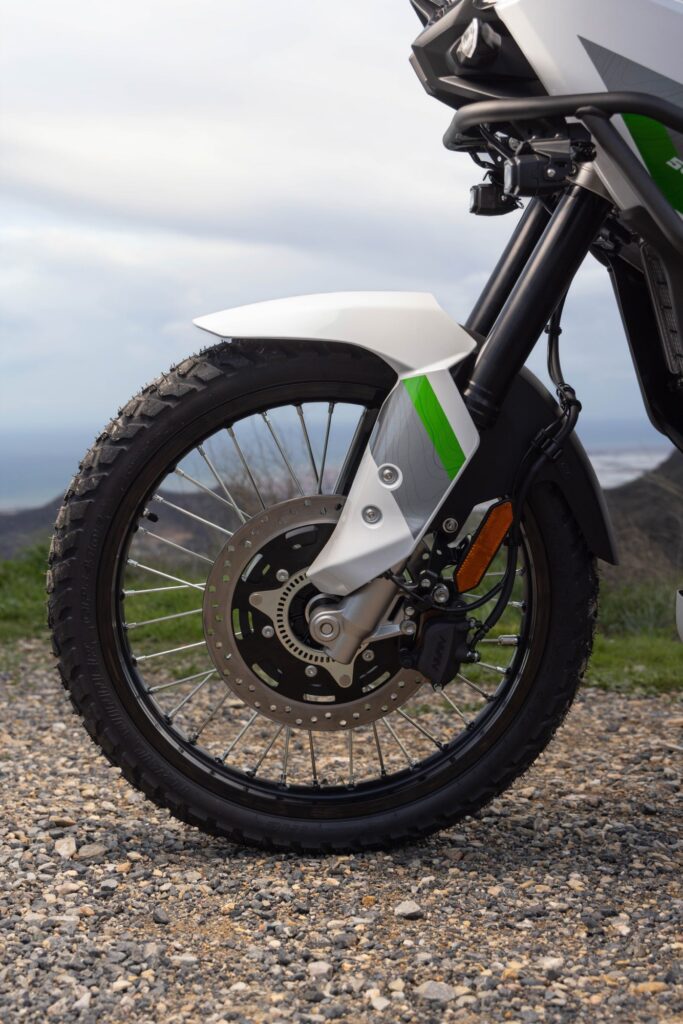 The KLE500’s suspension was one of the areas I’d spent quite a lot of time thinking about before the launch. Kawasaki has fitted a 43 mm inverted KYB front fork and a Uni-Trak rear monoshock with a linkage system. Front wheel travel is 210 mm, while the rear provides 196 mm. Those are respectable figures, particularly for a motorcycle intended for both road riding and lighter off-road use. However, the suspension offers relatively few adjustments. Neither damping nor spring preload can be adjusted on the front fork, while at the rear, only the spring preload is adjustable, although it can be varied continuously.
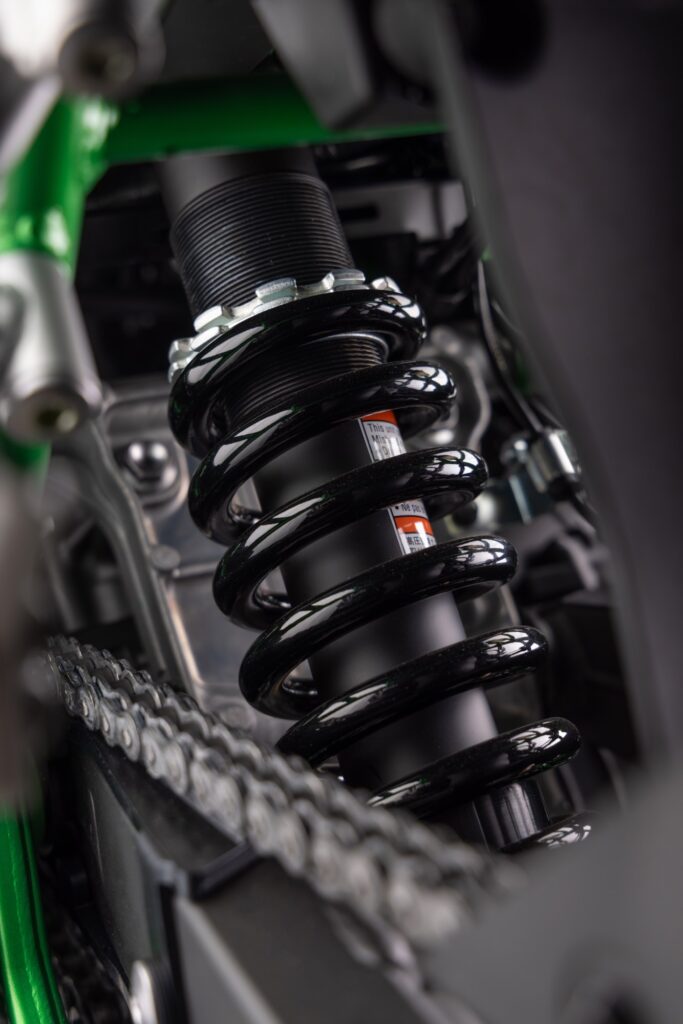 At first, that might sound like a significant disadvantage. However, I’ve always maintained that a properly tuned suspension system is worth far more than a badly set-up one with endless adjustments that never seem to make things right. The rear spring preload on my test bike had already been adjusted to suit my weight the previous evening, so I could set off with an appropriate setup. During the first few kilometres, I immediately noticed that the suspension was fairly firm. This isn’t the kind of soft, gently rocking arrangement that makes you feel as though you’re riding on a cloud. Personally, I really like that, because it’s important to me that a motorcycle holds itself firmly and precisely through corners. On tarmac, it worked extremely well. The bike leaned into corners easily, responded precisely to steering inputs and remained composed even during quicker changes of direction.
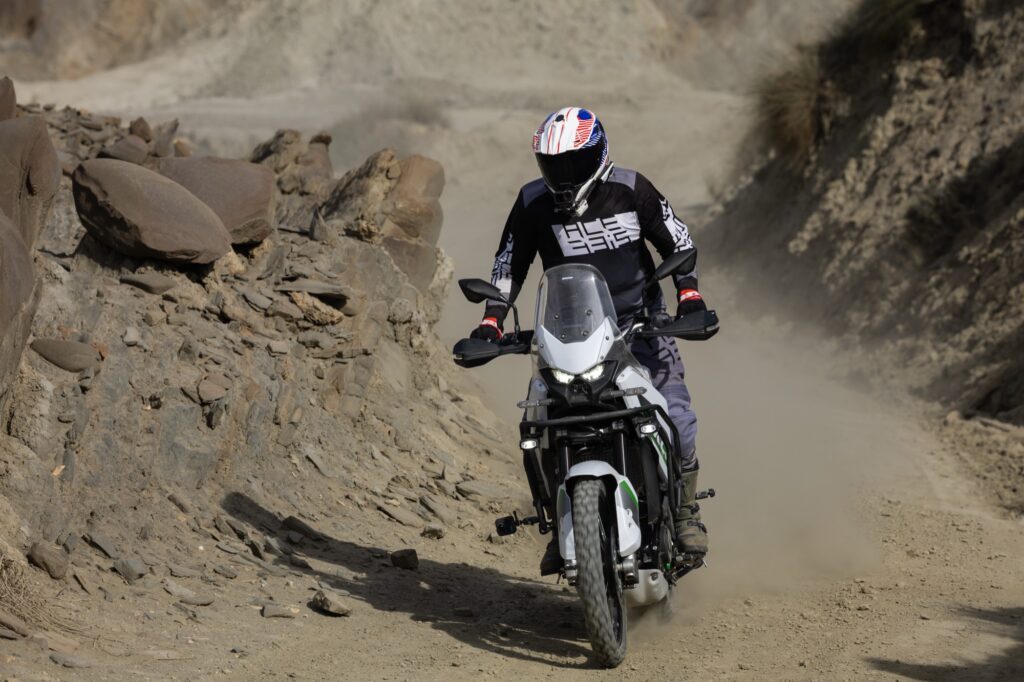 Then we reached the rockier sections with deeper holes, where both suspension travel and damping faced a more serious challenge. The suspension handled normal-sized bumps and off-road obstacles very well. Even over a few smaller jumps, I didn’t experience any bottoming out. There was, however, one larger hole where the front suspension made a distinct, sharp clunk. I felt that we might have reached the limit of its travel. On a serious enduro course or over larger jumps, this suspension would undoubtedly run out of travel sooner than that of a motorcycle developed specifically for demanding off-road riding. But that’s not what the KLE was designed for. On the rocky tracks of the Tabernas Desert, over smaller obstacles, through washouts and across uneven terrain, I was generally satisfied with its performance. The KYB components do their job well, and for me, the suspension tuning proved to be a very successful compromise between road and off-road use.
Those Famous 45 Horsepower
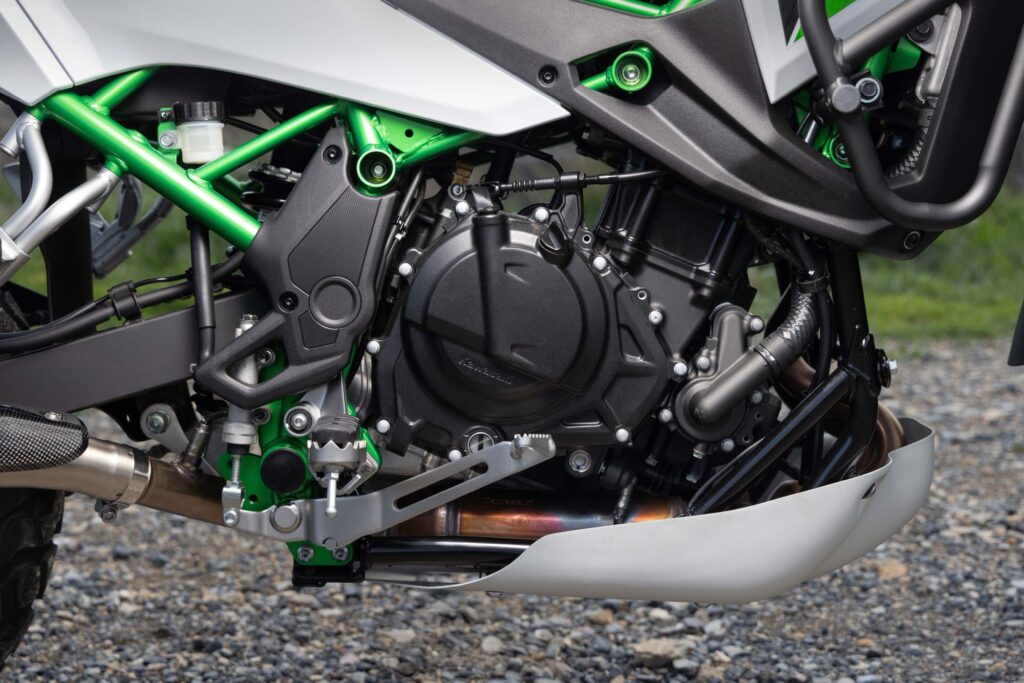 The KLE500 is powered by a 451cc, liquid-cooled parallel-twin engine that will already be familiar from several other Kawasaki models. Members of the same engine family are used in the Ninja 500 and Eliminator 500. In the KLE, maximum power is 33.4 kW, or 45 hp, at 9,000 rpm. Peak torque is 42.6 Nm at 6,000 rpm. Naturally, the motorcycle also meets the power restrictions of the A2 licence category. These aren’t particularly exciting numbers, but over the past few years, I’ve repeatedly experienced just how well Kawasaki has developed this twin-cylinder engine. And it didn’t disappoint in the new KLE500 either.
The 45 horsepower arrives in a very pleasant, direct way. The engine responds eagerly to the throttle, and its power is easily usable across a broad rev range. On country roads, it never felt sluggish. Overtaking was straightforward, it accelerated nicely out of corners on the winding roads, and dropping down a gear made it particularly enthusiastic. Naturally, you do need to rev this engine occasionally. It can accelerate in sixth gear, but in fourth it reveals a completely different character, and in third it becomes positively playful. Throughout all this, the power delivery remained smooth and predictable. That’s particularly important off-road, where sudden surges of torque aren’t always welcome.
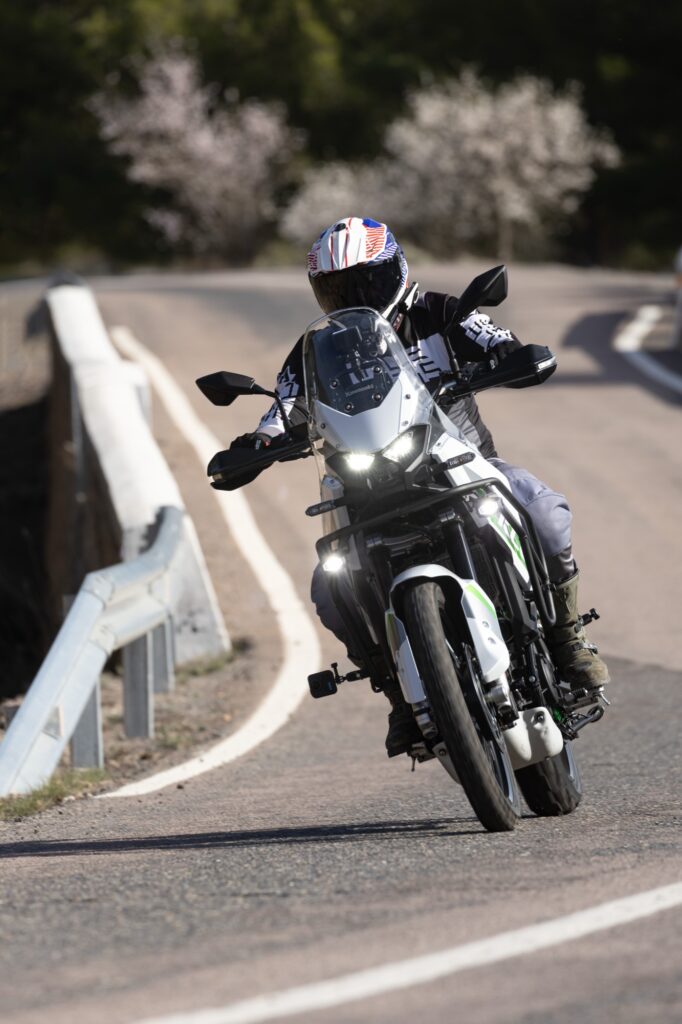 Kawasaki has also adapted the final-drive gearing to suit the KLE’s intended use. The combination of a 15-tooth front sprocket and a 46-tooth rear sprocket aims to balance road usability with the precise power delivery needed off-road. The engineers have also worked on numerous details around the engine to keep the motorcycle narrow and easy to handle. The revised intake system and engine management settings both contribute to its direct throttle response.
Once again, this engine was a pleasant surprise for me. I may have found the smaller Ninja 500 just a fraction more lively, which could also be explained by its lower weight. In the KLE, however, the balance between engine performance and overall construction is excellent. It’s a likeable, enthusiastic and easy-to-manage engine that provides far more riding enjoyment than its performance figures might lead you to expect.
One of Kawasaki’s Best Gearboxes
While we’re talking about the drivetrain, the gearbox deserves special attention. The six-speed transmission works beautifully. It’s precise, easy to shift and engages gears so smoothly that I didn’t even miss having a quickshifter. There isn’t one on the KLE500, but out of curiosity, I experimented with clutchless shifting during the test. With a slight roll-off of the throttle, I could easily shift up all the way to sixth. With a properly timed throttle blip, downshifts were smooth as well. Of course, this requires precise throttle control and the correct engine speed, but the gearbox responded exceptionally well.
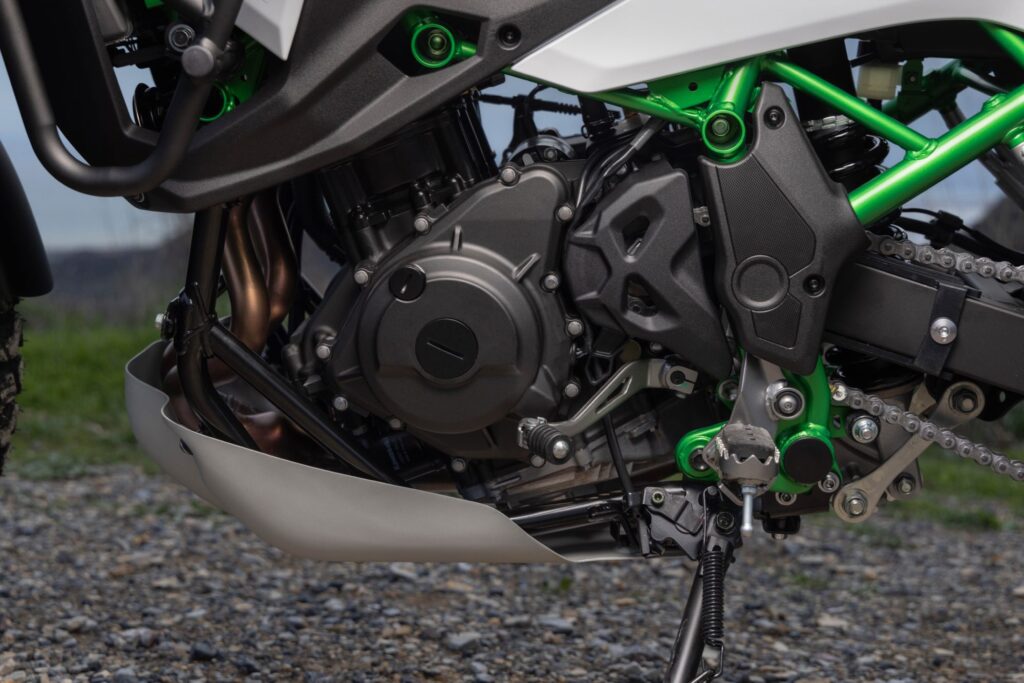 The clutch is cable-operated and uses Kawasaki’s Assist & Slipper system. The assist mechanism reduces the force required to operate the clutch lever, while the slipper function limits the back-torque transmitted to the rear wheel during excessive engine braking. I actually experienced the latter during a downshift on a winding mountain road, when I selected second gear a little earlier than I should have. The motorcycle gave a little shake, but the slipper clutch helped bring the situation under control.
The clutch lever can be operated with one finger, although over a full day’s riding, I found two fingers more comfortable. Even off-road, where I sometimes needed to use the clutch more frequently, it never felt particularly tiring. Overall, I really enjoyed the entire drivetrain. It’s smooth, precise, easy to control and offers exactly the amount of direct mechanical connection I expect from a motorcycle like this.
The Winding Roads Revealed What It’s Really Good At
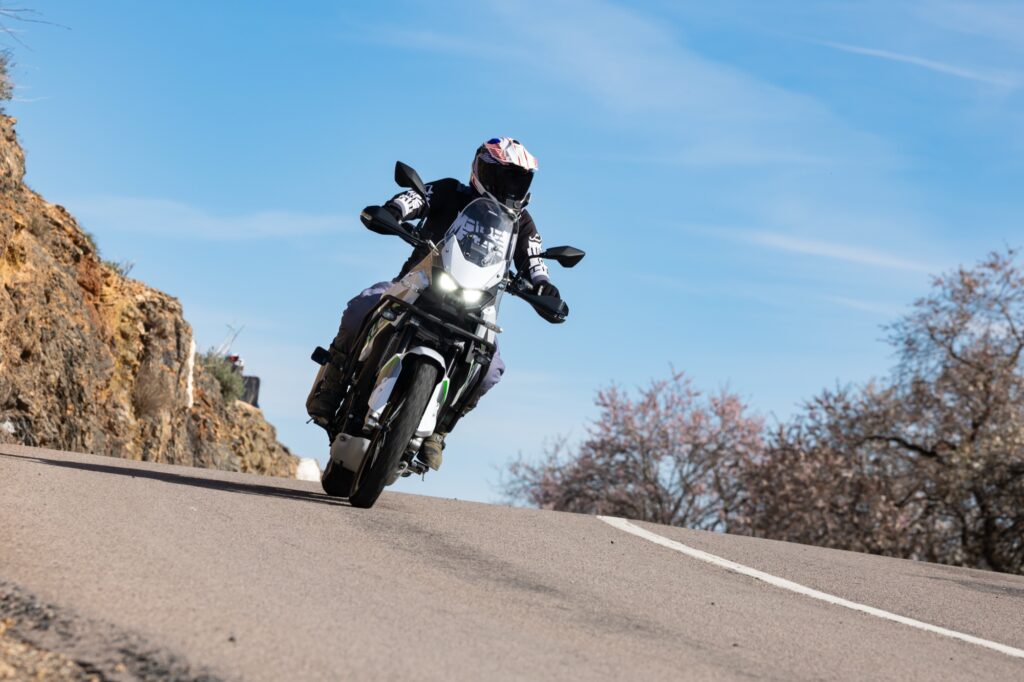 There’s one thing I particularly like about Kawasaki’s press launches: they usually allow journalists some time to ride independently. After the organised programmes, group rides and photo sessions, we’re normally given a pre-programmed route that we can follow at our own pace. That means we don’t have to constantly watch the ride leader or the other journalists, and we can get to know the motorcycle much more freely. We had that opportunity in Andalusia too.
After the off-road photo shoot and lunch, I set off alone towards the hotel, following a pre-programmed TomTom navigation system. Naturally, the organisers could track my location, so even if I’d become a little too enthusiastic about exploring some remote side road, they would have been able to find me. This was when I really started to fall in love with the KLE500. On the winding Spanish mountain roads, everything quickly fell into place. The motorcycle leaned into corners effortlessly, held its line precisely, and its firm suspension provided excellent feedback. Meanwhile, the twin-cylinder engine responded enthusiastically whenever I opened the throttle.
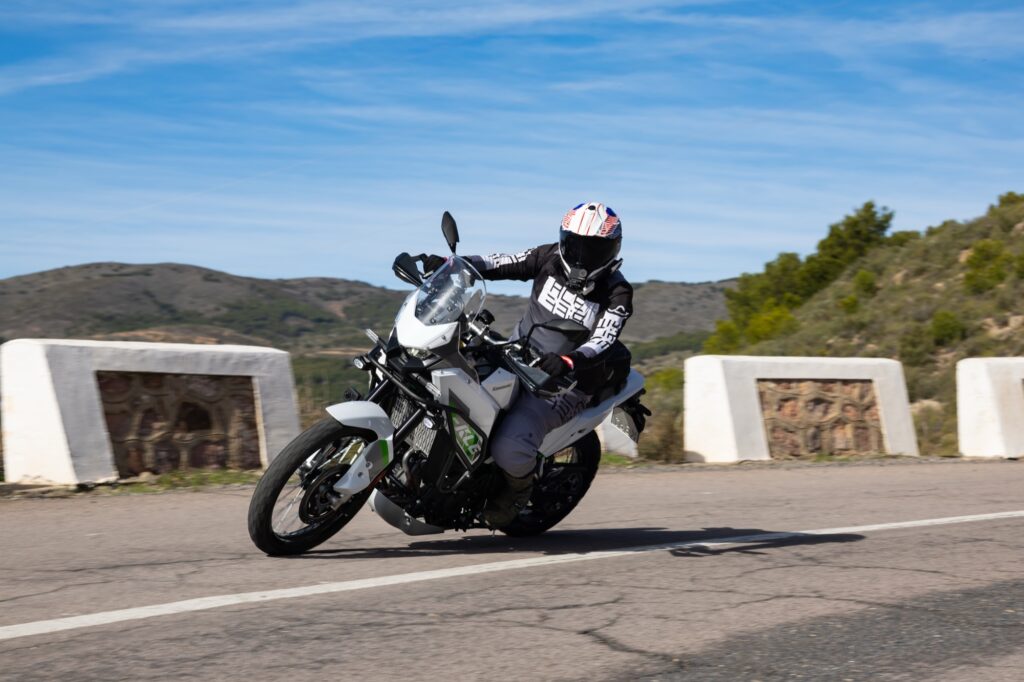
Interestingly, the riding experience reminded me of the Yamaha Tracer 7 launch in Portugal. There’s a considerable difference in power between the two motorcycles, yet they gave me remarkably similar enjoyment on winding country roads. It demonstrates once again that riding pleasure is by no means determined solely by horsepower. The KLE500 is simply great fun on twisty roads. It’s light, manageable and predictable, with just enough power to make opening the throttle at the exit of a corner thoroughly enjoyable.
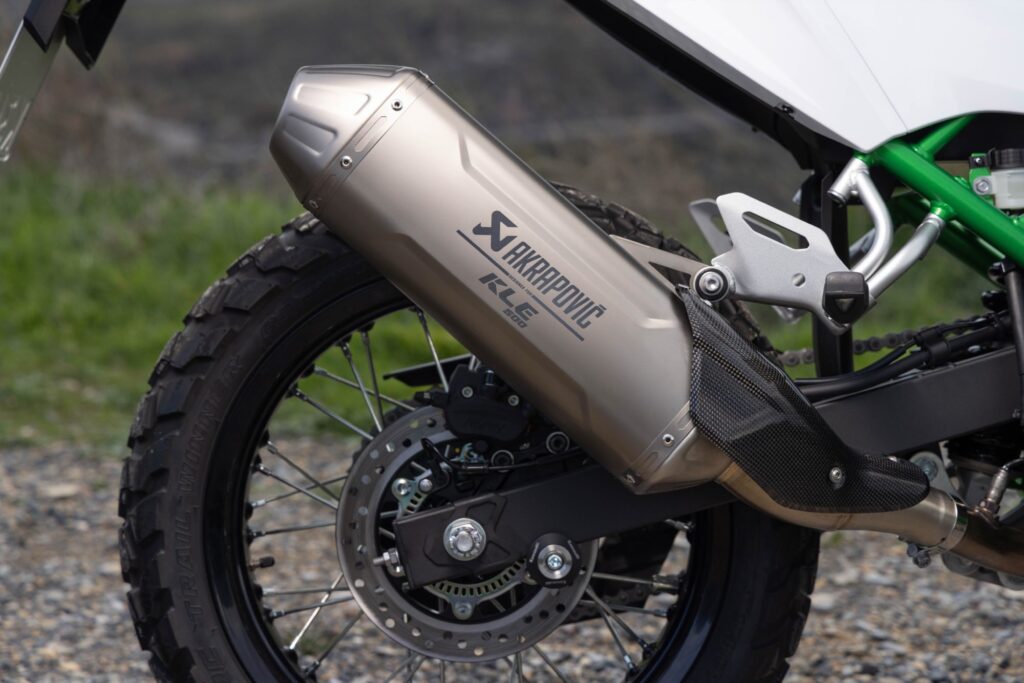 Of course, the Akrapovič exhaust fitted to the test bike added to the experience, giving the twin-cylinder engine a pleasantly distinctive sound. The standard silencer is considerably more restrained, but it’s also more practical. The positioning of the Akrapovič is incompatible with Kawasaki’s factory side cases, so anyone planning serious touring should take that compromise into account. For me, road riding was the most enjoyable part of the two-day test. The KLE500 performed extremely convincingly here, and by this point, I was already certain Kawasaki had introduced a serious contender in this category.
The 21-Inch Front Wheel and the Compromises of Off-Road Riding
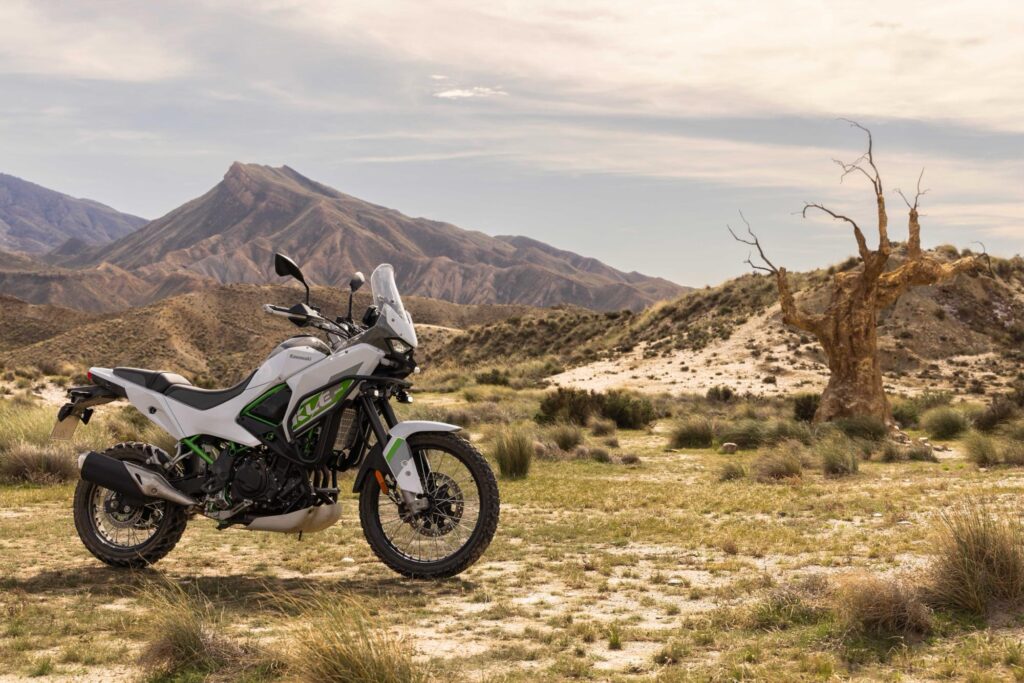 The new KLE500 runs on spoked wheels measuring 21 inches at the front and 17 inches at the rear. That’s the same wheel-size combination used on the original model back in 1991. The 21-inch front wheel undoubtedly has advantages off-road. It rolls over rocks, holes and other obstacles more easily than a smaller-diameter wheel, which is why it’s almost universally used on motorcycles intended for more serious off-road riding. However, I was less enthusiastic about the 17-inch rear wheel. I would have preferred an 18-inch rear, because the selection of tyres intended for off-road motorcycling is particularly extensive in that size. Kawasaki has clearly kept road usability in mind and retained the KLE’s traditional wheel dimensions.
Another compromise is that the 2026 KLE500 uses inner tubes. As a result, repairing a puncture off-road can involve considerably more work than with a tubeless tyre.
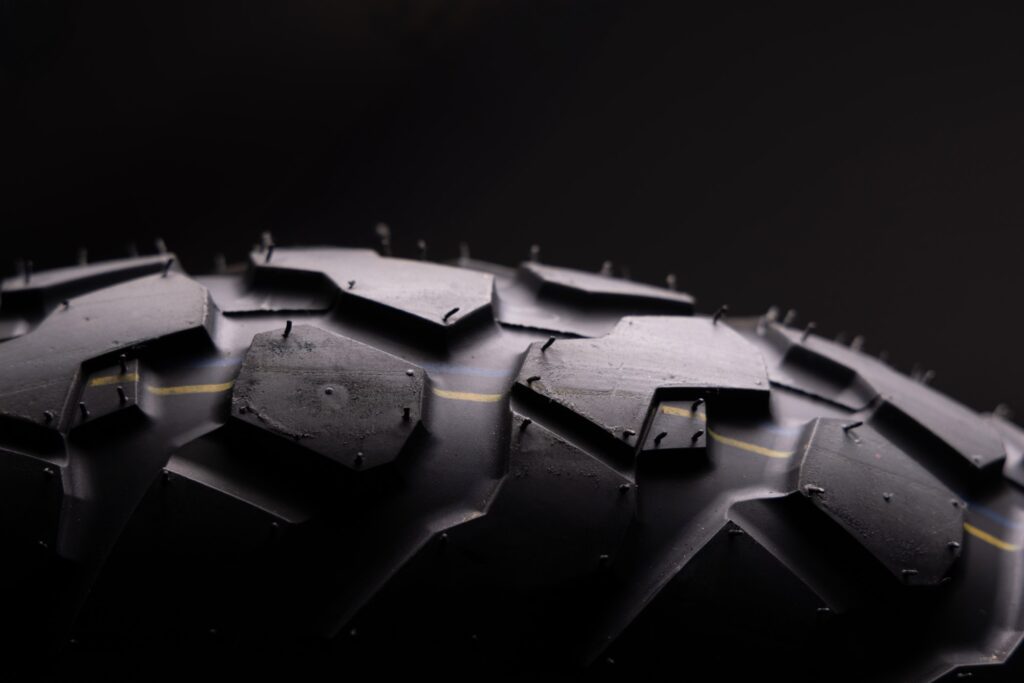 The standard IRC GP-410 tyres are primarily designed for mixed use. They provide adequate grip on tarmac, while their tread pattern also allows riding on dirt roads and lighter off-road terrain. However, during the early stages of the test, the motorcycle sometimes felt a little uncertain, particularly on loose surfaces. A Czech colleague pointed out that tyre pressure could easily have been responsible. The motorcycles had arrived with pressures set for road use, which can be too high for off-road riding. I regularly use lower tyre pressures on my own motorcycle, and I know exactly how much difference they can make to handling. On the KLE, properly adjusted off-road pressures would probably have improved both traction and predictability considerably. Unfortunately, we didn’t have the opportunity to experiment with tyre pressures during the press launch, so we used the motorcycles with their original settings.
Into the Tabernas Desert
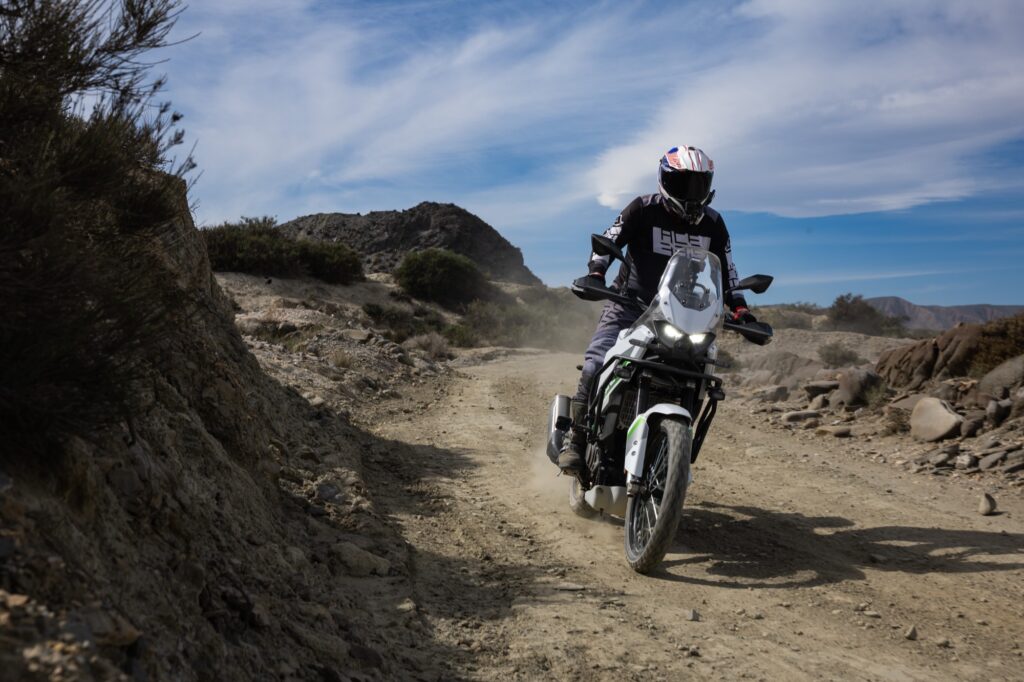
We tested the KLE500’s off-road capabilities in the Tabernas Desert. This distinctive dry, rocky landscape near Almería offers very different conditions from a forest track in Hungary. Loose stones, dusty surfaces, washouts and uneven terrain are everywhere, giving both the suspension and the rider plenty to deal with. Within the first few kilometres, I noticed how easy the KLE500 was to control while standing.
The narrow tank, relatively high handlebars positioned forward and the design of the footpegs allow me to stand in a natural riding position. The standard handlebar setting wasn’t perfect for me, but rotating the bars forward and adjusting the positions of the control levers would make it easy to adapt the ergonomics to my height.
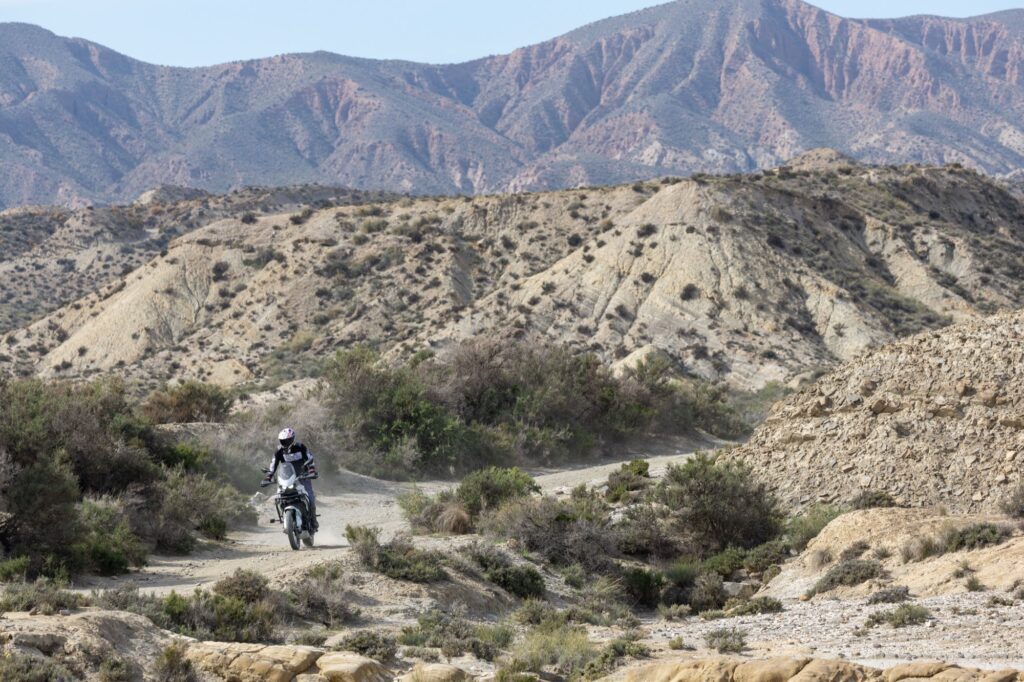 At 183 cm tall, I also had plenty of room when seated, and I could confidently reach the ground with both feet when stopping. When standing, the low centre of gravity and narrow construction were particularly beneficial. I could easily follow the motorcycle’s movements and control it precisely by shifting my body weight.
The 45 hp twin-cylinder engine was also very pleasant off-road. Power delivery is predictable, throttle response is easy to modulate, and there’s enough performance available to negotiate obstacles. The suspension absorbed most holes and bumps nicely. The 21-inch front wheel helped considerably when rolling over obstacles, while the 185 mm ground clearance proved sufficient for the test route. The underside of the motorcycle didn’t touch the ground once. Based on these experiences, the KLE500 performed well off-road too.
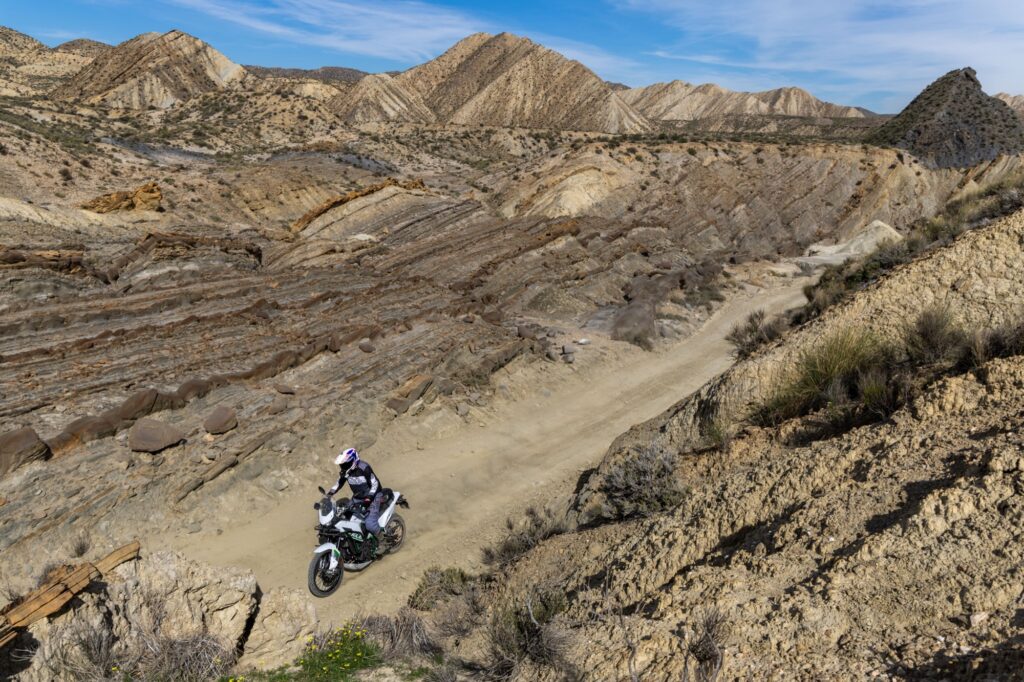
At the same time, I think it’s important to place the motorcycle in the correct category. I use my off-road motorcycles as a recreational rider, and although I’ve improved considerably over the past few years, I primarily judge off-road capabilities based on my experience of TET (Trans Euro Trail) tours and routes of similar difficulty. From that perspective, I found the KLE500 a very likeable motorcycle. It’s easy to handle, inspires confidence and is particularly enjoyable on rocky, dusty dirt roads. However, it shouldn’t be compared with a more aggressive, sporty off-road motorcycle. The KLE wasn’t designed for taking jumps at high speed or exploring the limits of serious enduro tracks. What it is very good at is allowing you to leave the tarmac during a tour and explore the surrounding dirt roads, mountain trails or even a more challenging section of the TET.
I’m Not Entirely Happy with the ABS
One of the most important features of the KLE500’s relatively simple electronics package is its dual-channel ABS, controlled by a Nissin system. There’s no traction control, and the motorcycle doesn’t have ride-by-wire throttle control either. With 45 horsepower available, I didn’t consider either omission particularly significant. The engine’s power is easy to modulate, and the direct throttle response caused no problems off-road.
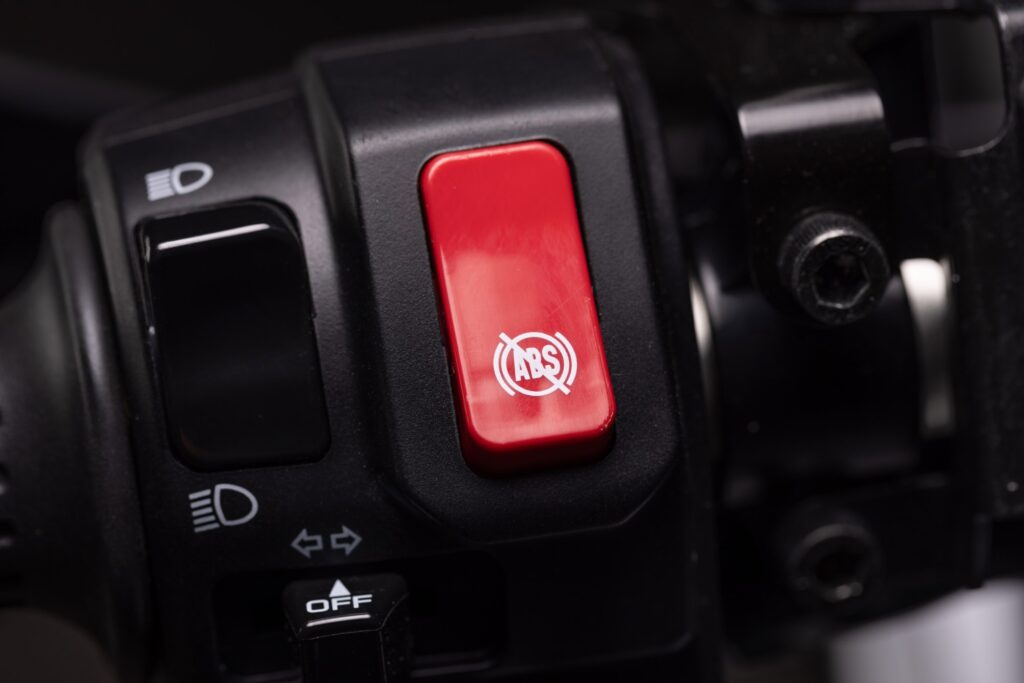 I was less satisfied, however, with the way Kawasaki has implemented the ABS. The system can be switched off, but only on both wheels simultaneously. By holding down the appropriate button on the left handlebar switchgear, you can deactivate the entire system. The ABS then remains disabled until the ignition is switched off.
Off-road, I prefer a different arrangement. On my own motorcycles, I generally disable ABS at the rear wheel while leaving it active at the front, preferably in a dedicated off-road mode. There’s a simple reason for that. On loose surfaces, locking the rear wheel can sometimes help slow the motorcycle down, particularly on steep descents. A locked rear tyre can build up a wedge of gravel or soil in front of itself, creating additional braking resistance. Conventional ABS, however, may intervene very quickly in these situations because the lightly loaded rear wheel can easily lose traction. Under certain off-road conditions, this can significantly increase stopping distances. At the front, meanwhile, I prefer to retain the additional safety margin provided by ABS. A sudden front-wheel slide off-road can be a particularly unpleasant surprise. With the KLE500, I had to choose: either ABS operates on both wheels, or it operates on neither. I would have much preferred the option of disabling the rear system independently.
Of course, this opinion reflects my own riding habits and off-road experience. Someone who has been riding off-road for longer and is accustomed to braking without ABS would probably consider it less of a problem. For me, however, this is one of the KLE500’s most significant shortcomings.
The Brakes Are Adequate, but Could Be More Decisive
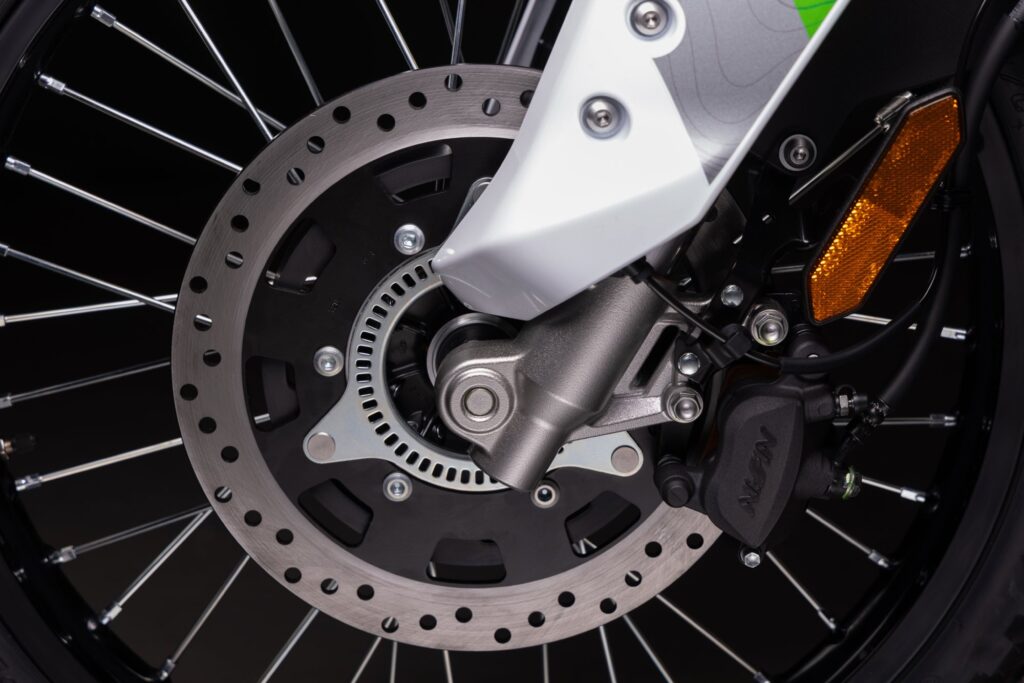 Kawasaki has fitted a single 300 mm front brake disc with a two-piston caliper. At the rear, there’s a 230 mm disc. This arrangement is fundamentally appropriate for the motorcycle’s weight and performance, but I would have liked slightly more decisive braking. I tested the brakes several times with harder deceleration on the Spanish mountain roads. As with the Eliminator and Ninja 500, I felt that Kawasaki had prioritised everyday use when specifying the braking system. The KLE’s brakes are easy to modulate and provide sufficient stopping power at normal country-road speeds. However, the biting point isn’t particularly sharp, and the brakes don’t have the immediate bite I’m accustomed to on sportier motorcycles.
When slowing from higher speeds, the system’s limitations become more noticeable. It’s also worth remembering that the KLE500 has a 21-inch front wheel and long-travel suspension, which results in very different braking behaviour from a sportbike with a smaller front wheel and shorter suspension travel. For its intended purpose, riding on country roads at around 80–100 km/h, I found the braking performance adequate. But at higher, significantly higher speeds, I’d certainly welcome a slightly stronger, more direct front brake.
Wind Protection and Road Comfort
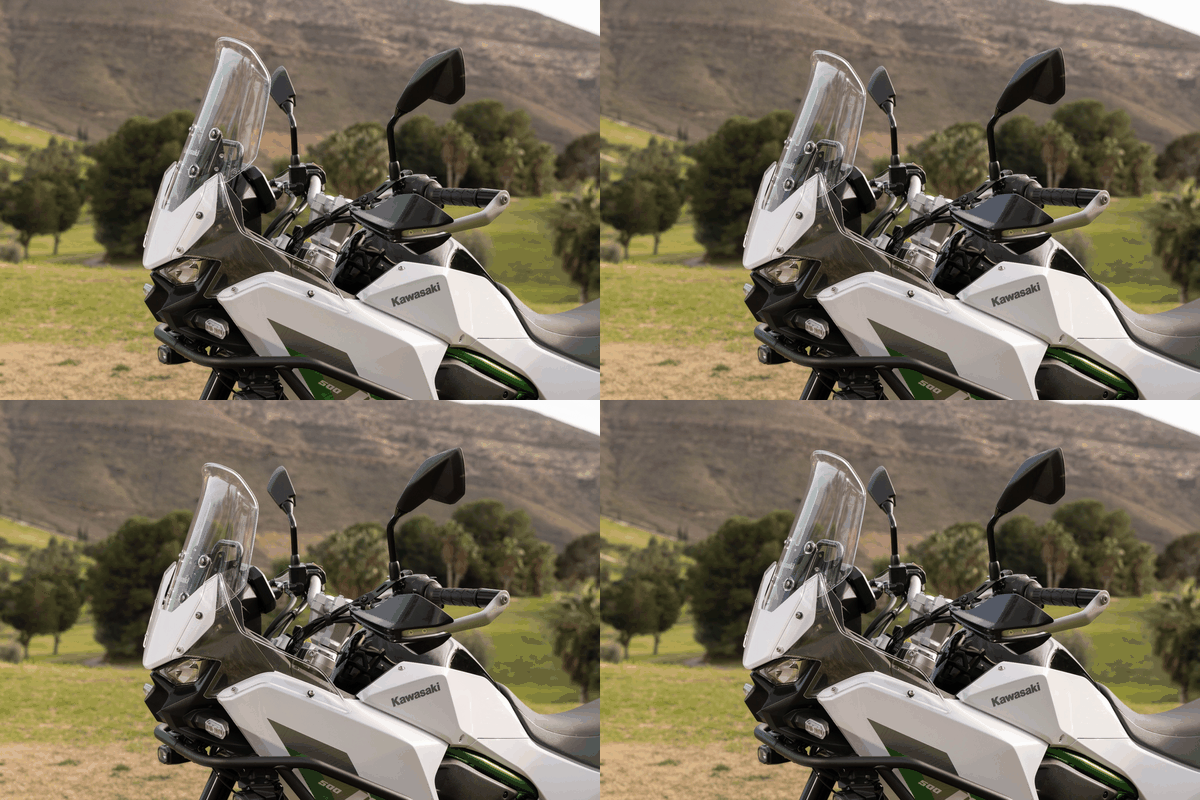 One of the KLE500’s most distinctive design elements is its tall rally-style windscreen. The screen can be adjusted to three positions. The middle and highest settings raise it by 27 and 55 mm respectively compared with the lowest position. However, adjustment requires tools, so you can’t change its height while riding. On the test bike, the windscreen was in its lowest position, and I found the wind protection adequate up to approximately 100 km/h. At higher speeds, however, I experienced considerable turbulence around my helmet. At around 120–130 km/h, the airflow was shaking my head quite noticeably, which could become tiring over longer distances. It’s possible that another windscreen position would have produced better results, but I couldn’t compare the different heights during the test.
I really liked the shape of the windscreen itself. Its upper section curves slightly forward, and transparent air deflectors are positioned along both sides. It suits the rally-style front fairing extremely well. I also appreciated being able to see comfortably over it. I generally dislike having a huge windscreen occupying much of my field of vision. I’d rather accept some airflow and have a clear view of the road. Overall, then, the KLE500’s wind protection proved adequate, but the turbulence around my helmet gave me some reservations at higher speeds.
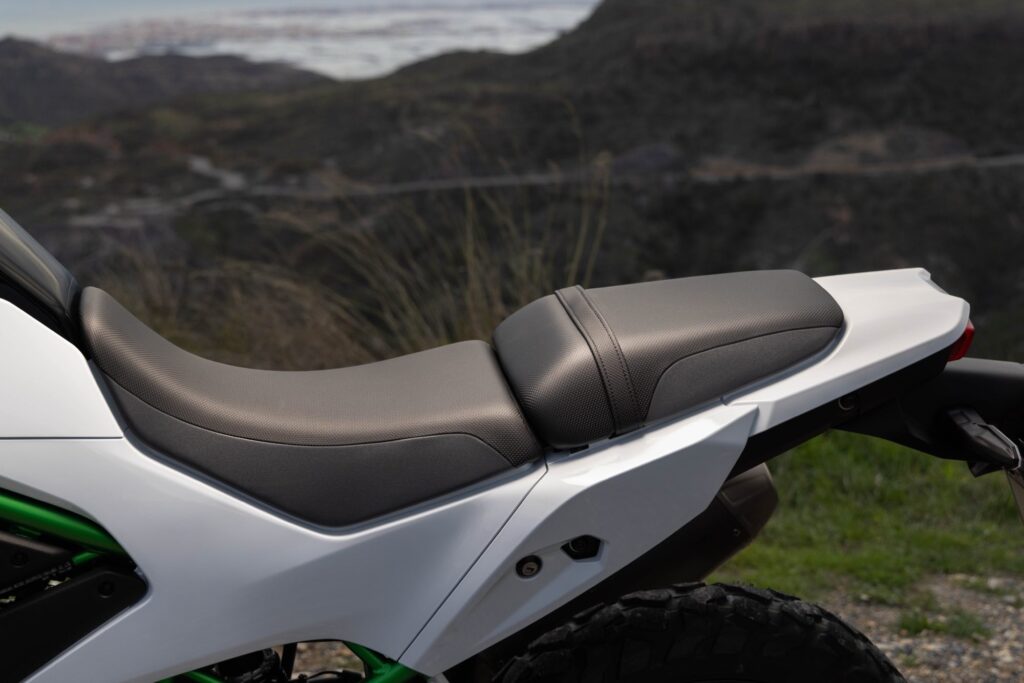 The seat, on the other hand, was a pleasant surprise. The standard seat height is 870 mm, which might sound tall at first, but the narrow construction makes it relatively easy to reach the ground. At 183 cm, I could hold the motorcycle confidently when stopped. The seat has adequate padding, its front section didn’t dig into my thighs, and I also found the knee angle comfortable. Kawasaki offers several seat combinations. In addition to the standard seat, you can order a rider’s seat that’s 30 mm lower, along with a lower passenger seat. The latter allows the two seating areas to form an almost continuous, flat surface, providing greater freedom of movement off-road.
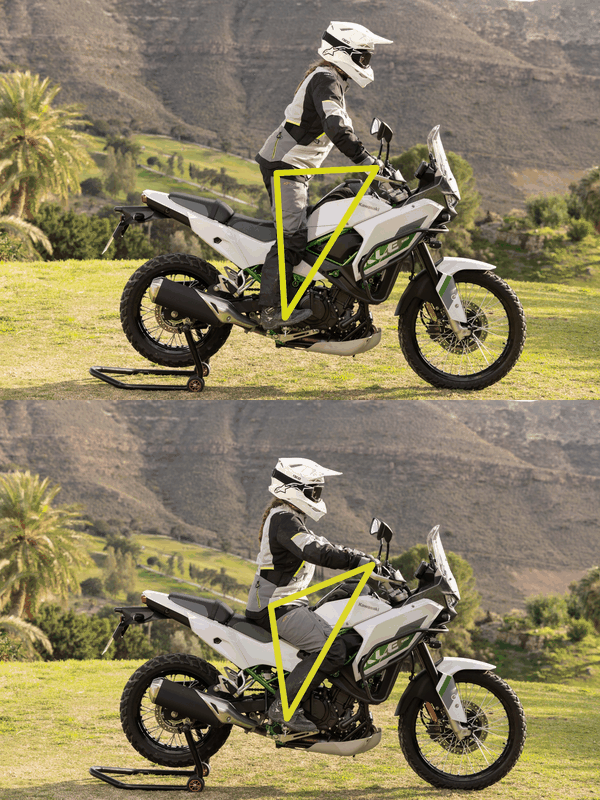 Moving between seated and standing positions feels natural. It’s easy to stand up, and adjusting the handlebar position allows the standing ergonomics to be tailored quite well. The rubber inserts in the footpegs can be removed without tools, allowing your boots to grip the serrated metal surfaces directly when riding off-road. That’s a very practical solution, especially in muddy or wet conditions. Personally, I would have preferred slightly wider footpegs. During longer periods of standing, a larger surface would provide more comfortable support. The positions of the brake and gear pedals worked well for me, although they aren’t adjustable.
Just Enough Electronics
In terms of electronics, the KLE500 is a relatively simple motorcycle. Apart from conventional ABS, there’s no traction control, no selection of riding modes and no electronic throttle. On the one hand, this reduces complexity. On the other, it brings back a little of the traditional motorcycling experience that I enjoy so much.
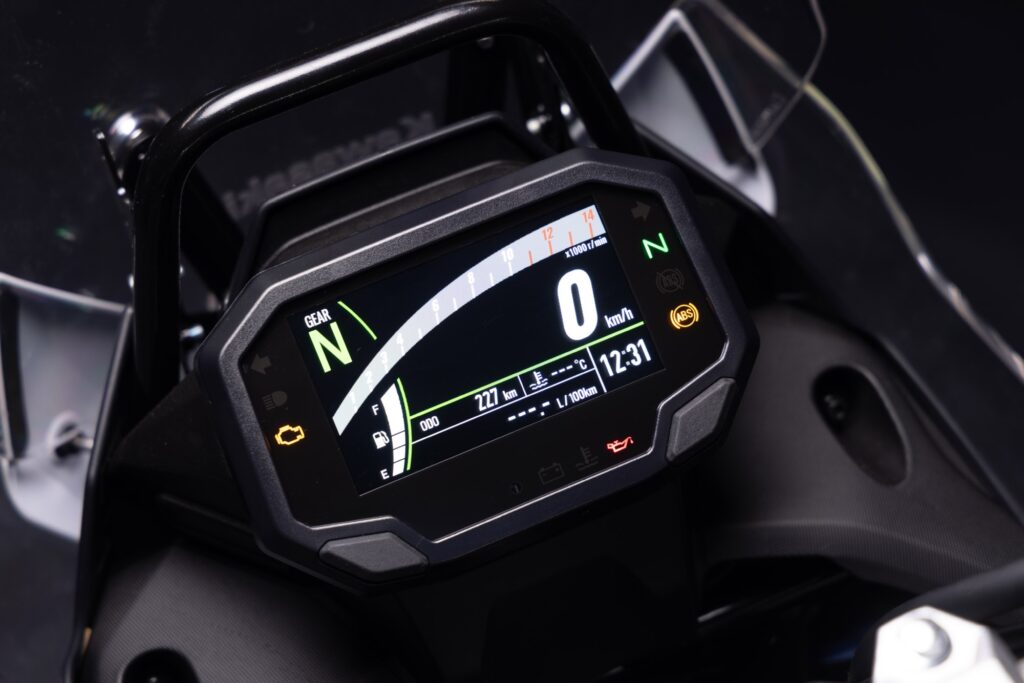 The dashboard, however, is thoroughly modern. The standard version features an LCD display, while the SE receives a 4.3-inch colour TFT with automatically adjusted brightness and light and dark display modes. It provides the usual trip computer information, including instantaneous and average fuel consumption, remaining range, trip meters and other riding data. The display is easy to read, the menu system is straightforward, and the important information is easy to find.
Kawasaki’s RIDEOLOGY app also enables smartphone connectivity, offering features such as navigation and ride logging. The SE version also supports voice-control functions. I have to admit, these features don’t particularly excite me. When I’m riding, I generally have no desire to have conversations with my motorcycle. And if I tried asking it to order me a pint of beer for my arrival back at the hotel, I probably wouldn’t have much success. Voice recognition has its limitations, after all, particularly when dealing with foreign languages and different accents. I much prefer simple, clearly legible dashboards and controls that operate logically. Fortunately, the KLE500 does well in this respect.
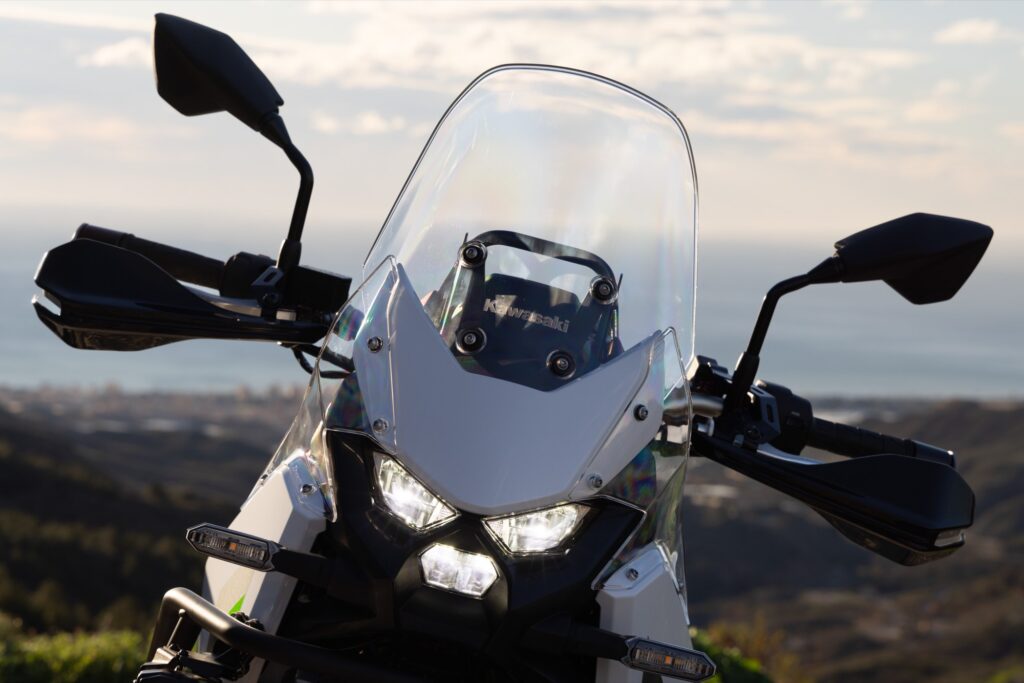 The three-part LED headlight is one of the motorcycle’s most distinctive design features. The two upper units provide the dipped beam, while the lower one produces the main beam. There’s LED lighting at the rear as well, although the indicators are LED only on the SE version.
The handguards on the test bike feature metal reinforcement, providing more substantial protection than purely plastic components. I also liked the shape of the mirrors and had no problems with rearward visibility.
Luggage Capacity and Range
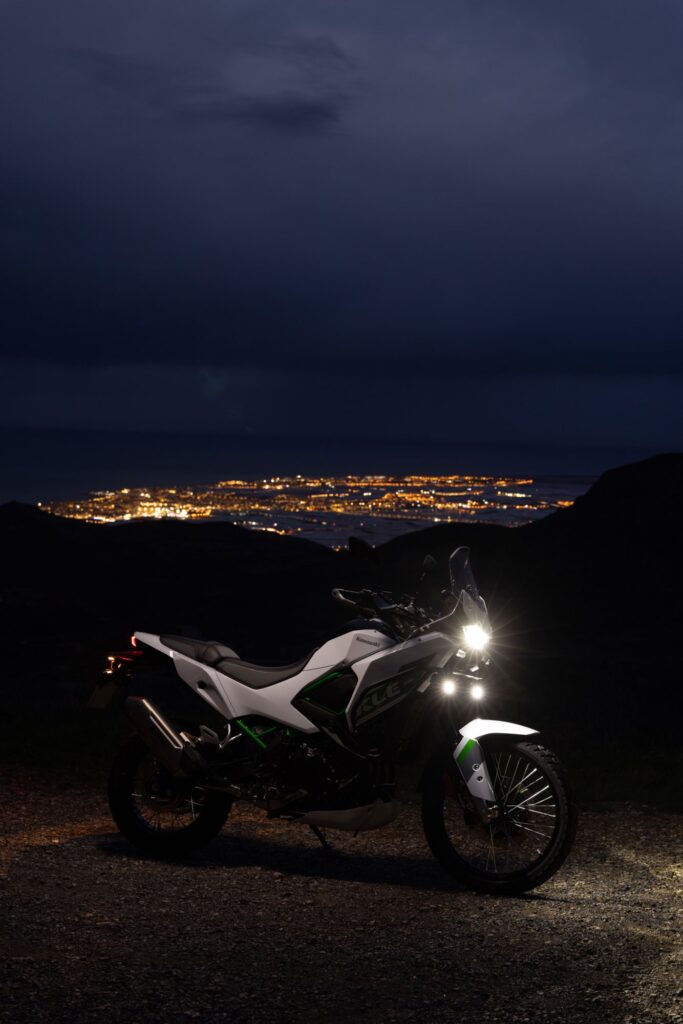 Kawasaki intends the KLE500 to be an adventure motorcycle suitable for longer tours, so luggage-carrying capability has also received attention. The reinforced rear frame allows two side cases and a top case to be mounted simultaneously. Genuine accessories include 21-litre side cases, a top case, luggage rack, centre stand, heated grips, USB-C port, crash bars and auxiliary LED lights.
The SE version’s larger skid plate is particularly useful off-road. During the test, I repeatedly heard stones striking it, and it was reassuring to know there was something beneath the engine to absorb those impacts.
The 16-litre fuel tank is appropriately sized for a motorcycle in this category. Kawasaki quotes fuel consumption of 4 litres per 100 kilometres, which would theoretically provide a range of 400 kilometres. During the test, however, the trip computer displayed higher figures. At the beginning of the day, I saw an average above 6 litres per 100 kilometres, although later it dropped to 4.7 litres. That included plenty of off-road riding, enthusiastic cornering and relatively little relaxed cruising on country roads. Based on the display, I think consumption of approximately 4.5 litres per 100 kilometres could be realistic at a normal touring pace. With that figure in mind, I’d start looking for a petrol station somewhere around the 300-kilometre mark. So the KLE appears suitable for longer journeys in this respect too. Combined with its comfortable seat, adequate wind protection and luggage options, these qualities make it a genuinely practical touring motorcycle.
KLE500, 450MT or Something Else?
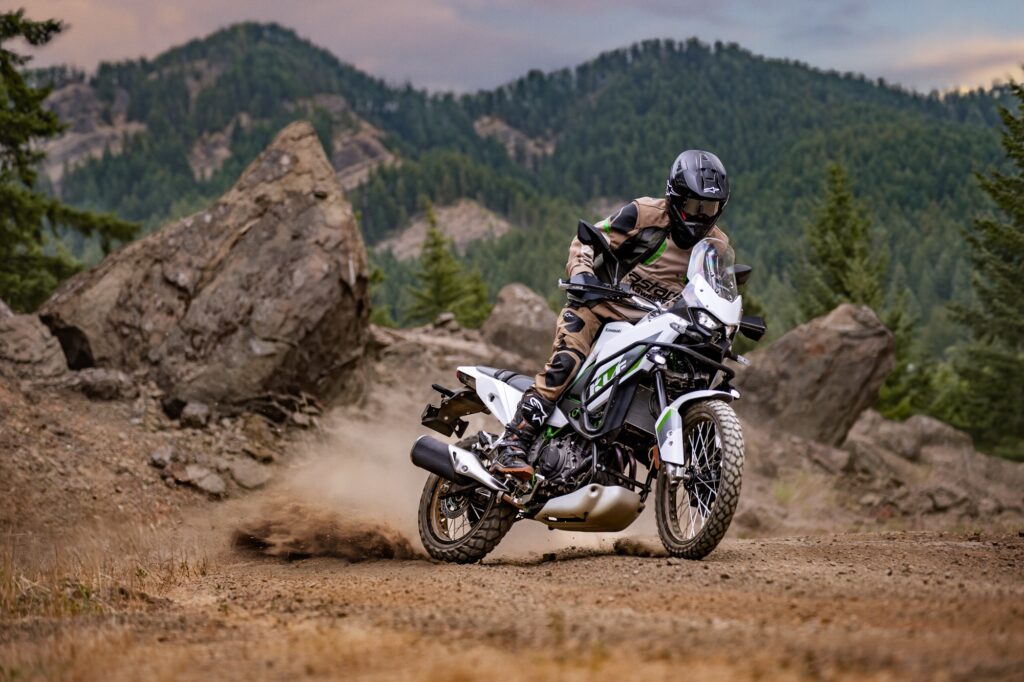 I suspect many people will compare the new Kawasaki KLE500 primarily with the CFMOTO 450MT, and for good reason. Both motorcycles are lightweight twin-cylinder adventure bikes, with kerb weights below 200 kg, similar performance and designs suitable for both road and off-road use. However, I think the two motorcycles represent quite different philosophies. The 450MT was developed primarily with an off-road mindset. Its 21-inch front and 18-inch rear wheels, greater ground clearance, adjustable suspension and off-road-oriented ergonomics all demonstrate that. Kawasaki, by contrast, has created an adventure motorcycle that works particularly well on the road while still offering respectable off-road capabilities.
I’d put it this way: the KLE500 is a good road bike that you can confidently take off the tarmac. The 450MT is a good off-road bike that’s also enjoyable to ride on the road. For me, that distinction is extremely important. The CFMOTO has several advantages when it comes to more demanding off-road use. Its greater ground clearance, 18-inch rear wheel, tubeless-compatible spoked wheels and adjustable suspension can all be beneficial for riders who regularly tackle more challenging terrain. On the road, however, the Kawasaki suited my personal preferences considerably better. Its suspension is firm and precise, the engine runs smoothly, the throttle response is pleasant, and I found the quality and operation of its controls more refined. I particularly loved the Kawasaki’s gearbox and clutch.
 It’s also important to acknowledge that I personally have a great deal of confidence in the Kawasaki brand. Its heritage, engineering background and my previous experiences all contribute to that feeling. Naturally, this isn’t proof that the new KLE will be more reliable than any of its competitors. It simply reflects my own relationship with the brand. There are, of course, other interesting contenders in this category.
The Honda NX500 places greater emphasis on road use with its 19-inch front and 17-inch rear cast wheels. The BMW F 450 GS offers an alternative with modern electronics and generous equipment. And the Moto Morini Alltrhike 450 perhaps comes closest to the KLE’s overall character. These aren’t simply better or worse motorcycles. Each offers a different set of compromises, and the right choice depends largely on where and how the rider intends to use it. Not to mention that, according to reports, the number of contenders in the small-displacement adventure-bike market could double by the end of the year. New manufacturers are entering the category, while established brands are also expanding into the segment. Exciting times are ahead.
What Is the Kawasaki KLE500 Really Good For?
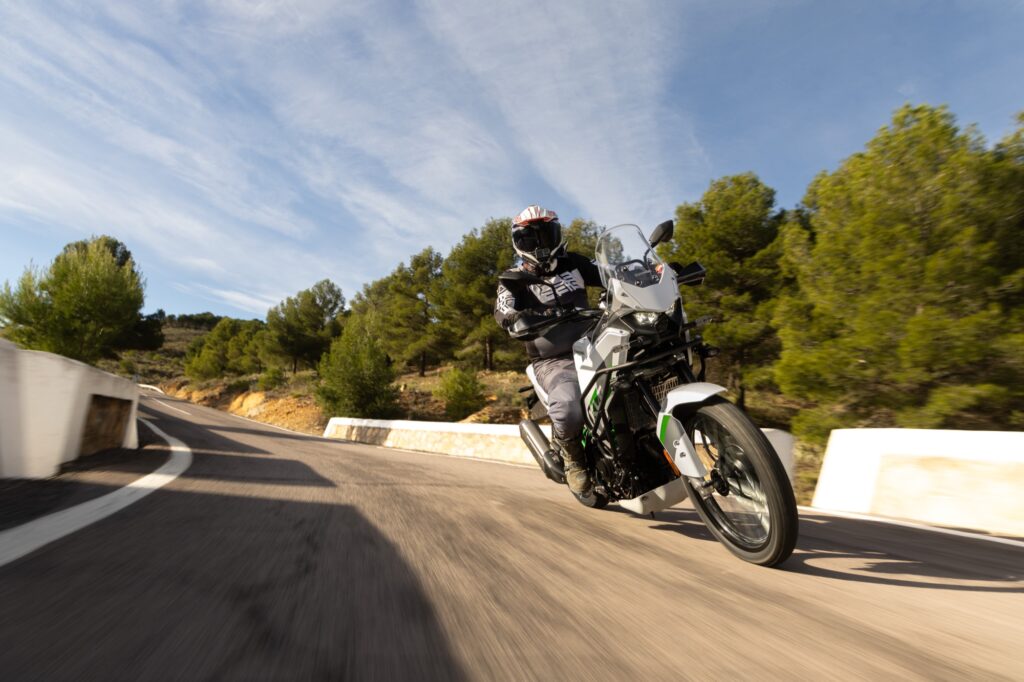
By the end of the two-day test in Andalusia, the KLE500’s character had become very clear to me. It’s an extremely likeable, versatile and easy-to-handle adventure motorcycle, with particularly impressive road manners. In the city, its narrow construction and low centre of gravity are major advantages. It’s easy to manoeuvre, the wide handlebars provide excellent control, and standing on the pegs gives you a clear view over the traffic.
On country roads, the engine has pleasantly lively performance, the bike is great fun on winding roads, and its suspension is particularly well suited to this kind of riding. For longer tours, the comfortable seat, 16-litre tank and factory luggage system provide a solid foundation.
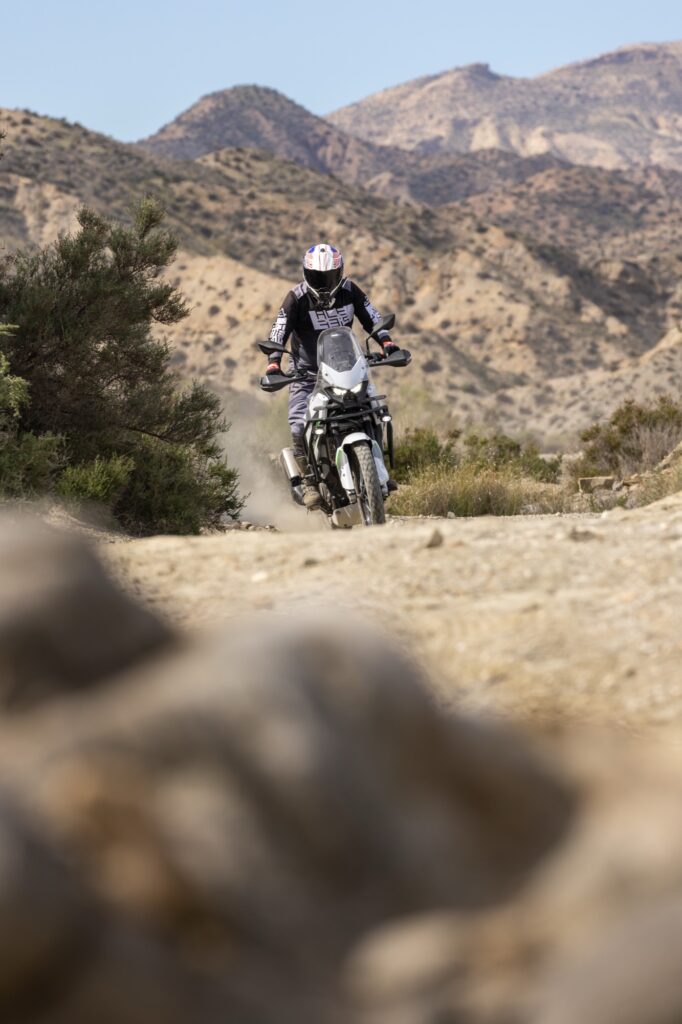
For anyone planning a three- or four-day trip, or perhaps even a week-long adventure, the KLE500 could be a perfectly realistic choice.
And when the tarmac ends, there’s no need to turn around. I thoroughly enjoyed riding it along the rocky dirt roads of the Tabernas Desert. The long suspension travel, 21-inch front wheel and narrow construction provide enough off-road capability to tackle the unpaved sections of a typical adventure tour with confidence. Naturally, there are limitations when it comes to more serious off-road riding. The things I missed most were the ability to disable rear ABS separately, wider footpegs and an 18-inch rear wheel. I’d also have appreciated a slightly stronger front brake and greater ground clearance. But none of these shortcomings changes the fact that Kawasaki has done an excellent job of defining the new KLE500’s character.
The 2027 KLE500 SE Smartride
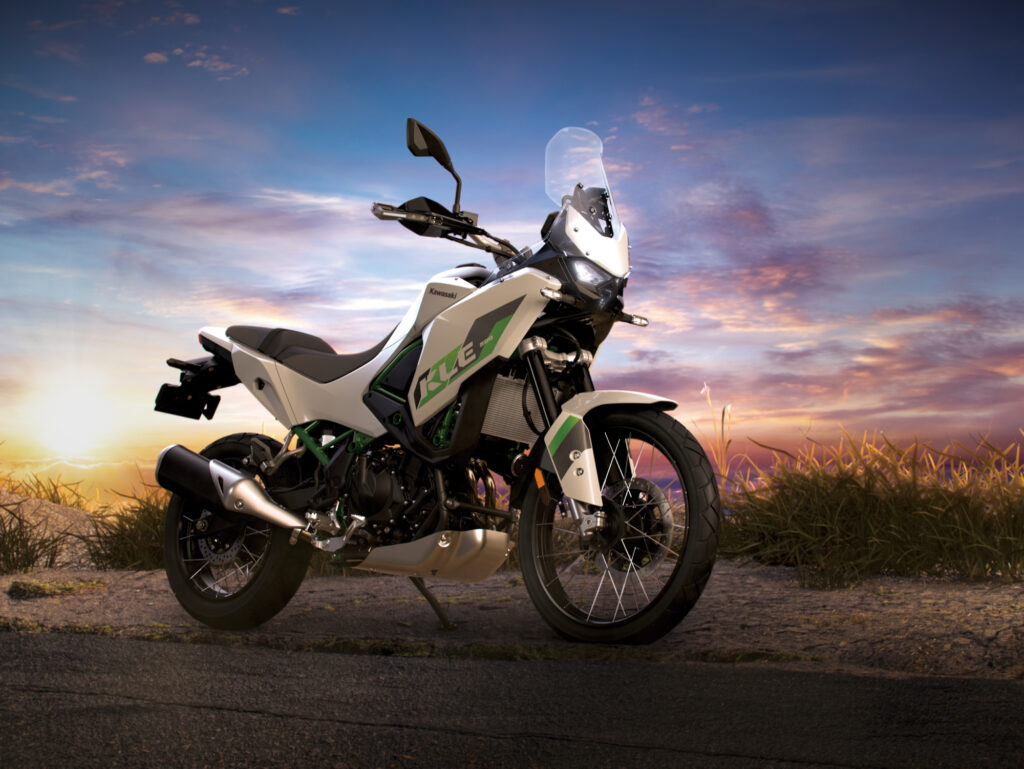 In the meantime, Kawasaki has announced a new addition to the KLE500 family for the 2027 model year. One of the most interesting features of the KLE500 SE Smartride is its mechanical, centrifugal clutch system. The idea is that you don’t need to operate the clutch lever when setting off or coming to a stop. The system automatically engages and disengages the connection between the engine and transmission, allowing the motorcycle to stop with a gear selected without stalling.
While riding, changing gears remains the rider’s responsibility, using the conventional gear lever and, when necessary, the clutch lever. Smartride is an entirely mechanical system without electronic control. According to the manufacturer, it increases the weight of the clutch assembly by only approximately one kilogram. The main benefit is greater convenience in city traffic, particularly when frequently stopping and setting off.
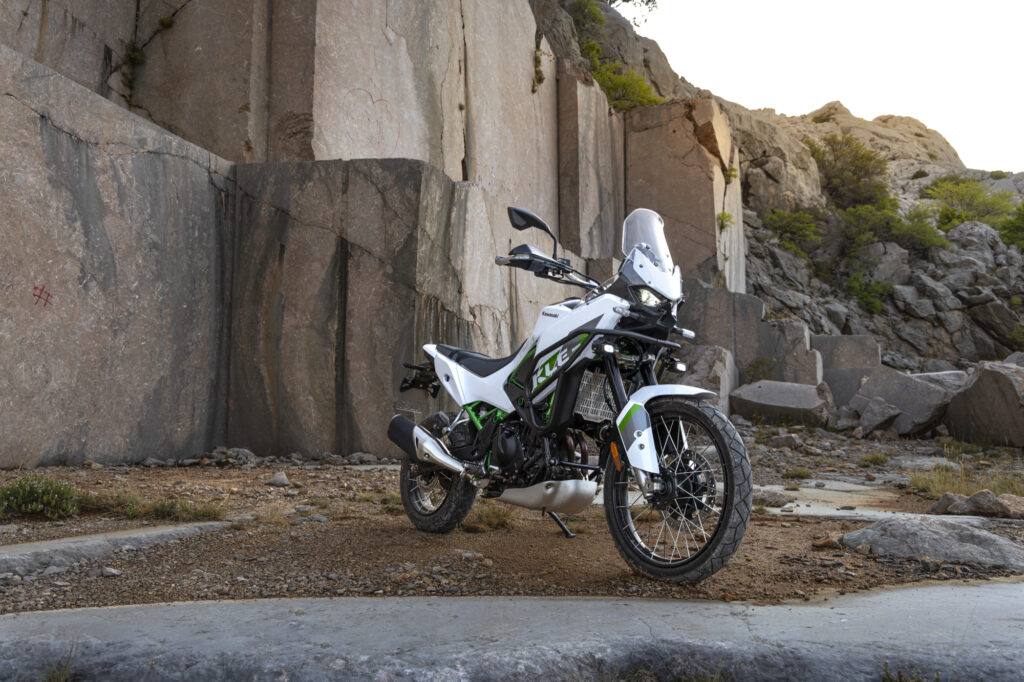 For me, however, something else is even more interesting: the Smartride version now comes with tubeless spoked wheels. That’s an improvement I particularly missed during my test of the 2026 KLE. In many cases, repairing a puncture in a tubeless tyre can be considerably easier because there’s no need to remove the wheel and repair or replace an inner tube. Standard equipment includes Dunlop Trailmax Mixtour tyres, with a 150/70-17 tyre now fitted at the rear.
Kawasaki has set the Hungarian price of the KLE500 SE Smartride at HUF 2,936,000 (around €7,300), with sales expected to begin in spring 2027.
Conclusion
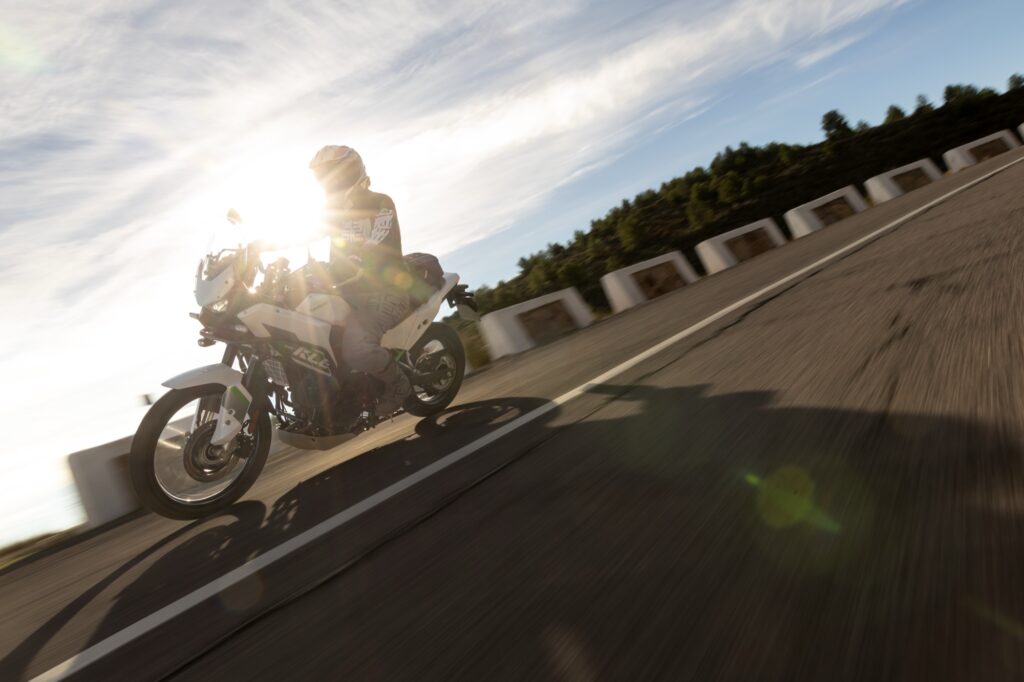
Testing the Kawasaki KLE500 SE was a thoroughly enjoyable experience. I discovered a motorcycle that offers versatility through straightforward engineering, thoughtfully designed details and an exceptionally well-matched drivetrain. The 45 hp twin-cylinder engine is far more enjoyable than its figures suggest. The gearbox and clutch work beautifully, the suspension is firm and stable, and the ergonomics are suitable for both road and off-road use.
I particularly liked the fact that the KLE500 isn’t desperately trying to compete with the most serious off-road motorcycles. Instead, it aims to excel within its own intended field of use, and I think it largely succeeds. I had the most fun on Andalusia’s winding mountain roads, where the easy handling, well-tuned suspension and enthusiastic twin-cylinder engine combined to create a thoroughly enjoyable riding experience.
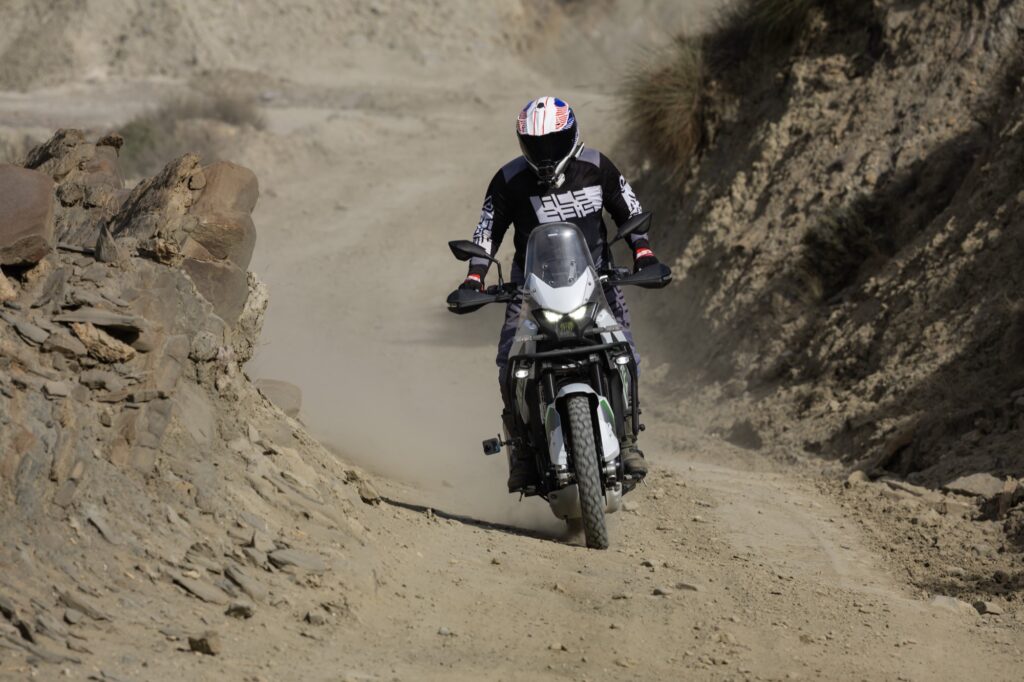
My off-road experiences also confirmed that the KLE500 can confidently venture beyond the tarmac. I still believe it’s primarily a very successful road-oriented adventure motorcycle with respectable off-road capabilities. The KLE500’s real strength is its versatility. During the week, it’s a practical means of transport. At the weekend, it’s an entertaining motorcycle. And in summer, it could become a promising companion for longer tours.
For me, Kawasaki has interpreted the philosophy of the original KLE500 extremely well. It has retained the motorcycle’s most important qualities while updating the design to meet modern expectations. At the end of the Andalusian test, I climbed off wishing I could go for another ride. Whether on the tarmac or along the rocky tracks of the Tabernas Desert. I don’t think we should expect much more from such a versatile and likeable little adventure motorcycle.
This review was produced during a press event organised by Kawasaki.
Watch the Video Review Here: