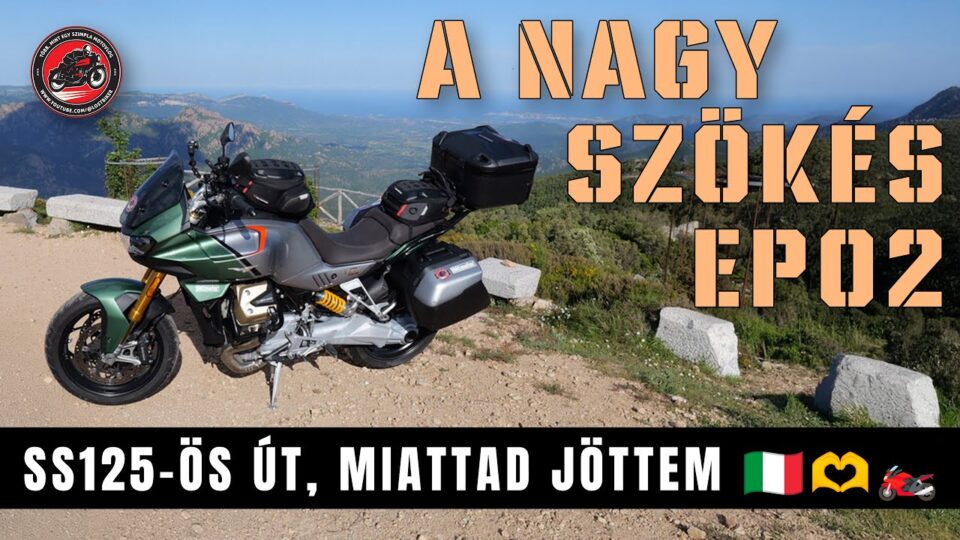
There’s a road in Sardinia whose reputation extends far beyond the island’s shores. The SS125 is one of Europe’s favourite routes among motorcycle tourers, and with good reason. Long, flowing bends, winding roads squeezed between rock faces, incredible panoramas and the kind of tarmac that’s an absolute pleasure to ride on a good motorcycle. It was one of my main reasons for coming to Sardinia in the first place. But before I reached this legendary stretch of road, an awful lot happened. I found an enormous radio telescope, discovered a beautiful reservoir, managed to get lost in the mountains several times and explored an abandoned town whose houses have been waiting more than seventy years for life to return to them. Meanwhile, the Moto Guzzi V100 Mandello S was beginning to reveal what sort of motorcycle it really was. But I’m getting ahead of myself, because the day began on a steep little street in Monastir, where even setting off in the morning turned into a minor adventure.
Monastir, an Italian Breakfast and Danny DeVito
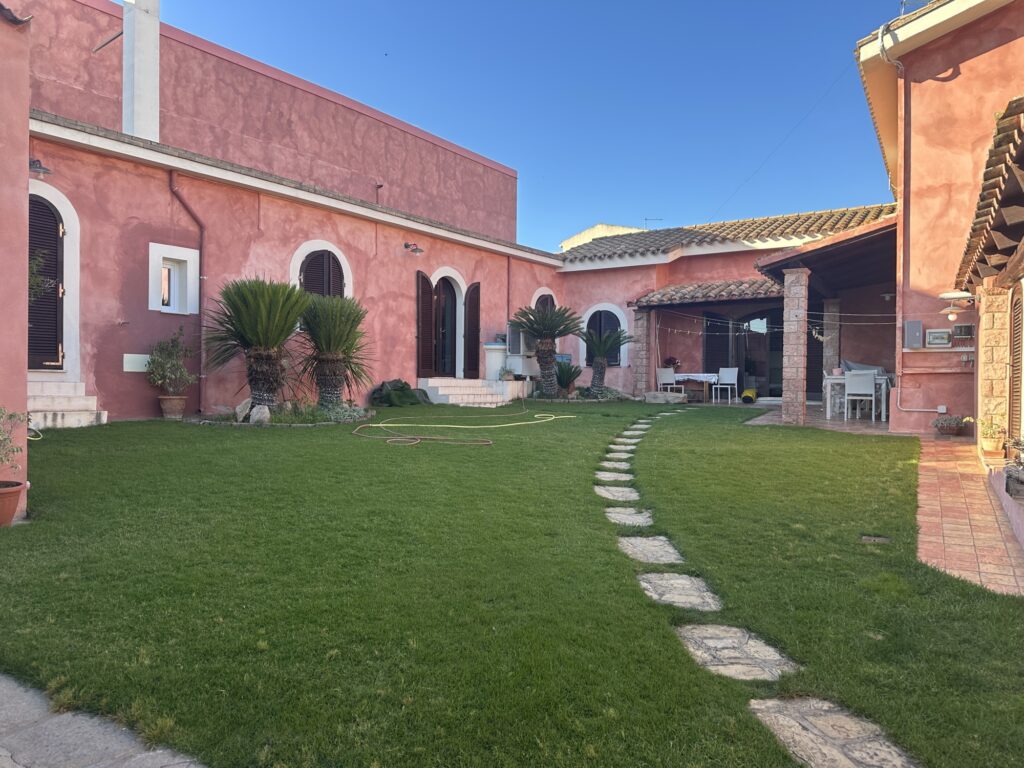
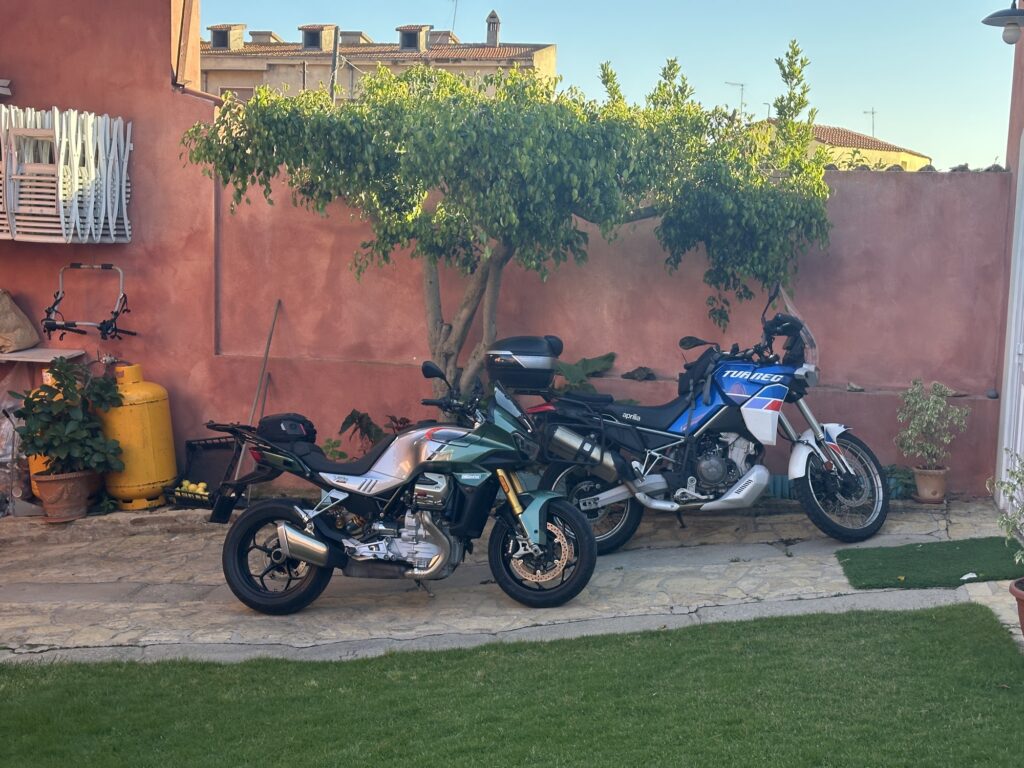
I’d spent the previous night in Monastir, a small town near Cagliari. I’d found the accommodation entirely by chance when, at around seven in the evening, I realised I definitely wasn’t going to find the radar station I’d been looking for that day, but it was probably time to decide where I was going to sleep. I opened Booking.com, searched for nearby accommodation and spotted a room among the first results with a rating of 9.1, offered at a discounted price of €45. It was only a few kilometres away, so I booked it and set off to find it. When I reached the little town, I entered the accommodation’s courtyard through an open gate, where a motorcycling couple on an Aprilia Tuareg were just parking up. Then the owner appeared, looking so much like Danny DeVito that for a moment I thought he’d stepped straight out of the film Ruthless People. He launched into an enthusiastic explanation in Italian, made a few phone calls and eventually handed me a key. That was pretty much the entire check-in procedure.
The accommodation turned out to be an excellent choice. It had a charming inner courtyard with beautifully maintained, soft grass, which I even wandered across barefoot for a while that evening. The hosts were extremely friendly, although they spoke absolutely no language other than Italian. This didn’t stop them from explaining everything in great detail, of course. I drew pictures, gestured, tried to scrape together a few Italian words, and somehow we always managed to understand each other in the end. This is exactly why I love these small, family-run places. They offer a much more personal experience than a famous hotel chain, and quite often you come away with a few interesting stories as well.
Breakfast, however, confirmed once again that the Italians and I have rather different ideas about the first meal of the day. In many places, an Italian breakfast consists almost entirely of sweet things. Nutella-filled croissants, jam pastries, treats generously sprinkled with sugar, and all of this first thing in the morning on an empty stomach. Personally, I really can’t manage that much sweetness at the beginning of the day. I decided that from then on I’d pay closer attention to what “breakfast included” actually meant in accommodation descriptions, because a proper coffee and something a little simpler to eat might suit me much better.
Calimoto and the Disappearing Radar Station
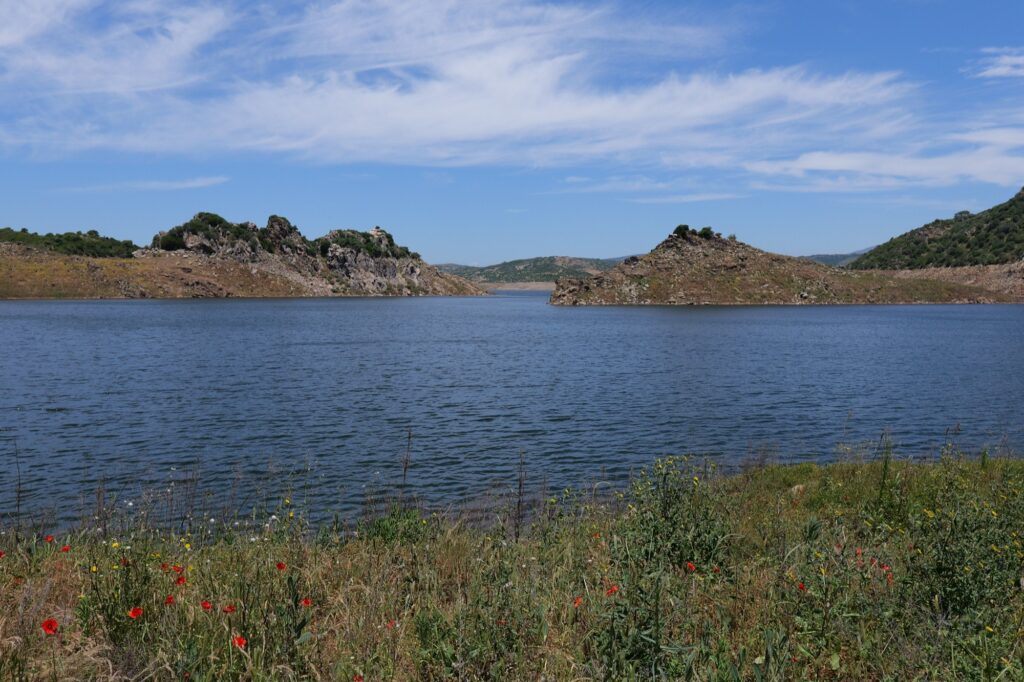
On my second full day of riding, my first objective was to finally find that mysterious radar station I’d searched for in vain the previous day. The owner of my accommodation in Villasimius had shown me a photograph of himself standing beside his motorcycle in front of an enormous antenna installation. He insisted I should visit it because the road leading there was beautiful and the place itself was something special. Naturally, I added it to my itinerary. Unfortunately, there had been some uncertainty about the exact coordinates from the beginning, and the Calimoto navigation app managed to complicate things further in its own distinctive way.
I have a rather long and complicated relationship with Calimoto. I’ve been using it for years, and although it has plenty of features that occasionally drive me up the wall, I’ve somehow become very fond of it. One of its greatest strengths is its ability to find particularly winding, enjoyable motorcycle routes between two points. I regularly make use of this: first I let it plan the route, and if I like the result, I add individual waypoints to lock in the sections I’ve chosen. Then I switch the routing between those points to the shortest route, hopefully preventing it from inventing one pointless detour after another. This is necessary because its winding-road algorithm sometimes behaves in a completely absurd manner. It can take you down a side street and bring you back onto the same main road a few hundred metres later, purely to squeeze in two extra bends.
The previous day, however, I’d failed to check the route properly. To make matters worse, my host couldn’t remember exactly where his favourite antenna was either, so he’d initially directed me to a place called Santa Barbara. The view from there was excellent, but the installation I was looking for was visible on the mountain opposite. Once I realised the mistake, I found the antenna on the map myself, and it appeared that my planned route would pass right beside it. I got back on the motorcycle and calmly continued my journey. It wasn’t until twenty or thirty kilometres later that I began to suspect something was wrong. Surely I should have reached the radar station ages ago. Instead, I was riding through an industrial area on the outskirts of Cagliari, with no antenna in sight. At some point along the way, Calimoto had recalculated my route without any particular warning and simply removed my destination. Thank you very much. How thoughtful.
So I set off once again to find the mysterious installation, and this time I succeeded. Well, almost. When I spotted the enormous white antenna, I immediately knew I’d arrived somewhere special, although I wasn’t entirely sure it was the same place my host had shown me. It turned out that there were several similar installations in the area. And the structure I’d discovered wasn’t a conventional radar station at all, but a rather serious piece of scientific equipment.
The Sardinia Radio Telescope – An Enormous Ear Listening to the Universe
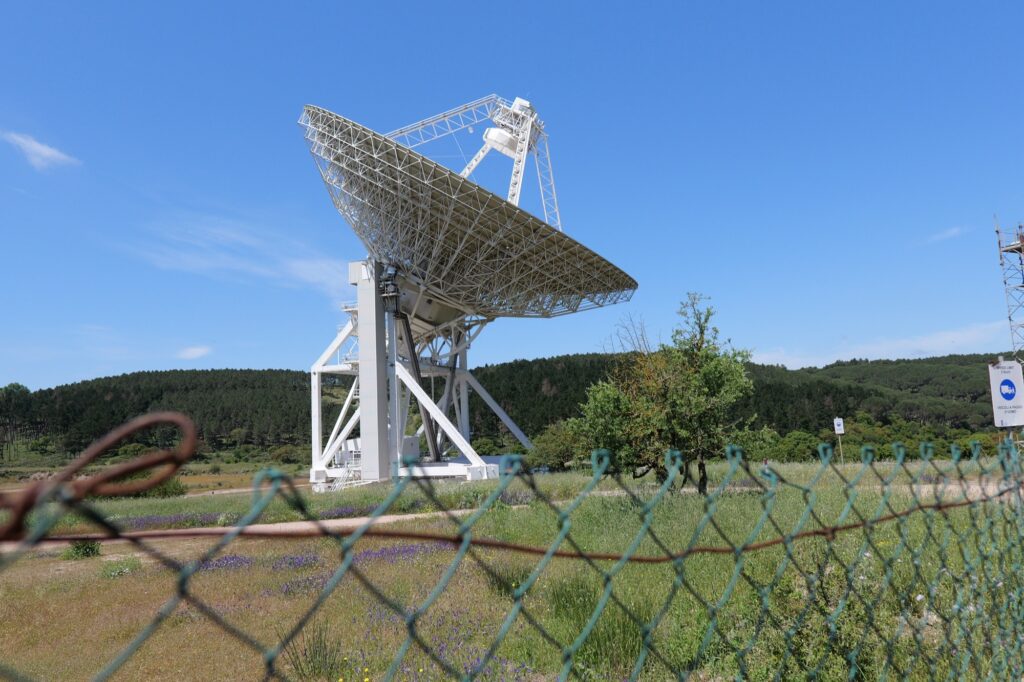
Near San Basilio stands the Sardinia Radio Telescope, or SRT, one of Europe’s most important radio astronomy facilities. Its enormous, fully steerable parabolic dish measures 64 metres in diameter, making it one of the largest radio telescopes of its kind in the world. Its surface consists of more than a thousand individually adjustable panels, allowing the shape of the reflector to be controlled with extraordinary precision. The telescope is used to study distant galaxies, pulsars and other astronomical objects, and also plays an important role in deep-space radio communications. All of this takes place in a relatively secluded Sardinian valley where you might initially expect to find agricultural buildings or a small industrial site.
The sight of the radio telescope was absolutely breathtaking. The enormous dish towered above the surrounding hills, dominating the entire landscape even from a considerable distance. Up close, it was particularly fascinating to appreciate the scale of the supporting structures and the incredible engineering achievement represented by a machine like this. I also met a Swiss motorcyclist there who had arrived on a Ducati Multistrada. We started chatting, and he told me how much he liked my Moto Guzzi. He was sixty-seven and was considering replacing his Ducati with a V100 Mandello because he felt the Multistrada had become too powerful for him. I found it interesting that the same motorcycle in which I was increasingly discovering a sporty character represented the possibility of more comfortable, relaxed riding to someone else.
Leaving the radio telescope behind, I headed back into the Sardinian mountains. I followed the SS387 towards Silius, then continued along smaller, sometimes remarkably remote side roads. One section was so overgrown that little tufts of grass were poking through the cracks in the middle of the tarmac. The road surface wasn’t up to the standard I’d enjoyed the previous day, but it was still quite pleasant to ride. Several motorcyclists came towards me too, suggesting that perhaps I hadn’t chosen a completely terrible route after all. The tarmac continued to offer good grip, the bends were enjoyable, and the area had a wonderfully peaceful atmosphere. As I travelled deeper into the island’s interior, the world of coastal tourism gradually disappeared, replaced by quiet villages, wooded mountainsides and roads that were almost completely free of traffic.
After 100,000 Kilometres, It’s Time to Slow Down
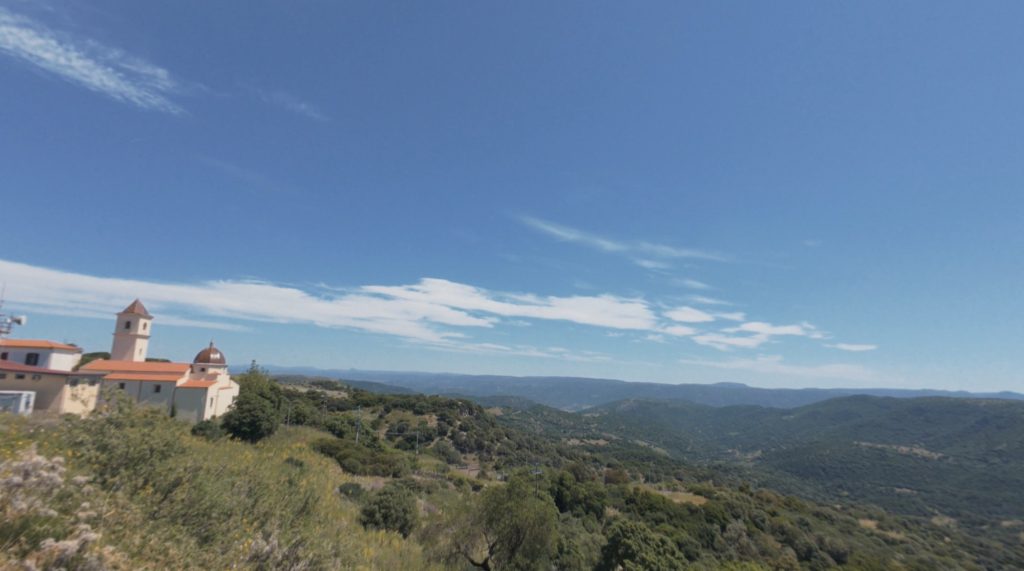
Near Silius, on the SP25, I climbed to a mountaintop offering an absolutely fantastic panorama of the surrounding countryside. I stopped for a while, switched off the engine and simply listened to the silence. The previous day, I’d reached my 100,000th kilometre of motorcycling, and somehow that milestone had prompted some new thoughts. I realised that in recent years I’d spent far too much time chasing kilometres. I’d set off in the morning, planned three, four or five hundred kilometres, and then spent the entire day trying to complete the distance I’d set myself. But in doing so, I’d often missed precisely the places that make motorcycle travel worthwhile in the first place.
I decided to change that on this tour. I’d already reached a hundred thousand kilometres, and the two-hundred-thousandth was still so far away that there was really no need to rush towards it. If I spotted an interesting side road, I’d turn onto it. If I found a beautiful viewpoint, I’d stop. If a ruined building, an unusual village or an interesting historical site caught my attention, I’d take the time to explore it. I didn’t want to ride as many kilometres as possible every day. Instead, I wanted to collect as many experiences as possible. Of course, that didn’t mean giving up the pleasure of a good set of bends, because they remain one of the greatest joys of motorcycling. I simply wanted to experience the journey more fully rather than measuring everything by the number of kilometres covered each day.
This thought fitted that day’s route particularly well, because the Sardinian interior was constantly tempting me to stop again and again. On the SP23, for example, I came across another breathtaking panorama that I simply couldn’t ride past. Interestingly, I’d already travelled along this short section the previous day, and I’d stopped in exactly the same place then too, trying to capture the landscape on camera. But it’s incredibly difficult to convey a view like this through a lens. The enormous open spaces, the mountain ranges stretching away one behind another and the depth of the distant valleys create an experience that can only truly be appreciated in person. These are the moments when I feel that motorcycling is so much more than simply getting from one place to another.
Lago di Mulargia – A Lake Where Time Stood Still
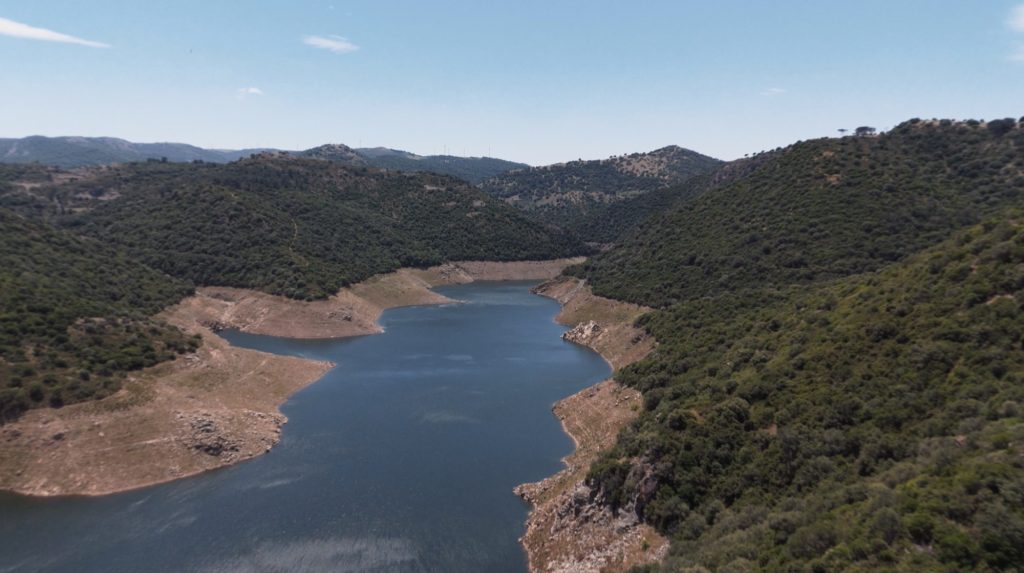
The road soon brought me to Lago di Mulargia, one of Sardinia’s largest artificial lakes. The Monte Su Rei Dam, built in the 1950s, impounded the river to create a reservoir covering nearly twelve square kilometres, which continues to play an important role in the region’s water management. The lake is surrounded by wooded hills and rocky mountainsides, and parts of its shoreline are particularly picturesque. Fishing, kayaking and hiking are all possible in the area, and boat trips are even organised on certain parts of the lake. But here too, I encountered a strange contrast that seemed characteristic of Sardinia: alongside the beautiful natural surroundings stood numerous abandoned, deteriorating structures.
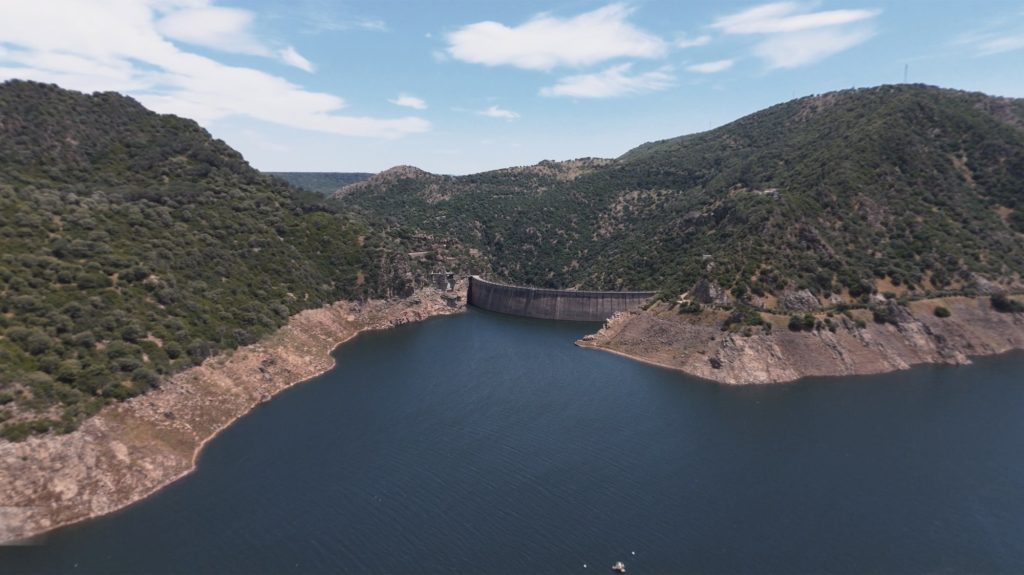
Around the lake, I found old benches, viewpoints, small buildings and the remains of former tourist facilities. In some places, it looked as though considerable development had once taken place, only for everyone to suddenly disappear. One building might have been a snack bar, while elsewhere there were traces of old rest areas. The condition of one small bridge was particularly thought-provoking, because the structure looked so badly damaged that it might collapse further at any moment. Whenever I encounter places like these, I find myself wondering who built them, what they had in mind, how long they operated and why they were eventually abandoned. I found a striking number of such structures in Sardinia, and I’m almost certain that there’s an interesting story behind every one of them. The area around the lake also contains remains of the ancient Nuragic civilisation, several thousand years old, so ancient and relatively recent history mingle here in a particularly unusual way.
SS198 – Potholes, Cracks and Still Absolutely Fantastic
After the reservoir, I finally reached the SS198, one of Sardinia’s best-known motorcycling routes. This mountain road, approximately 110 kilometres long, winds through the island’s interior among forests and rocky mountainsides, sometimes at altitudes of eight hundred to a thousand metres. It’s legendary among motorcyclists, and I was very curious to discover whether it really lived up to its reputation. My first impression, however, was rather mixed. Some sections had been beautifully resurfaced, while elsewhere I encountered cracked, potholed tarmac that was in quite poor condition in places. There were even stretches where the entire upper wearing course had disappeared, leaving me riding on the material underneath.
Yet if someone asked me whether I’d ridden on any bad roads in Sardinia and what they were like, I’d probably answer that they were good. That might sound contradictory, but there’s an explanation. On many Sardinian roads, I encountered a relatively coarse, grippy surface that provided surprisingly good feedback even when worn. Naturally, potholes and more serious defects had to be avoided, and at higher speeds they could be genuinely dangerous, but the tarmac itself often offered good grip even when its condition was far from ideal. This was particularly interesting on the Moto Guzzi, because the motorcycle’s stability and predictability helped make cornering enjoyable even when negotiating imperfections in the road.
There may be several reasons for this good grip. Sardinian road surfaces often contain relatively coarse stone aggregate, which, combined with suitable binding materials, can provide good mechanical grip, particularly in dry conditions. At the same time, Mediterranean heat, intense sunlight and considerable temperature fluctuations can accelerate the ageing of tarmac. Over time, the surface begins to crack, water penetrates the structure, and if maintenance is inadequate, potholes develop. So in Sardinia, it’s possible to encounter road surfaces that offer excellent grip and others in rather poor condition. The two characteristics aren’t mutually exclusive, although from a motorcyclist’s perspective, the ideal would naturally be flawless tarmac with equally excellent grip.
Despite its poorer sections, the SS198 quickly won me over. As I rode deeper into the mountains, the rhythm of the bends just kept getting better. Longer, flowing curves, tighter hairpins and a wonderfully varied succession of mountain bends followed one another, while the road alternated between forests and enormous panoramas across the valleys. After a while, I barely noticed the smaller imperfections because I was so absorbed in the riding. The Moto Guzzi was becoming increasingly responsive to my every input, and I was beginning to understand why so many motorcyclists rave about this road. The SS198 really does deserve its reputation.
Monte Santa Vittoria – When Both the Sat Nav and I Lose the Plot
After a particularly enjoyable section of the SS198, I decided to make a detour onto the SP53. I’d already ridden the next part of the SS198 on a previous visit, so this time I wanted to explore somewhere new. I’d spotted an interesting route on the map that first descended into a valley, then climbed back into the mountains on the other side near Esterzili. Nearby stands Monte Santa Vittoria, whose slopes are home to unusual natural attractions and archaeological remains for curious travellers to discover. Everything looked straightforward on the map: descend into the valley, climb the mountainside, admire the view and then return to my original route.
Reality, however, once again proved rather more interesting. I found myself travelling along increasingly narrow, occasionally very steep roads while the navigation system gradually lost touch with reality. There were hardly any road signs, and after a while I wasn’t even sure which mountain I was trying to climb. In one village, a local man came after me and began enthusiastically explaining that I was heading in the wrong direction. He spoke Italian, and all I managed to understand was that it had something to do with Santa Vittoria and that I shouldn’t be going the way I’d originally intended. In fact, that was the first moment I consciously realised I was probably looking for Monte Santa Vittoria. Eventually, the man pointed me in a particular direction, so I thanked him for his help and set off that way.
Then I encountered more local residents who also did their best to give me directions. None of them spoke English, but everyone was extremely helpful, while I became increasingly confused by the different instructions. Meanwhile, the GPS kept recalculating and sending me along roads that barely seemed to exist on the map. The whole situation was becoming slightly absurd. Eventually, I had absolutely no idea where I was going, but the surroundings were so beautiful that I didn’t particularly mind. Besides, getting lost in Sardinia is a very different experience from getting lost somewhere in a boring, flat landscape. Here, even a badly chosen route can reward you with fantastic winding roads and incredible views.
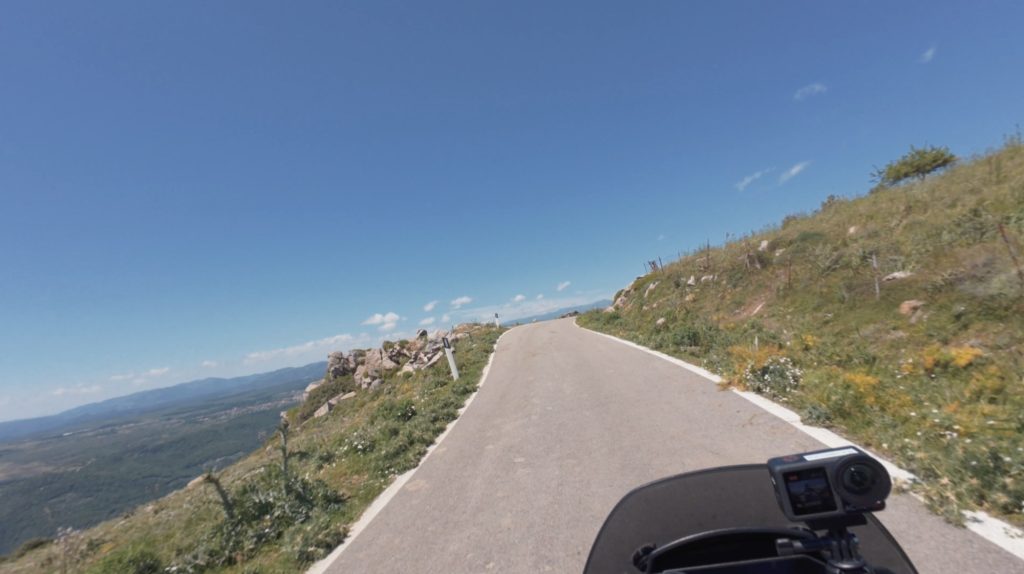
The real punchline only emerged later, when I was editing the video. Reviewing the footage, I noticed that one of the road signs clearly displayed the name Monte Santa Vittoria and even pointed in exactly the right direction. Unfortunately, I’d paid absolutely no attention to it while riding. Instead, I’d been blaming the GPS, trying to follow the locals’ advice and wondering at practically every other corner where I actually wanted to go. Sometimes, apparently, all you really need to do is read the road signs.
The end result was that I returned to the SS198 by a completely different route from the one I’d originally planned. Somehow, the navigation had eliminated a detour of approximately fifty kilometres, and I found myself back on the main road. This was both annoying and reassuring. Annoying because I’d missed several places that looked interesting, but reassuring because instead of the previous estimated arrival time of six in the evening, the navigation was now showing five. At least I might reach Cala Gonone in good time and perhaps even manage to have dinner.
A Comfortable Sports Bike – The Moto Guzzi V100 Mandello S
On the winding roads of the SS198, I finally began to understand the Moto Guzzi V100 Mandello S’s character. At first, the bike had presented me with rather unusual ergonomics. The relationship between the handlebars and seat felt strange, and it took a few kilometres before the riding position began to feel natural. Then suddenly, everything fell into place. I realised that the Mandello is essentially a comfortable sports bike. It’s a motorcycle with sporty handling deeply embedded in its DNA, but wrapped in a comfortable package that’s equally suitable for longer tours.
The riding position involves a slight forward lean, but not enough to become tiring over longer distances. The handlebars are wide enough to allow precise control with small inputs, yet not excessively wide, so they don’t interfere with sporty riding at all. The windscreen’s two basic positions also work well. In its lower setting, it allows clean, consistent airflow around the rider, while in the upper position it significantly reduces wind pressure without compromising the open view ahead. The motorcycle’s weight distribution and relatively low centre of gravity also contribute to its easy handling, something that’s particularly noticeable on tighter mountain roads.
The suspension, however, was perhaps an even bigger surprise. Based on my experiences so far, it dealt exceptionally well with imperfections in the road while keeping the motorcycle composed and predictable through corners. I experienced no unpleasant wallowing or uncertainty, and the Guzzi followed my chosen line so precisely that it felt as though it was running on rails. On a good winding road, it delivered a genuinely sporty riding experience while retaining enough comfort for long-distance travel. By this point, I felt that we were really beginning to understand each other. I was looking for faults, trying to identify where it could be better, but on this particular stretch of road, I simply couldn’t find much to criticise. Of course, there was still a long journey ahead of us, and I was certain the coming days would reveal more of its characteristics.
Gairo Vecchio – The Story of an Abandoned Town
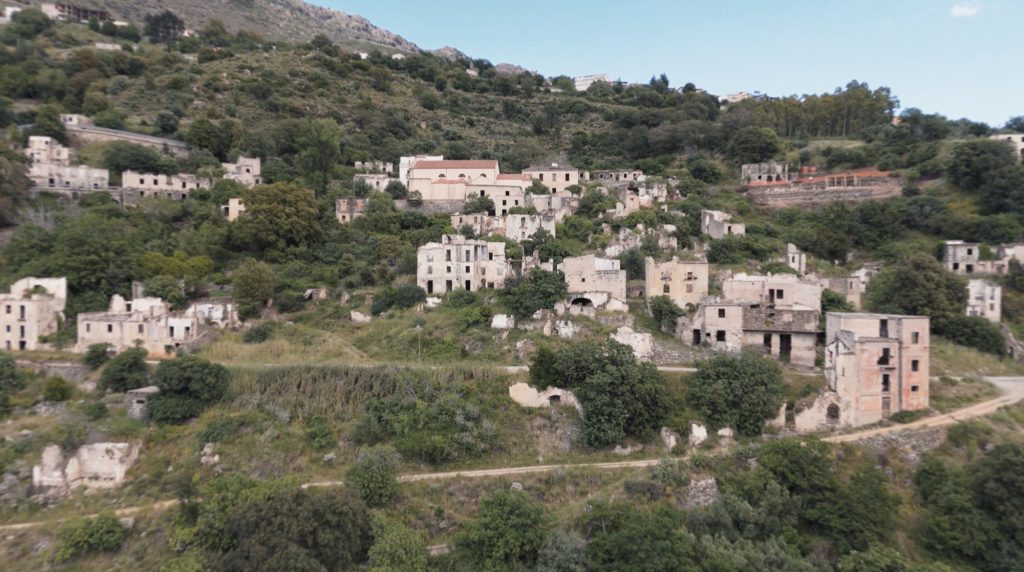
One of the most unusual attractions along the SS198 is Gairo Vecchio, or Old Gairo, which now stands on the mountainside as an almost completely abandoned settlement. The surrounding area was inhabited as far back as the ancient Nuragic period, but the story of the ruins we see today is primarily connected to the middle of the twentieth century. The extraordinary rainfall and flooding of 1951 caused severe damage to the town, the ground became unstable, and the buildings grew increasingly dangerous. Eventually, the residents were relocated to a new settlement, and old Gairo gradually became deserted. The new Gairo Sant’Elena was built higher up on safer ground, while the old houses were slowly left to decay.
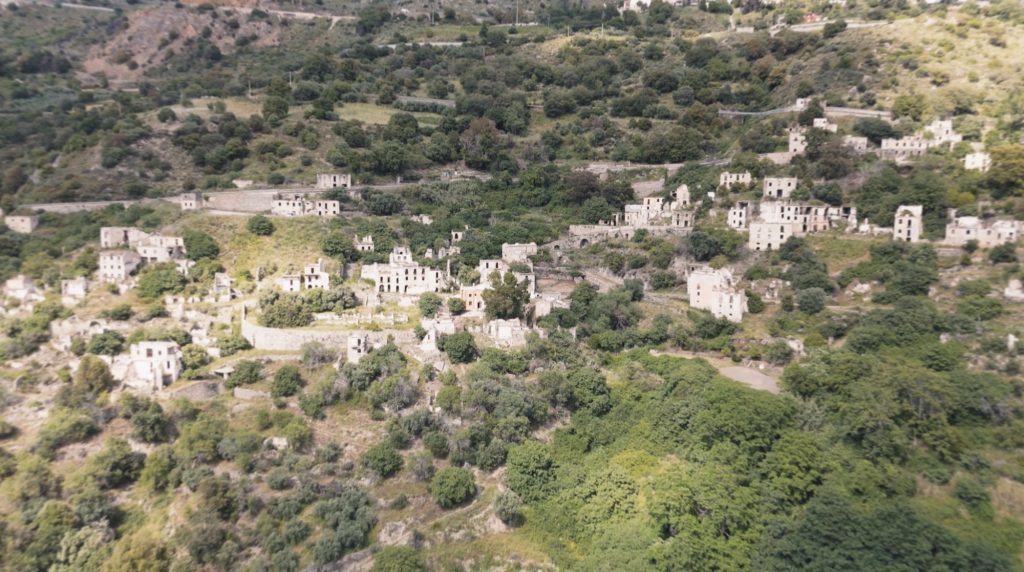
When I arrived, I was greeted by an extraordinary sight. Old stone houses stood side by side on the mountainside, many of them missing their roofs, while elsewhere empty openings gaped where windows and doors had once been. There was no traffic in the streets, silence hung between the buildings, and the entire settlement felt as though someone had simply stopped time. Some houses still retained recognisable traces of their former purpose, while others had been reduced to little more than fragments of walls. The church had been restored, and life had returned to a few buildings, but most of the settlement remained in ruins. Some former residents still return occasionally, for example to tend their old vegetable gardens, but overall, Gairo Vecchio can genuinely be described as a ghost town.
I’ve always been fascinated by abandoned places like this. Walking among the ruins, I inevitably find myself wondering what life must have been like here, who lived in these houses, where the school, the shop or the local meeting place stood, and how it must have felt to leave everything behind. Gairo Vecchio made a particularly strong impression on me because I wasn’t looking at a handful of scattered abandoned buildings, but the remains of an entire settlement. Hundreds of houses were left behind, once home to families, but today mostly reduced to walls that serve as reminders that life once existed within them.
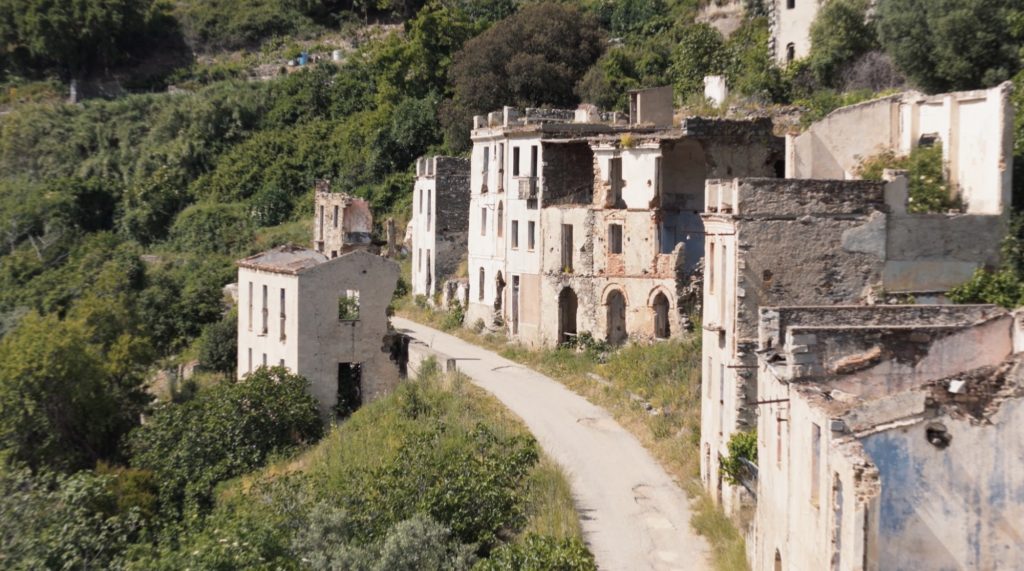
Exploring the ruins isn’t without danger, however. Many buildings have weakened structures, and walls or ceilings can collapse, which is why certain parts of the site are officially closed to visitors. I didn’t encounter any guards or other obstacles at the entrance, but that certainly doesn’t mean the dangers or local restrictions should be ignored. The settlement’s unique atmosphere can be experienced simply by walking through its streets and looking at the houses from outside. Gairo Vecchio became one of the most interesting stops of my day and fitted perfectly with my decision to start collecting stories rather than just kilometres.
Running Out of Petrol in the Mountains
After Gairo Vecchio, I continued north along the SS389 and then the SP56. The scenery was once again fantastic, and glimpses of the sea began appearing more frequently in the distance between the mountains. In several places, the road passed between towering rock faces and deep valleys, while the views kept tempting me to stop. Unfortunately, by this point, I was facing an increasingly unpleasant problem: I was running low on petrol. The Guzzi had been displaying its reserve warning for quite some time, and the estimated remaining range wasn’t particularly encouraging either. Eventually, it was showing approximately thirteen kilometres, while I was still deep in the mountains.
I’d made the situation worse by not paying enough attention to the fuel level. Petrol stations aren’t found in every village in the Sardinian mountains, and the roads between smaller settlements can be long and winding. Now I was descending a stretch of road with no guarantee that I could reach the nearest filling station. I tried to continue as economically as possible, and on one long downhill section, I even switched off the engine and coasted in neutral. Looking back, that wasn’t a good idea, because coasting with the engine switched off can present a safety risk, but at the time, my main concern was somehow reaching the next petrol station.
Fortunately, I eventually managed to fill up, although the price was now €1.96 per litre. That set a new record for the tour: my most expensive fill-up so far, and one of the most necessary. But the surprise came afterwards. I could only get approximately fifteen litres of petrol into the tank, even though the Mandello has a seventeen-litre fuel tank. In other words, despite the extremely low range displayed, there must still have been approximately two litres of fuel left. That certainly doesn’t mean it’s a good idea to regularly find yourself in this situation, because the remaining range can be heavily influenced by fuel consumption and riding conditions. Nevertheless, I was enormously relieved that I hadn’t ended up walking through the Sardinian mountains looking for petrol for a borrowed Moto Guzzi.
SS125 – The Real Highlight of the Day
After refuelling, I finally reached the stretch of road that had been one of my main reasons for wanting to visit Sardinia. The SS125, also known as the Orientale Sarda, is one of the island’s best-known and most important historic routes, connecting much of the eastern coastline from north to south. For motorcyclists, the mountain section between Urzulei and Dorgali is particularly legendary. Here, the road winds between rock faces, across steep mountainsides and occasionally above deep ravines, with an exceptionally varied layout. Faster, flowing curves alternate with tighter bends, while the tarmac on this particular section is especially good.
The SS125 isn’t the sort of road where you simply travel from one town to another. Here, every bend offers a new experience, every climb reveals another panorama, and riding becomes so natural that you almost forget about everything else. And it was precisely on this section that the Moto Guzzi V100 Mandello S truly demonstrated why I’d grown so fond of it in such a short time. The suspension followed the corners steadily and predictably, the bike changed direction effortlessly, and the V-twin’s distinctive power delivery made accelerating out of every bend a pleasure. Thanks to its relatively low centre of gravity and well-judged ergonomics, the Guzzi felt far sportier than I’d initially expected from a touring motorcycle.
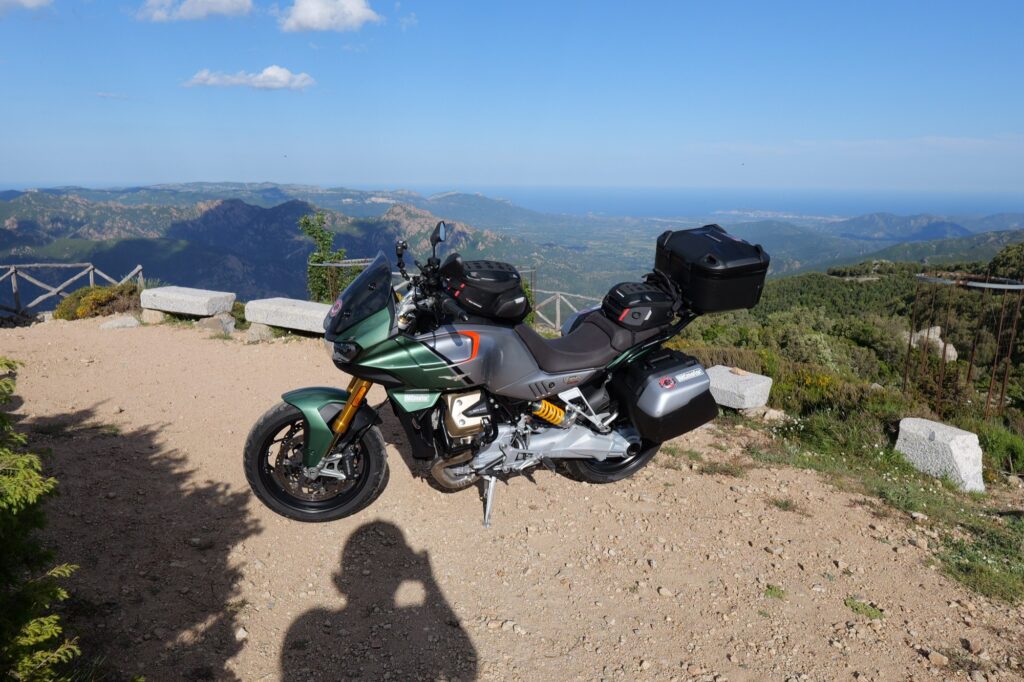
However, this road isn’t just enjoyable; it demands serious concentration too. Some corners tighten unexpectedly, the curves change rapidly, and on several sections, enormous drops lie just beyond the crash barriers. It’s particularly important not to feel compelled to use all of the motorcycle’s performance here, because a badly chosen line or an unexpected obstacle could easily cause serious trouble. On the SS125, the pleasure of motorcycling and the need for concentration go hand in hand. And I increasingly felt that the Mandello and I had found our shared rhythm.
By the end of the day, the SS125 had become one of my most memorable motorcycling experiences in Sardinia. And that’s saying something, because I’d already ridden some fantastic roads through the Settefratelli mountains the previous day, while the SS198 had also set the bar extremely high. But the road between Urzulei and Dorgali somehow brought together everything I look for in a great mountain road: the scenery, the rhythm of the bends, good tarmac and that special feeling when rider and motorcycle work in perfect harmony. It’s no coincidence that so many people consider the SS125 Sardinia’s best motorcycling road. I now understood exactly why.
Cala Gonone – 284 Kilometres Later
I finally arrived in Cala Gonone in the late afternoon, where I’d be riding with Fotelmotoros Peti and his friends over the following days. The day’s journey had covered 284 kilometres, which might not sound particularly impressive at first, but with so many stops, wrong turns and discoveries in the Sardinian mountains, it had been an incredibly eventful day. That morning, I’d still been trying to navigate the steep streets of Monastir to get out of town. Then I’d found the enormous radio telescope, explored the area around Lago di Mulargia, enjoyed the fantastic winding roads of the SS198, managed to get thoroughly lost near Monte Santa Vittoria, discovered the ghost town of Gairo Vecchio and nearly run out of petrol in the mountains. And all of that in a single day.
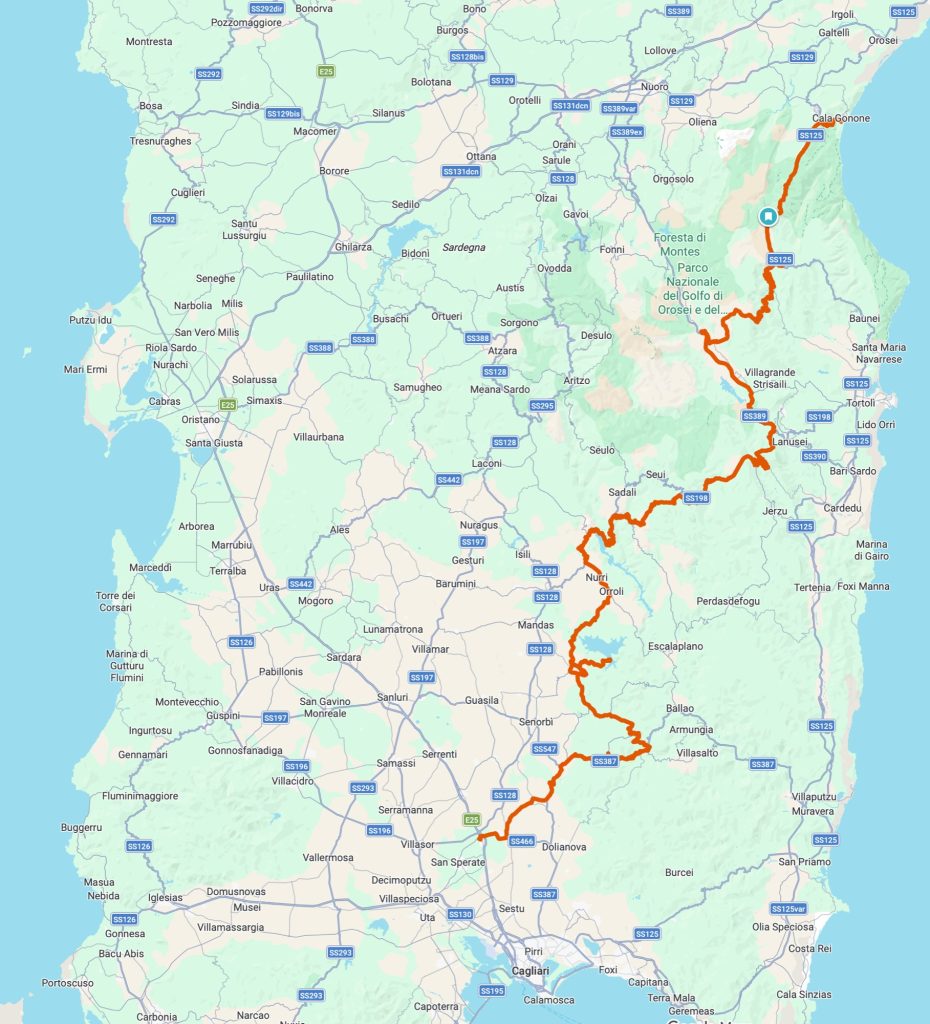 My accommodation in Cala Gonone cost €52 per night, which seemed a perfectly reasonable price considering the area. By the evening, all I wanted was to unload my luggage, have dinner and reflect on everything that had happened over the previous two days. I was growing increasingly fond of the Moto Guzzi V100 Mandello S, and I could already sense that I’d learn much more about it in the days ahead. The island itself seemed almost inexhaustible. Whichever direction I took, I discovered more wonderful winding roads, unusual historical sites and breathtaking panoramas.
The second day of The Great Escape had therefore confirmed once again that I’d made the right decision not to plan this journey down to the smallest detail or follow a rigid timetable. Of course, the navigation sometimes took me somewhere completely different from where I wanted to go, and a few interesting destinations were ultimately missed. But in return, I discovered roads and places that I might never have encountered on a strictly planned tour. Getting lost in Sardinia often isn’t really getting lost at all. It’s simply another opportunity to discover something unexpectedly beautiful. And that’s exactly why I came here. I set off because of the SS125, but along the way, an entire island was beginning to reveal itself to me.
Watch the second episode of the motorcycle touring series here: