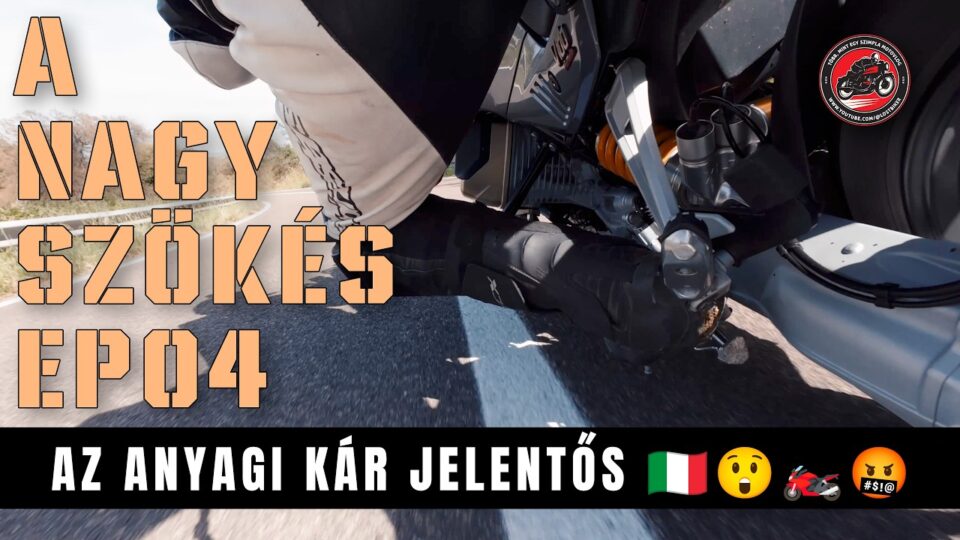
Sometimes, the difference between a motorcycle tour becoming a wonderful memory or ending in a serious accident comes down to very little indeed. I experienced this first-hand in Sardinia when I hit an enormous pothole on what appeared to be a completely harmless, wide stretch of road. I managed to avoid the first one, but in doing so, I rode straight into a much bigger one. The impact was so violent that, for a moment, I genuinely thought my tour was over. Fortunately, the Moto Guzzi V100 Mandello S’s suspension somehow managed to cope, and I stayed on the bike, but the incident still had serious consequences. The wheel rim was bent, and the top box flew off the motorcycle. Yet the day was originally supposed to be about something entirely different: a ride of approximately four hundred kilometres through central and western Sardinia, taking in historical sites, winding mountain roads and beautiful panoramas.
I Wasn’t in a Good Mood Even That Morning
On Thursday, 29 May, the sixth day of the tour, we set off from Cala Gonone towards Alghero. This time, my riding companion was Johnny (not Kiss), who was riding a Yamaha Tracer 9 GT. Unfortunately, the day got off to a bad start before we’d even left. In my room, the camera mounted on my helmet, which I’d placed on a counter, simply fell off, taking the audio recorder and the entire mounting system with it. In an instant, everything I’d believed about the perfect helmet camera mounting solution a few years earlier came crashing down. Back then, I’d made a video confidently demonstrating my tried-and-tested solution. Now I was seriously considering removing that video from the channel altogether.
I’d fitted a three-piece adjustable camera mount made by a company called MotoRadds to my current helmet. In theory, the design can be adapted to the contours of different helmet chin bars, but in reality, I hadn’t been convinced by it even when it first arrived. The adhesive contact areas were small, and the three separate components didn’t inspire much confidence in the overall strength of the assembly. I’d previously tried fitting it to several helmets, but it hadn’t suited any of them properly. It finally fitted my new helmet, so I decided to give it a chance. Since I didn’t entirely trust the factory adhesive, I reinforced the mounting with a two-part modelling adhesive. I’d used this glue before, and it had proved so strong that removing a camera mount from an old Schuberth helmet had practically required industrial demolition equipment. Yet after just a few days, the entire assembly detached from my new helmet without putting up any meaningful resistance. Once again, the lesson was that the advertised strength of an adhesive isn’t enough when mounting a camera: it also has to work with the particular surface, material and shape involved.
Unfortunately, the loss of my helmet camera mount was just one item on an increasingly long list of technical problems. I’d also fitted cameras to the Moto Guzzi’s crash bars, because the protective frame seemed particularly suitable for capturing unusual footage from a low angle. I alternated a DJI Osmo Action 5 Pro between the right and left sides, and initially the arrangement seemed like an excellent idea. However, the Guzzi’s transverse V-twin engine transmitted vibrations to the crash bars at higher revs that were far stronger than I’d anticipated. At normal cruising speeds, there was no particular problem, but when I started using the engine at considerably higher revs, the vibrations increased dramatically. The camera batteries began making tiny movements inside their compartments, gradually grinding away the internal foam support in the battery covers. Eventually, one camera stopped working properly with either battery, while one of the batteries wouldn’t work in either camera. Judging by the symptoms, the electrical contacts may also have been damaged.
The camera mounts didn’t fare any better. The plastic components of the quick-release bases gradually loosened and deformed under the constant vibration, developing increasing amounts of play at the joints until several mounting components became completely unusable. I found this particularly frustrating because we’re talking about action cameras and accessories specifically marketed for them. Equipment advertised as being suitable for use in extreme conditions. Yet all it took was running a Moto Guzzi engine between six and eight thousand rpm for part of the equipment to give up. Of course, sustained high-frequency vibrations transmitted through crash bars represent a completely different kind of stress from a single impact or jolt, but knowing that didn’t make me feel any better. Especially as this was happening on a tour where my filming equipment was an essential part of my work.
The Pothole That Almost Ended the Journey
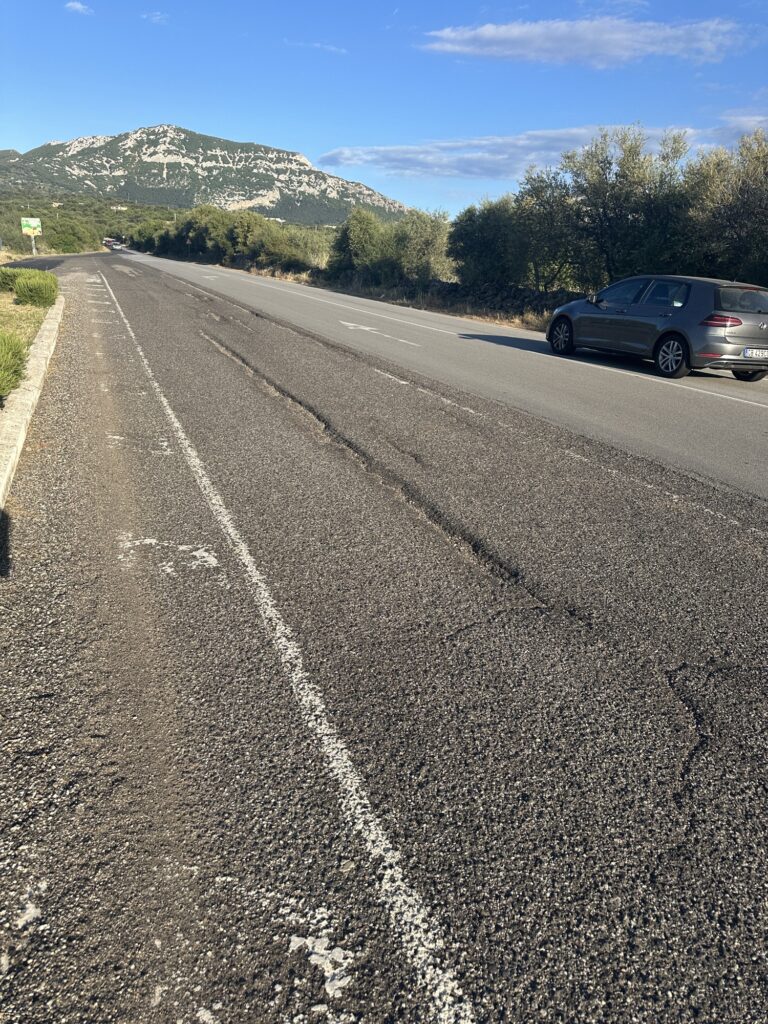
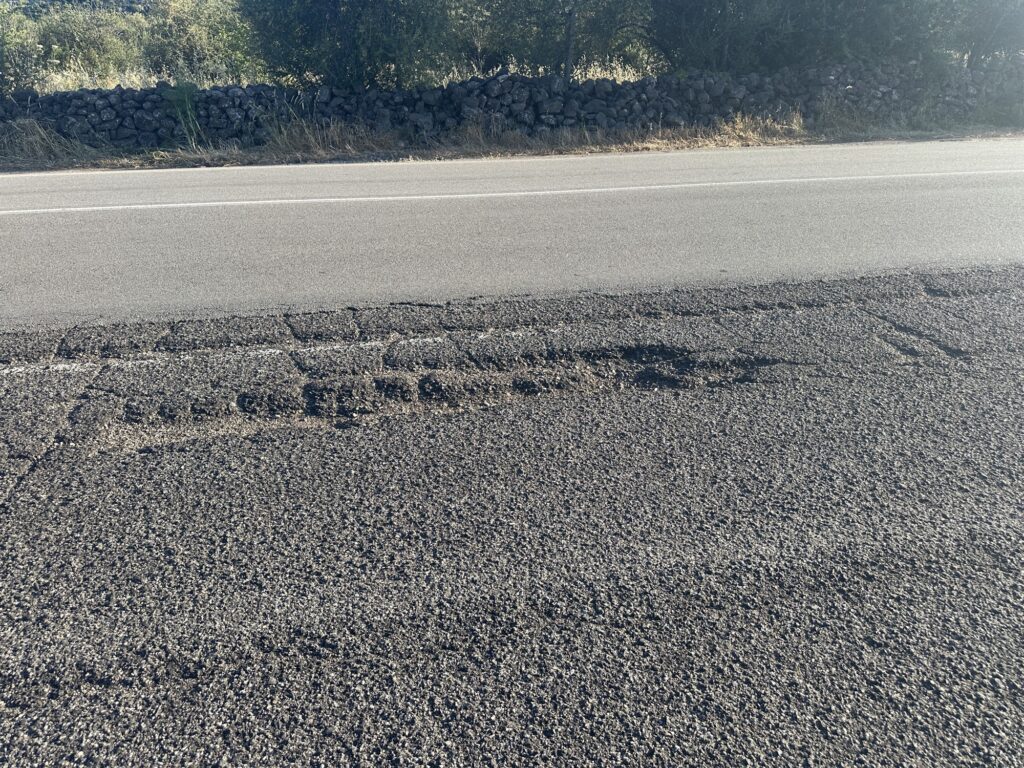
While I was busy getting annoyed about the cameras and their mounts, the real trouble was still waiting for me. Leaving Cala Gonone, I was travelling along a wide, relatively straight stretch of road at approximately 70–80 km/h. The road surface consisted of two different colours of tarmac, and at the point where they met, I suddenly noticed a serious defect. I managed to avoid the first pothole, but that evasive manoeuvre took the motorcycle straight into a much deeper and larger hole. The impact was absolutely brutal. The suspension compressed violently, the wheels were subjected to an enormous load, and for a moment I genuinely wasn’t sure whether I’d manage to stay upright. Had I hit the pothole at a less favourable angle, I could easily have crashed.
Fortunately, the motorcycle remained stable, but the rear wheel took such a tremendous hit that the SW-Motech top box simply detached from its mounting plate. First, the rear retaining tab came loose while the front tabs were still holding the box in place. This caused the entire assembly to tip forwards and strike me hard in the back. Then the front attachments gave way as well, and the box flew off the motorcycle. By the time I’d stopped, the beautiful top box, previously in immaculate condition, had acquired scratches and impact damage on several corners. I was so fed up with everything by then that I didn’t even feel like opening it. I didn’t want to find out what might have been damaged inside, because some of my filming equipment was travelling in there too. The most important thing, however, was that I hadn’t crashed, and the motorcycle was still in one piece.
The following day, I returned to the scene to take a closer look at exactly what had happened. That’s when I fully realised how treacherous the road defect had been. The traffic lane consisted of several different strips of tarmac, and the painted road markings guided vehicles towards a line where two enormous potholes lay one after the other. The locals clearly knew about the problem, because almost without exception they took a different line past them. I, naturally, had followed the road markings, and by the time I noticed the danger, it was too late. There were no warning signs or markings indicating damaged road surfaces anywhere nearby. Looking at the size and depth of the potholes afterwards only strengthened my conviction that I’d been incredibly lucky. An impact like that could easily have caused a much more serious accident.
Sardinia’s Roads: The Dark Side of a Motorcycling Paradise
In previous episodes, I’ve spent a great deal of time praising Sardinia’s roads. In the south-east and east of the island, I’d ridden winding roads that rank among Europe’s finest motorcycling routes for grip, layout and sheer enjoyment. Even on more heavily cracked tarmac, the feedback had been good, and I often found myself wondering how it was possible to enjoy cornering so much on a road in such poor condition. But central Sardinia had some very different experiences in store for me. Here, we weren’t simply talking about worn tarmac or surface cracks, but genuinely dangerous potholes, sometimes three to five centimetres deep. What’s more, I encountered them not only on remote minor roads but also on wide connecting routes resembling fast main roads.
Particularly dangerous were the defects that formed where two different strips of road surface met. In these places, potholes appeared not individually but in long, continuous lines, making it easy for a wheel to drop into a groove. On a motorcycle, this is particularly unpleasant because a long depression can also steer the front wheel off its intended line, especially if the bike encounters it while leaning or changing direction. There were also sections where so many potholes followed one another that avoiding every single one seemed almost impossible. This was no longer the sort of bad road that you might consider an interesting part of motorcycling. It genuinely required serious attention and caution.
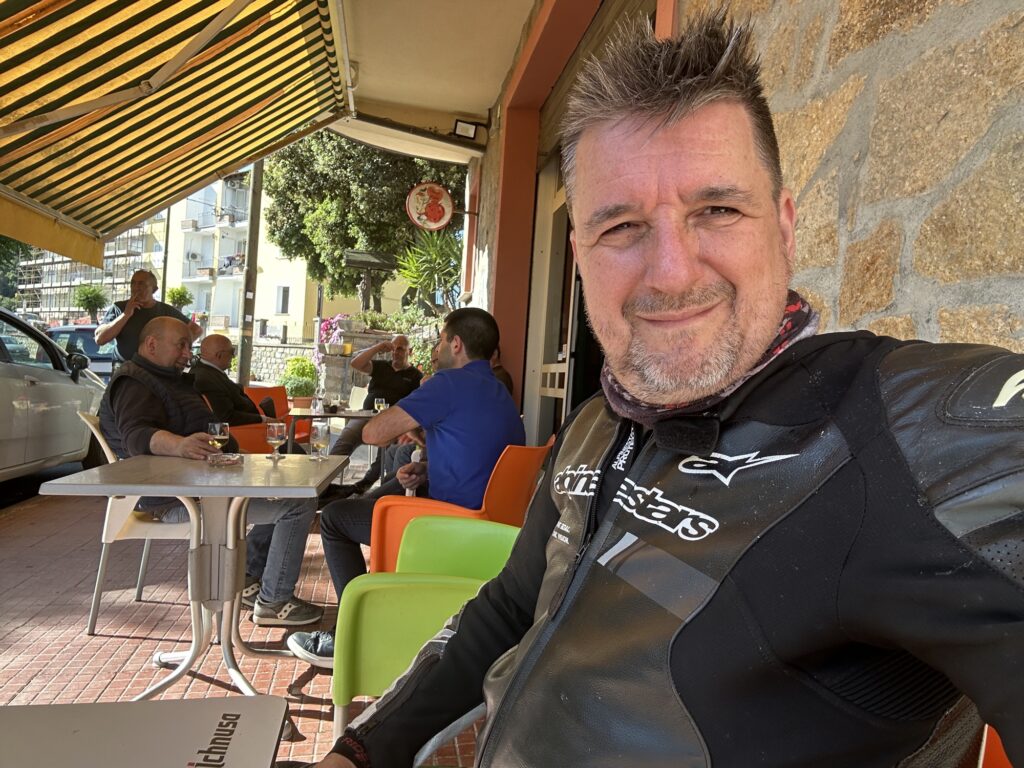
After the morning’s events, I wasn’t in a particularly good mood, and for a while, every new road defect made my stomach tighten. Traffic provided a few more surprises too. At one junction, a driver simply pulled out in front of me even though I had priority. He noticed me at the last moment and tried to make amends with an apologetic gesture, but that hardly made me feel any calmer. I felt I’d already experienced quite enough dangerous moments for one day. I decided that at the next suitable opportunity, I’d stop for a good coffee, try to recover my good mood and finally concentrate on the reasons I’d come to Sardinia in the first place: riding motorcycles and exploring the island.
Nuraghi and a 3,500-Year-Old Civilisation
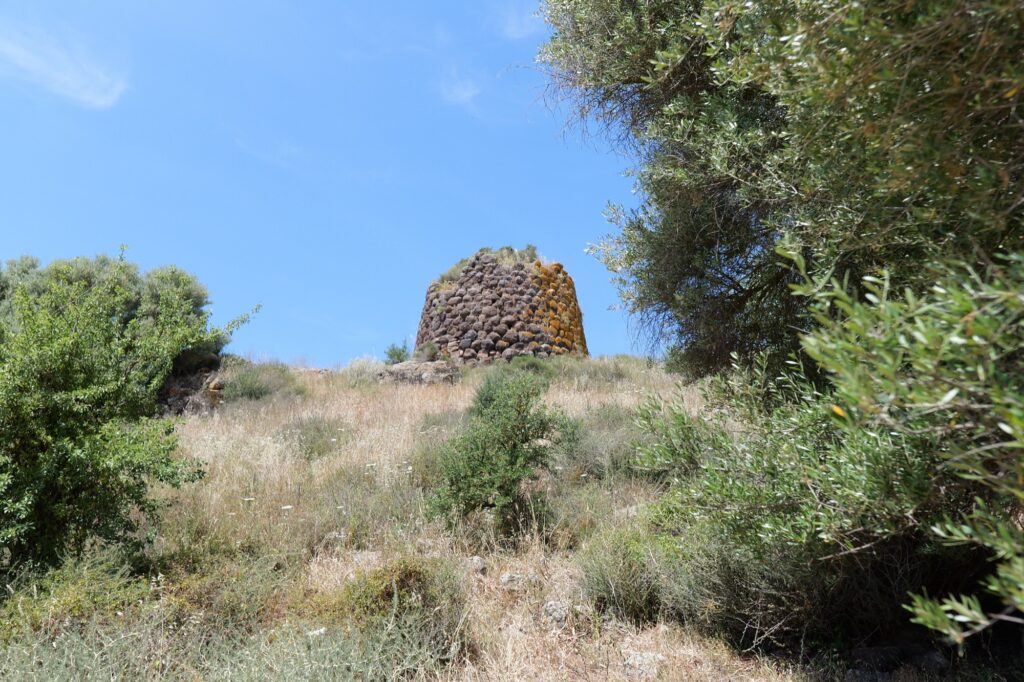
One of Sardinia’s special characteristics is that, alongside its wonderful natural surroundings, it also possesses an exceptionally rich historical heritage. Among the island’s best-known symbols are the nuraghi, mysterious stone towers built thousands of years ago, thousands of which can still be found across the landscape today. The Nuragic civilisation, which flourished during the Bronze Age approximately 3,500 years ago, constructed these towers from enormous, roughly shaped stone blocks without using mortar. The stones remained in place thanks solely to their own weight and the construction techniques used, and many of these towers are still standing today. There are several theories about their purpose: some believe they served as fortifications or watchtowers, while others suggest religious or communal functions. It’s quite possible that not every structure served the same purpose.
The remains of more than seven thousand nuraghi are known across Sardinia, although some estimates suggest that considerably more may originally have existed. These remarkable structures are as closely connected to the island’s history as medieval castles are to other parts of Europe. We stopped beside one such monument, Nuraghe Athethu. It’s astonishing to think that when these towers were being built, many of the European countries, cities and cultures we know today didn’t even exist. Yet the Nuragic people were already constructing monumental buildings that, several millennia later, still help define Sardinia’s identity. At a place like this, it’s easy to forget your frustrations, at least for a little while.
The Montiferru Mountains – Volcanoes and Endless Panoramas
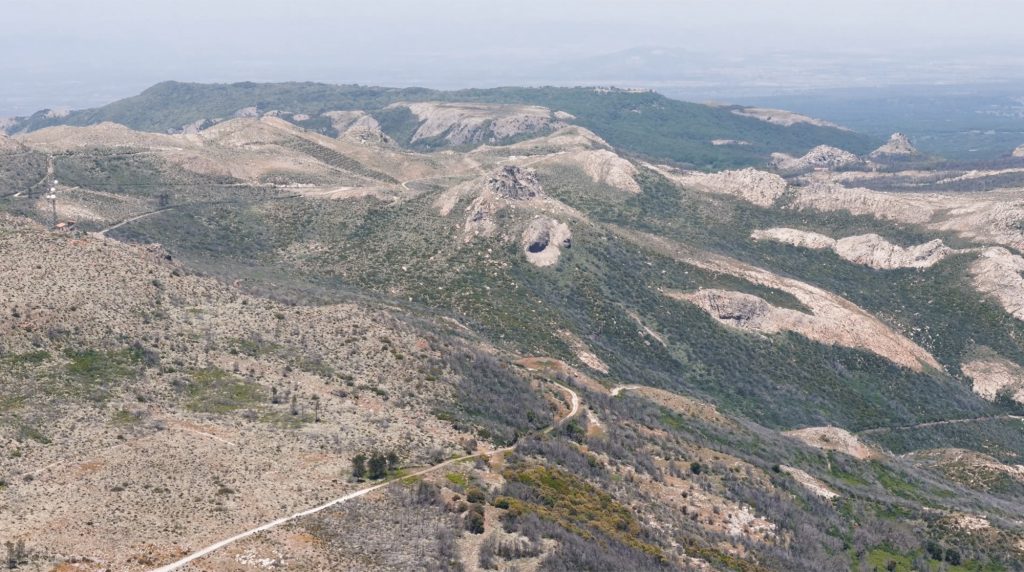
After a coffee and some refreshments, we continued through the Montiferru Mountains in west-central Sardinia. The route we’d put together that morning included an interesting attraction, but by the time we arrived, I couldn’t really remember exactly what we were looking for. Perhaps a waterfall, although of course there was no guarantee it would actually have any water during the summer. In any case, we turned off the main road and began climbing into the mountains. The landscape was completely different from what I’d become accustomed to in eastern Sardinia over the previous few days. Montiferru is an ancient volcanic region, its surface shaped by basalt formations, the remains of old lava flows and unusual rock structures. The western slopes of the mountains descend all the way to the sea, offering views across enormous distances from the higher points.
As we rode along the mountain ridge, bare peaks, deep green valleys and rocky mountainsides alternated, with the blue of the sea occasionally appearing in the distance. A devastating wildfire had swept through the area a few years earlier, and its traces were still visible, but nature was slowly beginning to reclaim the damaged landscape. It was particularly interesting to see how patches of surviving vegetation mingled with newly green mountainsides. I got the drone out too, because the enormous scale of the landscape could really only be conveyed from above. From the air, the distinctive shape of the entire mountain range became clear, along with the valleys cutting through the ancient volcanic terrain and the mountains stretching towards the sea.
In the end, we never found the waterfall we’d been looking for. We spent a little while trying to work out where we might go next, but we didn’t want to venture onto more serious off-road terrain with these motorcycles. Had I been riding my KTM 690 Enduro, I’d certainly have explored further, but the Moto Guzzi V100 Mandello S and Johnny’s Tracer weren’t exactly designed for that. Eventually, we settled for the views, which had exceeded our expectations anyway. After the unpleasant events earlier in the day, a peaceful stop in such spectacular surroundings was particularly welcome. From there, we continued along the SP19, enjoying more pleasant winding roads before arriving at our next historical destination.
Montiferru Castle – A Reminder of a Medieval Power Struggle
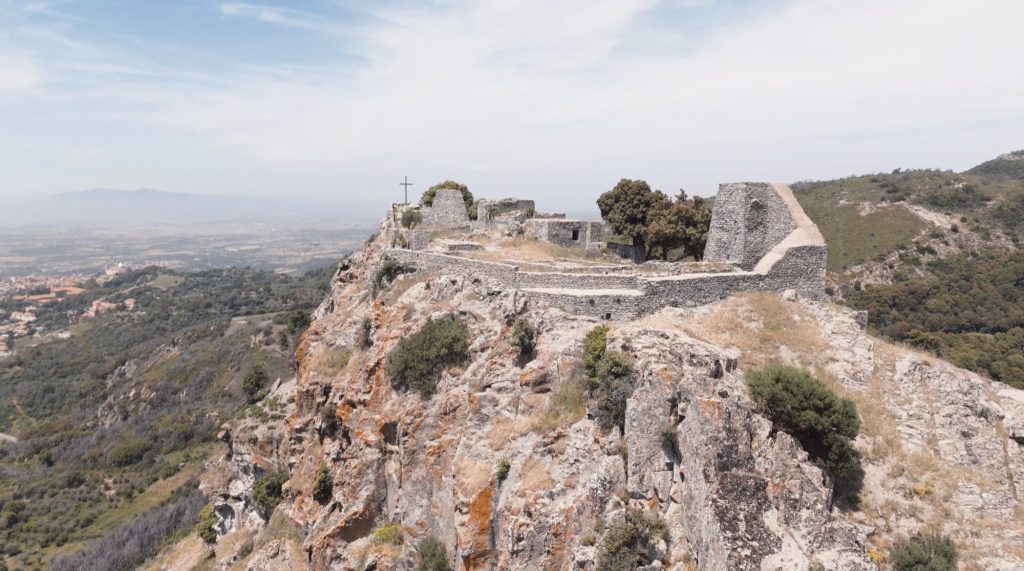
Castello del Montiferru, or Montiferru Castle, was built in the 12th century, when Sardinia was still divided into several smaller kingdoms known as giudicati. The castle was commissioned by the ruler of Torres to protect his territories against the neighbouring power of Arborea. In the longer term, however, the plan wasn’t particularly successful, because barely a century later, the castle was already in Arborea’s possession. The island’s history during those centuries was extremely turbulent. Alongside the various local rulers, the Pisans, Genoese and later the Aragonese all competed for considerable influence. Eventually, the castle lost its original military importance and gradually fell into ruin.
Today, only parts of the walls and a few architectural details remain to remind visitors of the former fortress, but the site is still a remarkable attraction. From its elevated position, there’s a wonderful panoramic view of the Montiferru region, making the ruins worth visiting for the scenery alone. Of course, visitors have to climb the steps leading to the castle, which is a rather less appealing prospect in motorcycle gear during the summer heat. At moments like these, I’m particularly grateful for my drone, which can reveal a location from angles that would otherwise require a considerably longer walk. Naturally, nothing can replace the experience of visiting somewhere in person, but on a motorcycle touring day covering hundreds of kilometres, you sometimes have to compromise when it comes to time.
The Supposedly Beautiful Coastal Road That Failed to Impress Me
After the Montiferru Mountains, we turned towards Sardinia’s western coastline. The plan was to follow the sea for a considerable distance towards Alghero, enjoying the coastal views along the way. The other members of our group had already ridden the route and had expressed some opinions about it, but all I’d taken away was that it was an interesting road worth seeing. Only later did I discover that what I’d interpreted as a positive recommendation had actually been more of a warning. From a motorcycling perspective, the coastal section turned out to be nowhere near as exciting as I’d hoped.
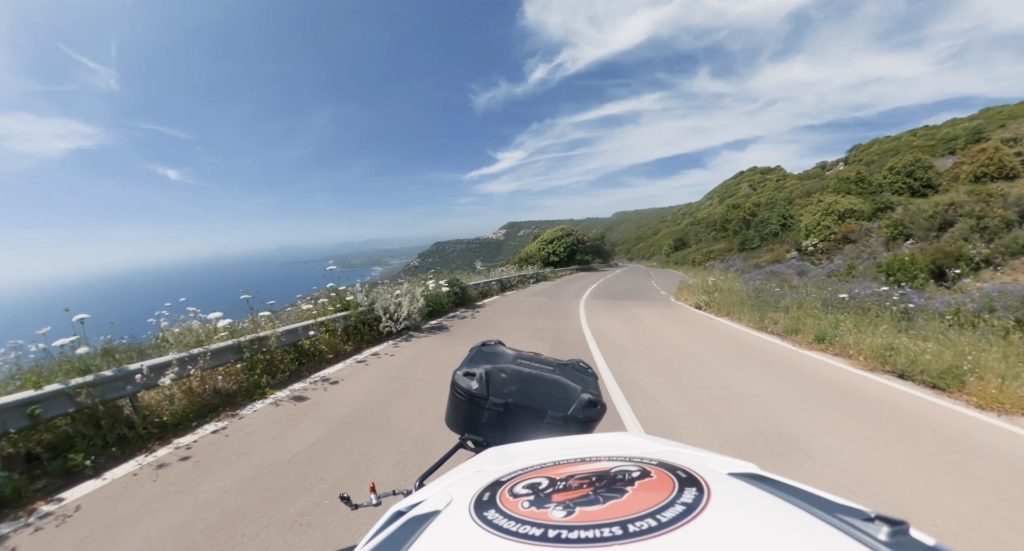
The sea was, of course, a beautiful blue, white waves were breaking along the shore, and the Mediterranean landscape was pleasant enough in itself. Unfortunately, the road often ran some distance from the water or was bordered by such dense vegetation that the sea was barely visible. What I really love are dramatic coastlines divided by towering rock faces, where the road winds high above the water and every bend reveals another bay. There are some absolutely extraordinary examples along the northern coast of Corsica, for instance. By comparison, this stretch of Sardinia’s western coast offered pleasant but not particularly memorable riding.
The road surface wasn’t convincing either. We encountered numerous potholes, including some very serious ones, which was particularly unwelcome after my experiences that morning. Nevertheless, I didn’t want to complain too much. After all, I was still riding a motorcycle in Sardinia, in beautiful weather, near the sea. Things could certainly have been worse. By then, however, I had no desire to enter the centre of Alghero, particularly as refuelling would have meant negotiating the town’s traffic. So we turned off the SP105 onto a smaller connecting road towards Villanova, and it soon became clear that we’d made a much better choice.
SS292 – Finally, a Proper Sardinian Motorcycling Road!
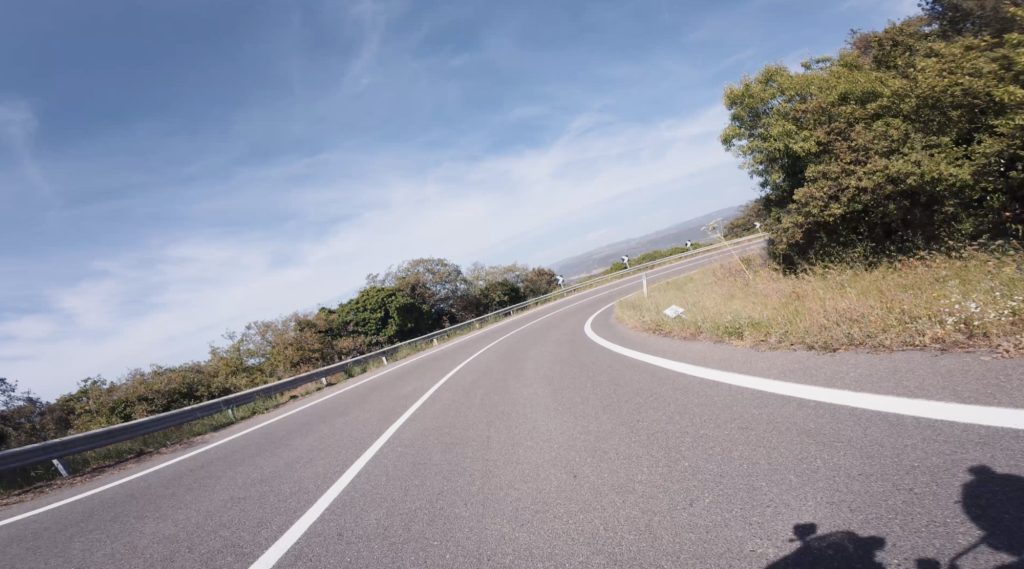
Almost immediately after leaving the coastal road, the character of the ride changed. The smaller connecting road wound pleasantly through the hills, and the tarmac was noticeably better than what we’d experienced over the previous hour. Then we reached the SS292, which runs between Oristano and Alghero through the mountains further inland from the coast. Within the first few kilometres, I knew we’d finally found the sort of road I love so much about Sardinia. Long, flowing bends, corners with excellent visibility, superb tarmac and beautiful mountain panoramas followed one another. The SS292 was unquestionably the best motorcycling section of the day.
Unfortunately, an oncoming Fiat Panda managed to seriously interrupt the enjoyment for a moment. Two elderly people were sitting in the little car, which also displayed a learner-driver sign. The driver negotiated one of the bends so badly that the vehicle came dangerously close to me, and the driver had already seemed uncertain in the previous corner. Fortunately, Johnny wasn’t riding immediately behind me, so the situation didn’t develop into anything more serious, but for a moment my stomach tightened again. On Sardinia’s mountain roads, you need to stay alert not just because of potholes, but also because not every oncoming driver can keep their vehicle properly within their own lane.
After the Panda, however, we were finally able to enjoy the road without interruption. The Moto Guzzi V100 Mandello S once again demonstrated the sporty character I’d grown so fond of over the previous days. It handled the long, sweeping bends fantastically. Leaning from one curve into the next felt effortless, the suspension kept the motorcycle composed, and the brakes performed convincingly in every situation. I know that many people consider calling the Mandello a sports bike an exaggeration, and I’ve already received a few comments about it. Nevertheless, I still believe that a motorcycle doesn’t necessarily need racetrack-inspired bodywork and an extreme riding position to possess sporting characteristics. If a machine feels wonderful to move through corners, lean confidently, control precisely with the throttle and brakes, and responds naturally to every input, then it certainly has some sports bike DNA.
The Guzzi once again proved to be a fantastic companion on this road. I could barely feel its relatively high weight while riding, and the suspension followed my chosen lines so precisely that, after the morning’s pothole experiences, I could finally enjoy motorcycling with complete freedom again. The SS292 is also a road I’d happily recommend to others. Anyone travelling north or south along the western side of Sardinia might well be better off choosing this inland mountain route instead of the coast. We certainly enjoyed it much more than the coastal detour.
Burgos Castle and the Legend of a Cursed Knight
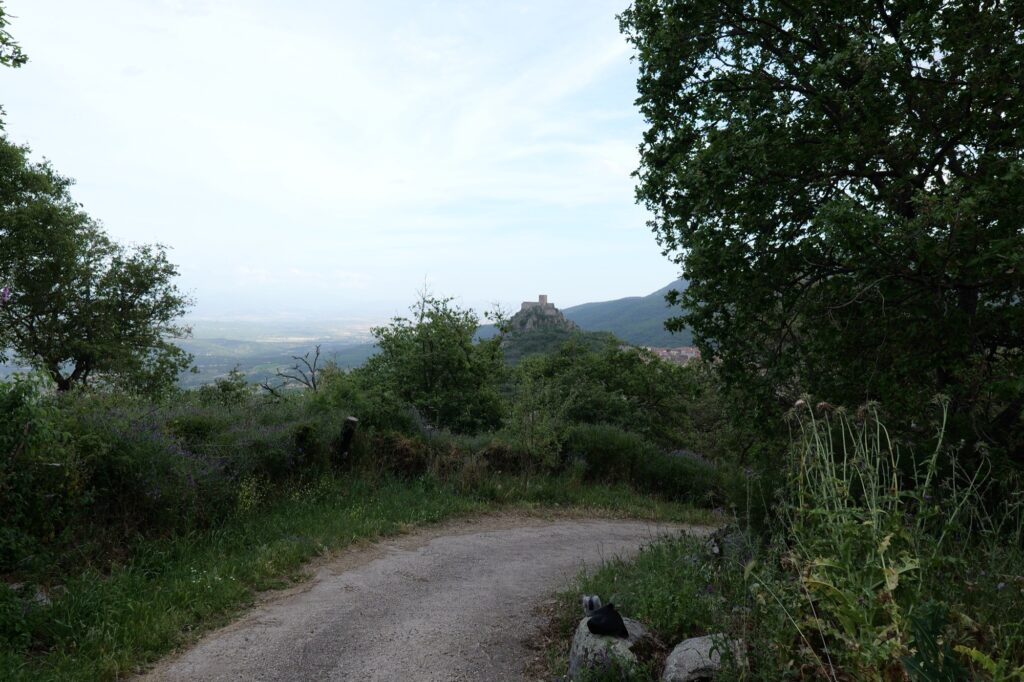
Our final historical destination of the day was Castello di Burgos, which rises above the surrounding landscape on top of a steep rock formation. The castle’s distinctive tower is visible from a considerable distance, appearing almost to grow directly out of the rock itself. Its history is similar in many respects to that of Montiferru Castle, which we’d visited earlier. Built in the 12th century, it passed between various rulers and political powers during Sardinia’s medieval struggles for control. The rivalry between Torres and Arborea, followed by Pisan, Genoese and Aragonese influence, all left their marks on the area’s history. During the late Middle Ages, the castle gradually lost its strategic importance and fell into ruin over the centuries.
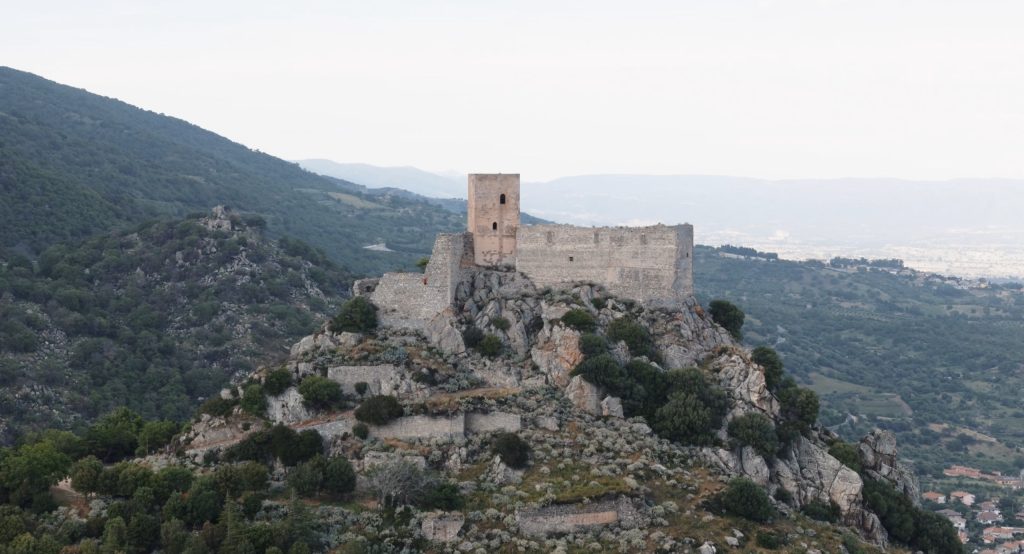
Naturally, Burgos Castle has its own legends. According to one local story, the ghost of a knight named Don Blas d’Aragona has guarded his hidden treasures for centuries in the caves beneath the castle. I have no idea how much truth there might be in this, but the story fits such an extraordinary location perfectly. If I hadn’t been wearing motorcycle gear, I might even have considered exploring the ruins more closely, just in case I really could find the treasure. Instead, I once again enlisted the help of my drone. From above, it was possible to see just how spectacularly the castle sits on top of its rocky outcrop and how far the views extend across the surrounding mountains and valleys.
So this time, I didn’t climb the path leading to the castle but explored the ruins from the air instead. Admittedly, that was cheating a little, but on a four-hundred-kilometre motorcycling day that also included coffee stops, a lunch break, historical attractions and countless mountain bends, it’s simply impossible to explore everything on foot as well. A drone is a wonderful tool in situations like these, revealing perspectives that would otherwise require a much longer walk.
By the End of the Day, I Realised How Lucky I’d Been
When we stopped at Burgos Castle and I gradually began reviewing the day’s events, I finally started seeing the morning’s accident from a different perspective. Until then, I’d mainly been annoyed about the damaged equipment, broken cameras and scratched top box. But when I thought about it properly, I’d been unbelievably lucky. I could easily have crashed in that enormous pothole. If the wheel had struck it at a worse angle, or if the suspension had failed to absorb the impact, the entire journey could have ended there, potentially with personal injury as well.
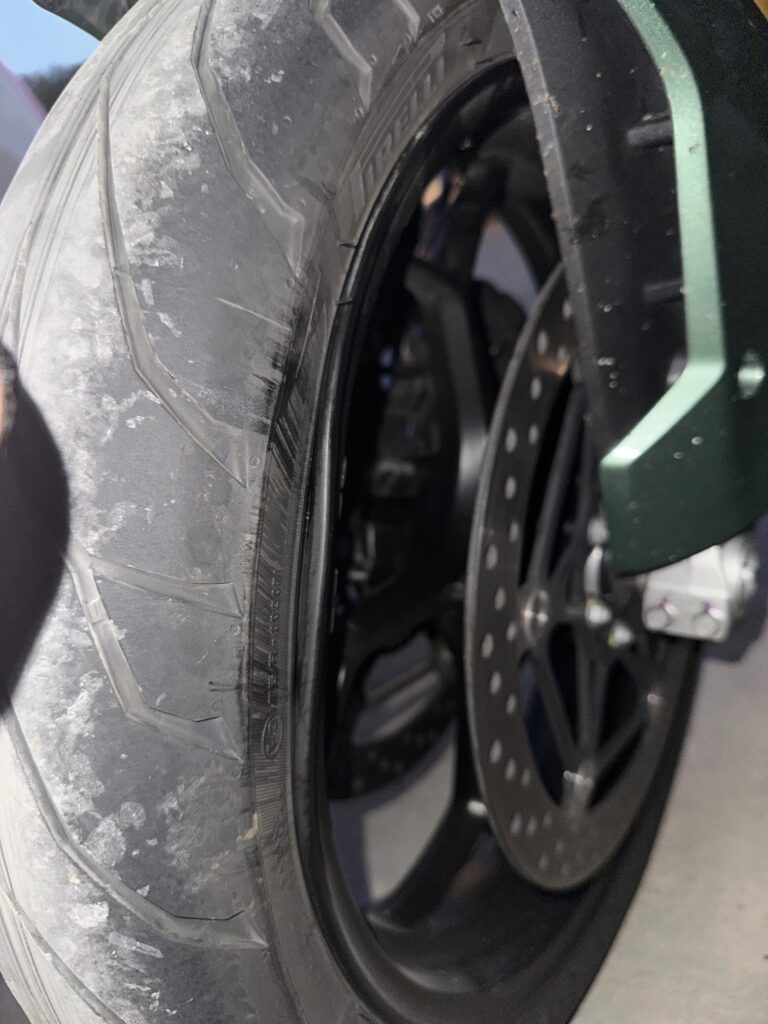
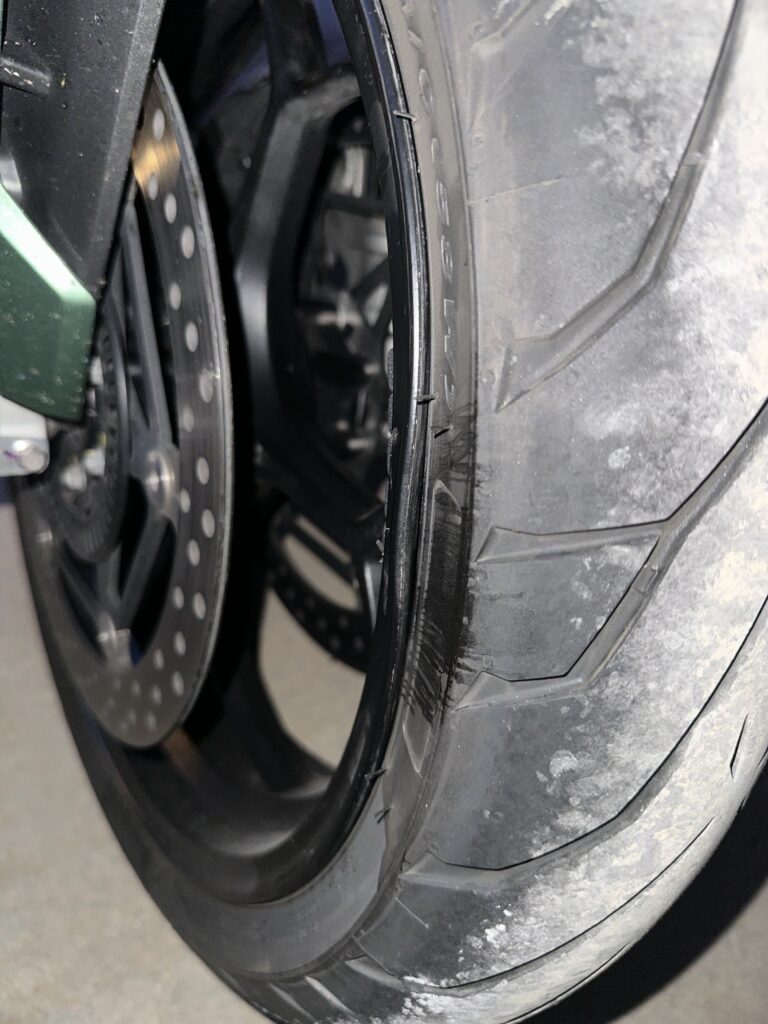 The wheel rim had been significantly deformed, but the tyre hadn’t lost pressure. What’s more, I couldn’t find any visible damage to the Pirelli Angel GT tyre, despite the enormous impact the wheel had suffered. The bent rim could have caused serious vibration or handling problems, but I’d noticed only a barely perceptible change in the motorcycle’s behaviour. Naturally, that didn’t mean the damage could simply be ignored. I decided that the following day, I’d definitely have the wheel inspected by a professional, because I didn’t want to continue a long tour on a wheel whose condition was uncertain.
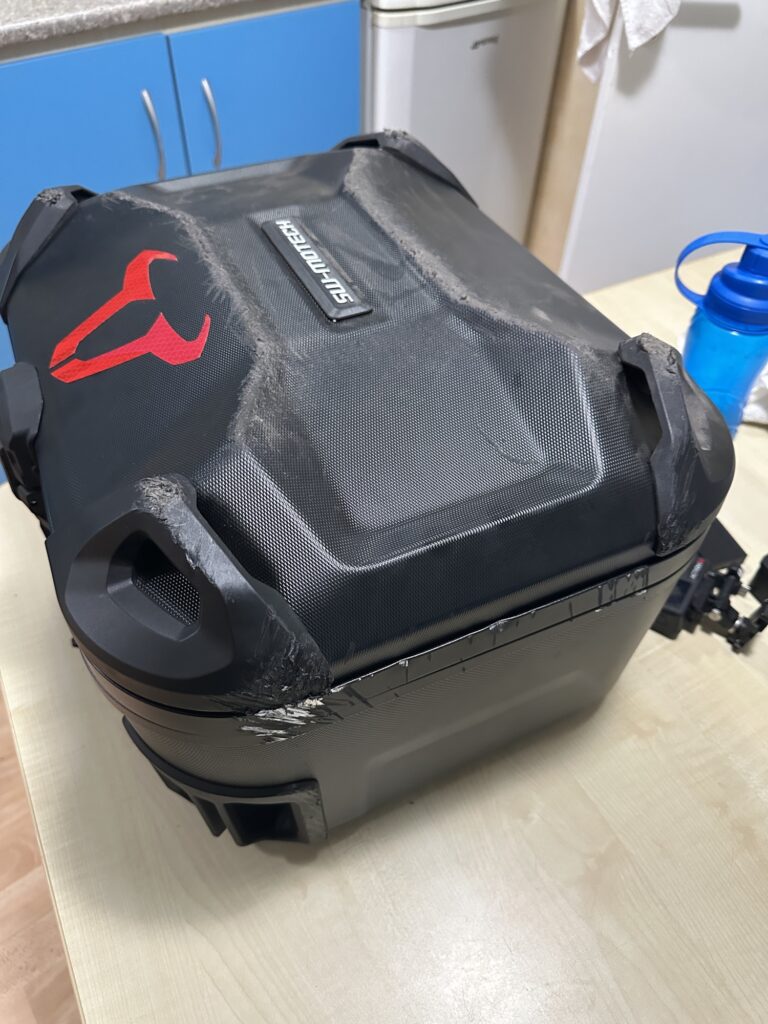
I was also beginning to view the incident with the top box differently. Although the mounting system had come apart under the enormous impact, the mounting frame hadn’t been significantly bent, and the box itself had remained intact despite falling onto the road. Its outer surface had suffered several scratches and other marks, but structurally it hadn’t broken apart. And perhaps most importantly for me, it had protected the filming equipment inside. On a long motorcycle tour where I’m also producing video footage along the way, that’s particularly valuable. Losing the cameras and other equipment travelling in the box wouldn’t merely have caused financial damage; it could have jeopardised the entire production.
Of course, I still wasn’t happy that the cameras, camera mounts and motorcycle accessories had begun failing so quickly. The action cameras’ sensitivity to vibration was particularly disappointing, and I also needed to rethink my helmet camera mounting system. But when I compared all of that with the fact that I’d been able to continue my journey unharmed despite hitting such an enormous pothole, those problems suddenly seemed rather different. Whether it was simply good luck, or whether the Guzzi’s suspension, the Pirelli tyres and the appropriate luggage system had all played a major part in handling the situation, it’s difficult to say for certain. Most likely, they all contributed.
Four Hundred Kilometres, Countless Experiences and a Few Expensive Lessons
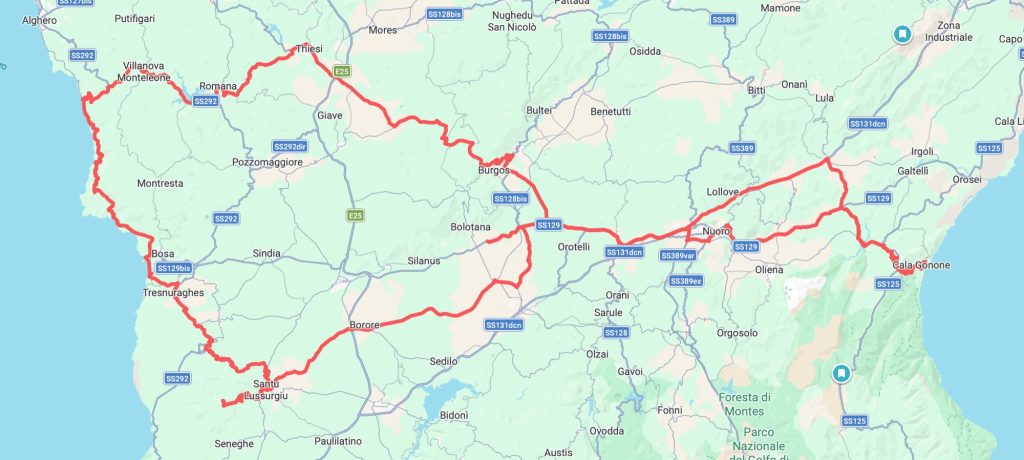 By the end of the day, we’d covered approximately four hundred kilometres through central and western Sardinia. We’d explored the distinctive volcanic landscapes of the Montiferru Mountains, admired two medieval castles, ridden along the western coastline and discovered the fantastic winding roads of the SS292. Along the way, we’d learnt that not every road in Sardinia is perfect, and that some parts of the island have genuinely dangerous road defects. The Moto Guzzi V100 Mandello S had demonstrated not only its sporty handling but also its ability to cope with exceptionally severe punishment.
When we returned to our accommodation that evening, all I really wanted was to rest. The four hundred kilometres, countless mountain bends and the day’s excitement had thoroughly exhausted me. At the same time, I felt that “The Great Escape” was still delivering exactly what I’d set out to find: genuine adventures, beautiful places and experiences that could never have been planned in advance. The financial damage might have been significant this time, but the things that mattered most had survived intact. I could still ride, the Guzzi was still running, and the greater part of my journey was still ahead of me.
Watch the fourth episode of the motorcycle touring series here: