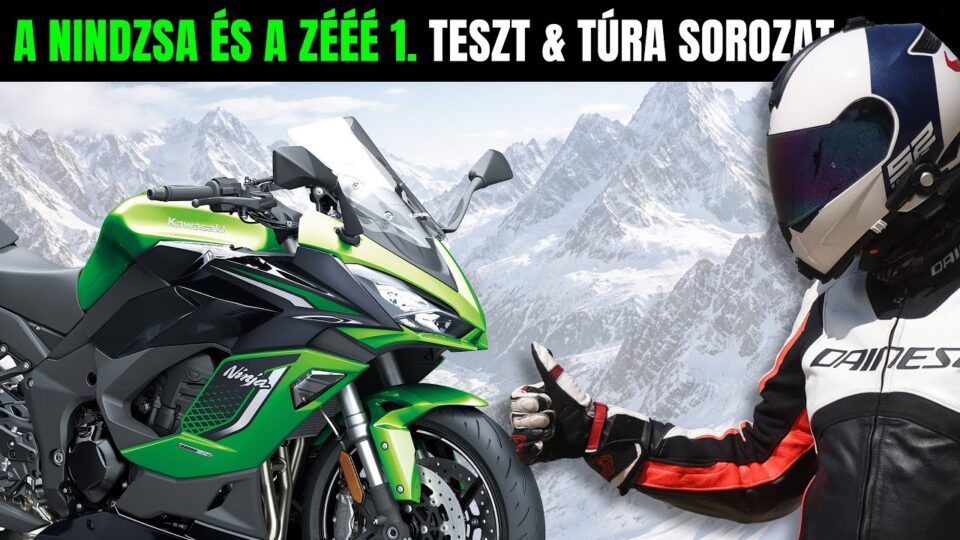
 Four days, two Kawasakis, some of the best motorcycle roads in the Alps, and weather that tried to ruin our plans on the very first morning. Soma and I set off for Austria on a Ninja 1100 SX SE and a Z900 SE, with the intention of eventually riding all the way to the Dolomites. Our first day involved a little mechanical work, countless corners, some rain, a rather lively suspension bridge and 472 kilometres of riding.
Two Kawasakis, Four Days of Freedom
Sometimes life gives you a rather pleasant assignment. For example, collecting two of this year’s Kawasaki motorcycles and spending four days riding them along some of the most beautiful roads in Austria and Italy. I can’t say I needed much convincing.
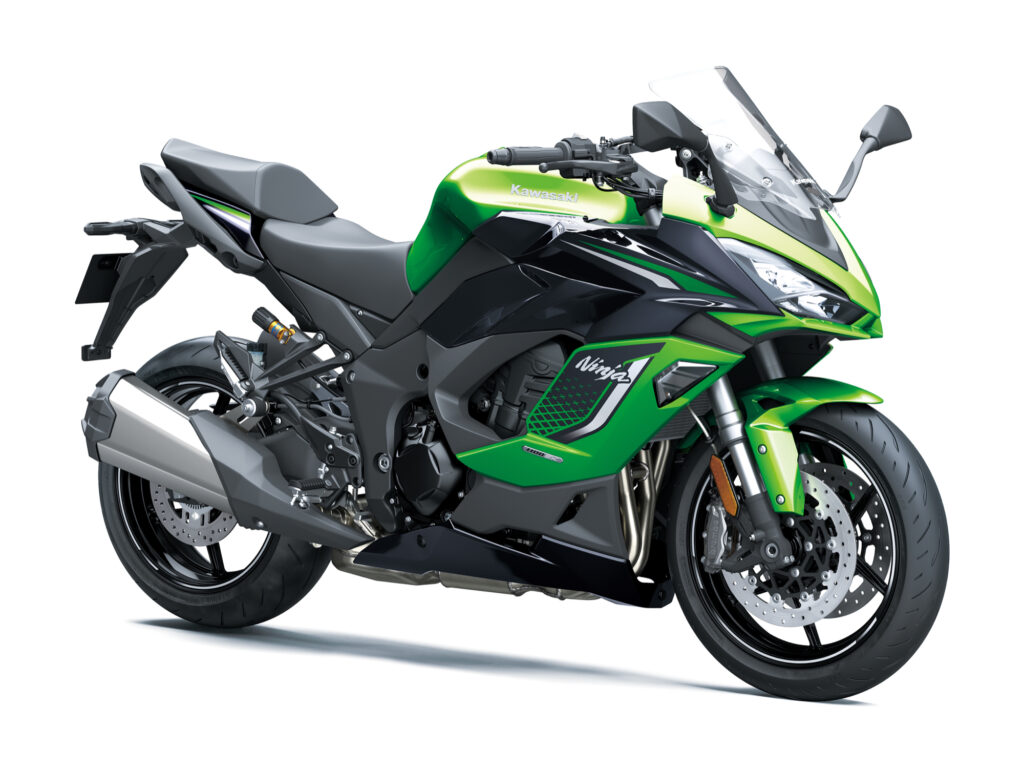
Thanks to Kawasaki Europe’s regional office, we were given a 2025 Ninja 1100 SX SE and a Z900 SE. Both were the higher-specification versions: the Ninja came with electronic suspension, while the Z900 featured, among other things, an Öhlins rear shock and Brembo front brakes. Both were waiting patiently for us to finally put them to good use.
My travelling companion was István Somorjai, better known as Soma, with whom I’d already ridden several times. He’s an experienced motorcyclist who has also worked as a tour guide, and fortunately he enjoys pretty much the same kinds of roads as I do. We collected the motorcycles on Wednesday afternoon from Kawasaki’s headquarters near Vienna. We had to return them by nine o’clock on Monday morning, which meant we had four full days of riding ahead of us.
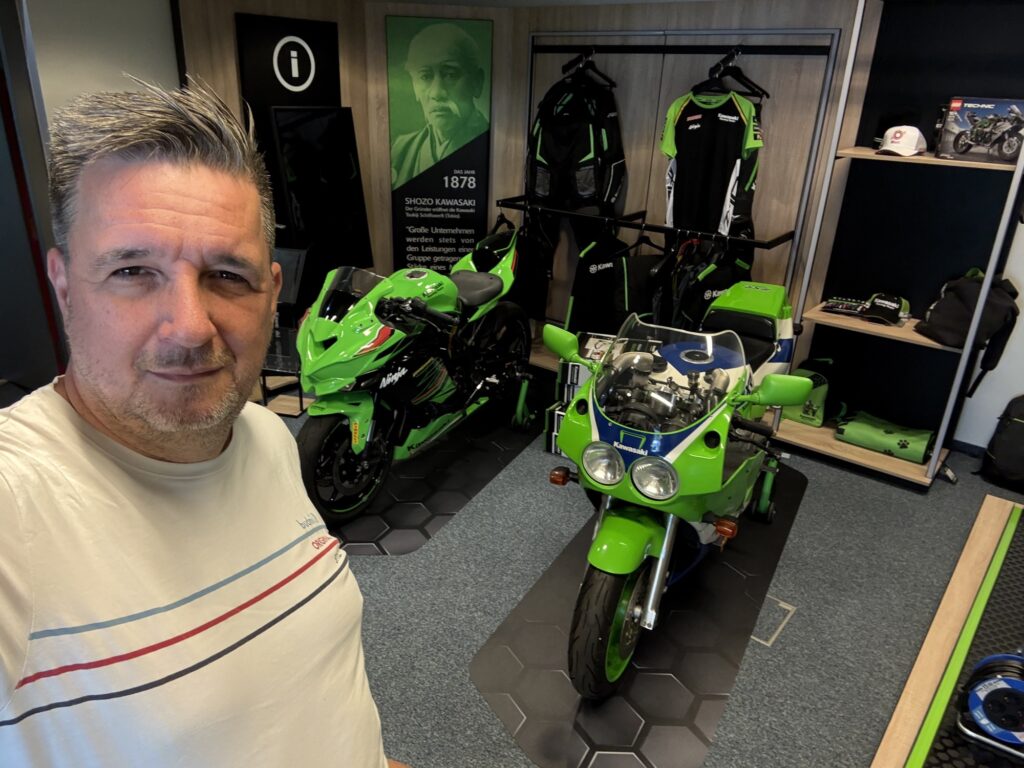 After arriving, we had a look around Kawasaki’s headquarters, admired the legendary motorcycles on display, and then collected two bikes that were equally important to us: our travelling companions for the next four days.
Immediately afterwards, we treated the Austrian car park to a little Hungarian-style motorcycle maintenance. We needed to fit the tank bag mounting rings, cameras and the phone holder for navigation to both bikes. Soma struggled with the tank ring bolts while attempting to tighten them to precisely two newton-metres using the torque wrench apparently built into his hand. We hadn’t brought a torque wrench, and I don’t own one capable of measuring such a ridiculously small torque anyway. Still, we eventually managed. At least the tank bags weren’t a problem, because thanks to HP Motor, we had the appropriate SW-Motech mounting systems for both motorcycles. Better still, both bags used the same type of tank ring, so we could easily take our bags with us whenever we swapped bikes.
Mounting the cameras proved rather less straightforward. There was plenty of room for different mounts on the Z900’s exposed handlebars, but the Ninja’s sportier design presented a proper challenge. Eventually, the cameras ended up on the grab handle and a few other more or less suitable mounting points. There was at least one attachment whose durability I wasn’t entirely convinced about even before we set off. The Z900 also became our navigation bike. My phone, running Calimoto, was mounted on it, so whichever of us was riding it, the same motorcycle always led the way. And the following morning, the adventure began.
Waterproofs as a Weather-Control Device
I started the first day on the Ninja, with Soma riding ahead on the Z900. We’d barely set off when Austria decided to welcome us by showing its less pleasant side. Practically the moment I started the engine, the rain started too. For a while, it was only drizzling, and I hoped the weather might be heading in the opposite direction. It wasn’t, so we soon stopped and got our waterproofs out.
Putting on waterproof clothing has an interesting, almost supernatural effect: by the time you’ve finally struggled into all the layers, the rain usually stops. That’s exactly what happened to us. By the time we’d finished getting dressed, the tarmac around our stopping place was already beginning to dry. I really don’t enjoy riding in waterproofs, incidentally. Not because they aren’t useful, but because every single item makes motorcycling just that little bit less pleasant. My windproof neck warmer, for example, does a wonderful job of keeping my neck warm, but it also restricts my head movements just enough to make looking through corners uncomfortable. The waterproof jacket is equally effective at keeping out the cold wind, which was particularly welcome in temperatures of 16–17°C. On the other hand, it flaps, rustles, and its bright green colour even reflects in the edge of my helmet visor.
My biggest problem, however, is the gloves. I prefer thin summer motorcycle gloves that allow me to feel the throttle, brakes and clutch precisely. Unfortunately, my favourite Alpinestars gloves become soaked almost immediately in serious rain. I also have a pair of summer gloves with a waterproof membrane, but their waterproofing lasts roughly as far as the distance between Veresegyház and Dunakeszi. So this time, I’d brought a thick pair of winter Dane gloves, which genuinely withstand hours of rain and protect my hands perfectly from the cold. Just don’t ask me to ride a motorcycle in them. They’re so thick that operating the brake and clutch delicately becomes a challenge in itself. It’s rather like trying to play the piano wearing a pair of padded ski gloves.
At least I have no complaints about the waterproof trousers, although my new TCX boots with Gore-Tex membranes were still under investigation. On a previous tour, I’d stood in a lake wearing them for several minutes, and they’d proved completely waterproof. Later, however, during a perfectly ordinary rain shower, water somehow found its way inside. I still need to solve that mystery. Anyway, the waterproofs worked. At least, while we were wearing them, it didn’t seem particularly interested in raining. But the moment we tried to take them off, the weather sprang back into action.
The Winding Roads of the Gutenstein Alps
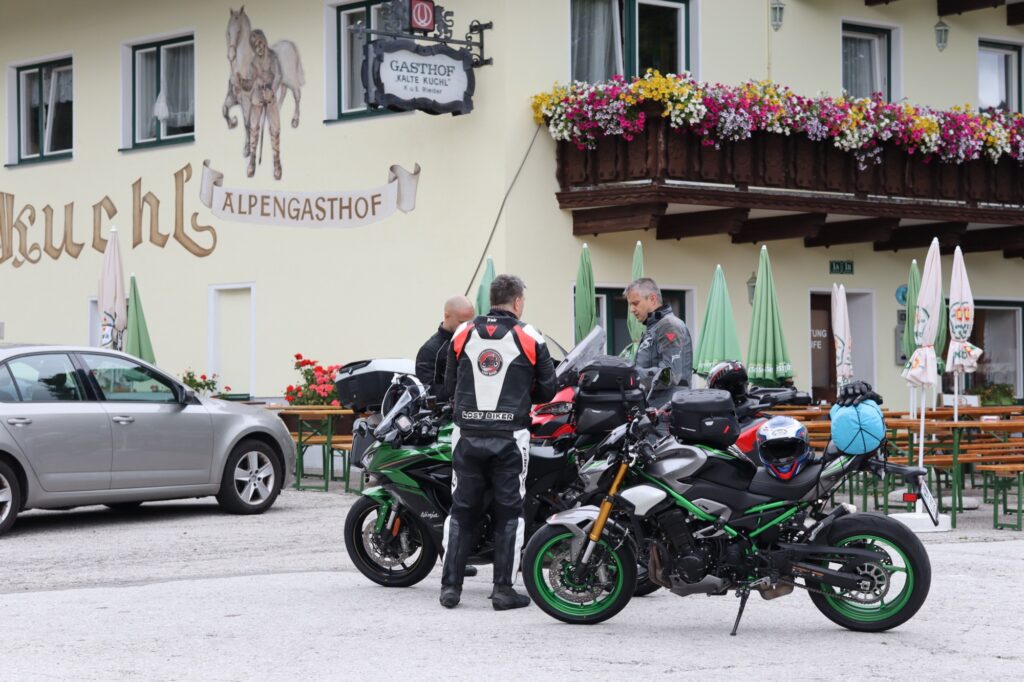 We tried to leave the Vienna area behind as quickly as possible. Partly because of the weather, and partly because I’d already explored this region extensively on a Kawasaki Z900RS the previous year. We followed the L133 through the valley of the Hallbach stream towards the famous Route 21. This is one of the lesser-known routes through the Gutenstein Alps, although from a motorcyclist’s perspective, it has practically everything you could want. Beautifully flowing corners, excellent tarmac, lovely surroundings and generally very little traffic. And at the end of the valley lies Kalte Kuchl, one of Lower Austria’s best-known motorcycle meeting places.
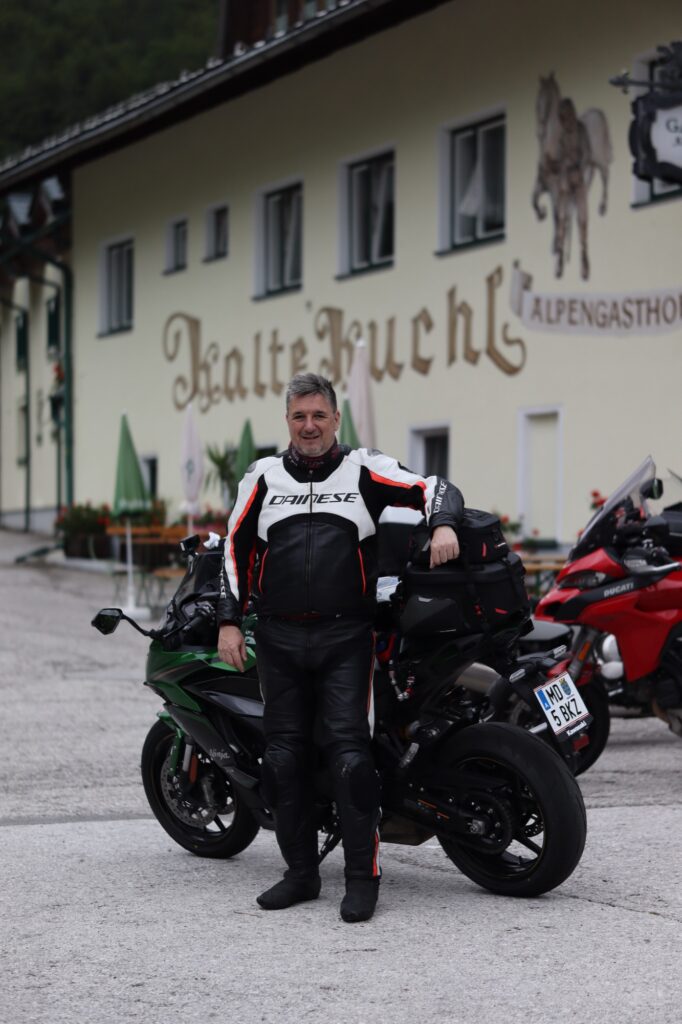 Kalte Kuchl’s history stretches all the way back to the Middle Ages, when it was already known as a crossroads and an inn. Of course, in those days, travellers generally arrived in vehicles powered by no more than one horsepower. Today, however, it has become one of Austria’s most popular motorcycle meeting points, and with good reason. Several excellent motorcycle roads converge here. The B27 heads south, the L133 north, and Route 21 provides the corners in an east–west direction. The latter also includes the Rohrer Sattel and Ochsattel passes. We headed towards Ochsattel, where almost a hundred flowing bends await motorcyclists.
In good weather, the car park at Kalte Kuchl reminds me a little of the two ends of Route 24 in Hungary’s Mátra Mountains. Plenty of motorcycles, conversations, coffee, and then everyone sets off to enjoy the winding roads again. Perhaps the layout of our Route 24 is slightly more exciting, but here the cleanliness of the roads and the quality of the tarmac are on an entirely different level. There’s none of that gravel scattered across corners that can sometimes provide such unpleasant surprises back home. And something particularly nice: a substantial proportion of the traffic consists of motorcycles.
Getting to Know the Ninja
It was among the corners of Ochsattel that I first began to get a proper feel for what the 1100 Ninja was really like. Until then, we’d been getting acquainted rather cautiously. After all, we’re talking about a sports tourer with 136 horsepower, 113 Nm of torque and a weight of around 230 kilograms. I wouldn’t call it a monster, but it’s certainly not a motorcycle you can simply jump on without any previous experience and immediately start pushing with complete confidence.
The riding position was unfamiliar, with its slightly forward-leaning upper body, swept-back handlebars and relatively high footpegs. What’s more, I’d previously ridden these roads on motorcycles with entirely different characters, so I needed to rebuild the confidence without which it’s impossible to ride in a truly relaxed manner. Perhaps Ochsattel came a little too early. I could already feel that this motorcycle was going to be excellent, but I wasn’t yet confident enough to throw it into corners as boldly as I’d been riding in Sardinia not long before.
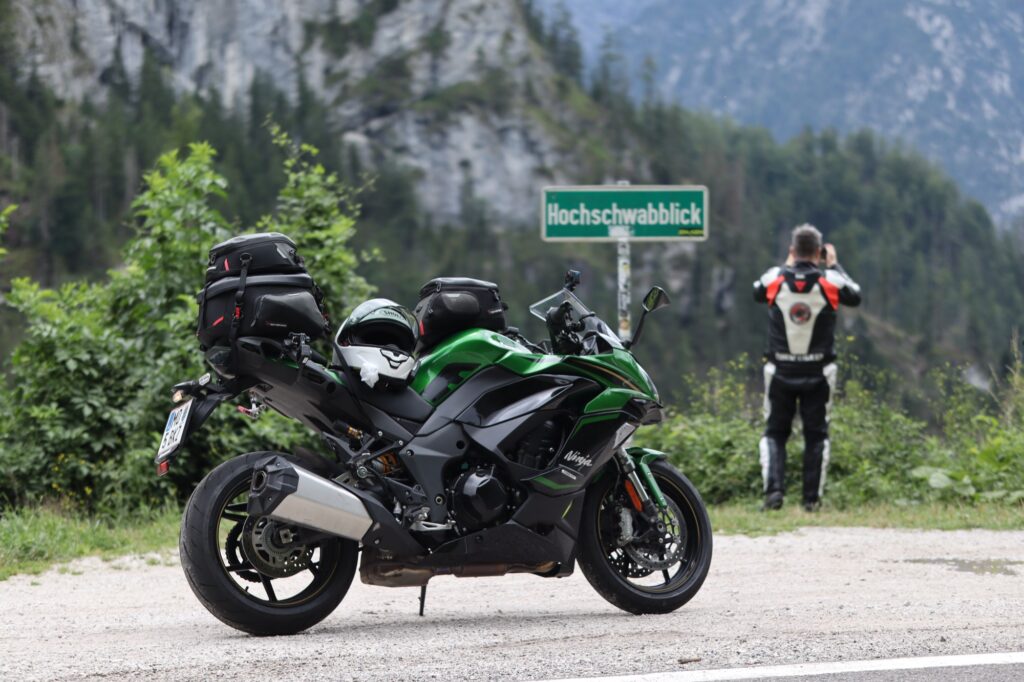 The section of Route 21 towards Mariazell, however, offered exactly what I needed. The tighter bends gave way to longer, sweeping curves, the pace became more consistent, and I gradually began to understand how the Ninja behaved. These are the Austrian roads that keep drawing me back time after time. With good tarmac, clean road surfaces and corners you can see through, you can ride with an entirely different level of confidence. This is where that trust between motorcycle, rider and road can genuinely develop, forming the foundation of relaxed, enjoyable riding. Even then, I was beginning to suspect that returning this Kawasaki after four days wasn’t going to be easy.
The Other Route 24
After Mariazell, we reached Route 24. No, we hadn’t turned back towards Hungary. Austria has a Route 24 of its own, and from a motorcyclist’s perspective, it certainly has nothing to be ashamed of compared with our version in the Mátra Mountains. The B24 follows the Salza River valley between the Hochschwab mountains and the Ybbstal Alps. Sometimes the river winds right beside the road, while elsewhere it appears far below us at the bottom of the valley.
As we approached Wildalpen, the mountains grew taller, the rock faces became more imposing, and the river wound its way through increasingly broad curves. This region is simultaneously a protected natural area, a popular rafting destination and a motorcycling paradise. Somehow, Austria manages to accommodate all three without allowing one to ruin the others.
The road itself is fantastic. Long, sweeping corners, excellent clean tarmac and very little traffic. We encountered more motorcyclists than cars. And there’s another significant difference compared with Hungary’s Route 24: here, there’s plenty to admire from the road itself. At one point, I wanted to stop and take some photographs, only to realise that my phone was travelling on the other motorcycle. So video footage had to do.
Stuffed Potatoes, Hungarian Motorcyclists and a Suspension Bridge
Soma had previously recommended a restaurant beyond Wildalpen that he’d discovered during his days as a tour guide. Apart from being somewhere to eat, there’s also a suspension bridge nearby leading to a gorge called Wasserlochklamm. This natural attraction features five waterfalls and can be explored using steps, walkways and bridges, with a total height difference of 152 metres across the waterfall system. We weren’t planning any serious hiking this time, but we did want to have a look around.
At the roadside restaurant, temptation was waiting right at the entrance: someone was preparing enormous jacket potatoes with all sorts of toppings and fillings. We didn’t need much time to think about it. Almost as soon as we walked in, we’d decided this was where we were going to eat. The result wasn’t exactly the culinary experience of a lifetime. It was pleasantly average.
At the restaurant, we bumped into two motorcyclists from the Budapest area whom we’d already met at Kalte Kuchl. Not long afterwards, an entire Rhino Tours group arrived as well. By this point, it was beginning to look as though wherever we went in Austria, we’d eventually run into Hungarian motorcyclists.
After eating, I walked down to the suspension bridge. Now, I’ve always thought a bridge’s job was to provide a stable connection between two pieces of dry land. This particular example, however, clearly followed a different philosophy. It moved with every step. Not slightly. A lot. Beneath me was the Salza River, around me the rocky mountainside, and there I was trying to decide just how much I liked this kind of structure. The bridge did offer an excellent view of the river and a small jumping platform from which braver visitors can launch themselves into water that’s approximately eight degrees Celsius. I decided to leave that particular opportunity to others.
In any case, it’s a lovely place. If you’re riding through the area, I think it’s well worth stopping. If nothing else, certainly for a coffee or an Almdudler.
Getting Dressed, Undressed and Dressed Again
For the rest of the day, the weather took centre stage. Naturally, as soon as we left the restaurant, it started raining again. But the rain seemed completely incapable of making up its mind. Whenever we were just about to stop and put on our waterproofs, it eased off. Whenever we decided not to stop after all, it immediately started again.
Eventually, I forbade Soma from saying, “Perhaps it isn’t raining anymore.” According to our observations, that sentence almost guaranteed another shower. It was particularly strange that the tarmac often looked completely dry even while light rain was falling. At other times, it wasn’t raining at all, but Soma’s rear wheel was visibly throwing up water. At one point, the milky-white clouds gathering in the valley looked so threatening that we decided to stop and put our waterproofs on again. Naturally, by the time we’d finished, most of the clouds had dispersed.
The problem is that on a multi-day tour, you simply can’t afford to get completely soaked. Once your motorcycle equipment is saturated, there’s a good chance it won’t be completely dry even two or three days later. And that can ruin the rest of your trip. So we got dressed. Then undressed. Then dressed again. By approximately the fifth clothing operation of the day, I’d finally found a workable compromise. I kept the waterproof jacket on to protect me from the cold wind, but switched back to my thin summer gloves and turned on the Ninja’s heated grips. That made riding quite pleasant again.
Meanwhile, there was also some uncertainty about our route. The Grossglockner High Alpine Road, for example, was temporarily closed to motorcyclists and cyclists, while cars were still allowed through. We understood this was because of strong winds. Calimoto had actually warned us about the closure earlier, but we hadn’t believed it. Sometimes it would probably be worth listening.
The Final Kilometres in the Evening Sun
By around seven in the evening, we were definitely in a hurry. We’d spent the previous hour riding through some beautiful countryside. Near Innerkrems, we’d passed the northern end of the Nockalm Panorama Road, and we’d also ridden past the entrance to the Malta Valley. At another time of day, we’d happily have spent longer exploring these places, but it was getting rather late.
For the next three nights, we’d booked a two-bedroom apartment with a living room in Flattach. This would be our base, from which the Grossglockner, Nockalm, Malta Valley and even the Dolomites would be within easy reach. I also have personal memories connected with this area. On my very first solo motorcycle tour, I spent my first nights in this very valley. Now I was returning with two excellent motorcycles, and we still had three full days to explore some of the most beautiful roads in the Eastern Alps.
The final kilometres were bathed in the golden light of the setting sun. We rode past cows grazing peacefully among the mountains, the weather finally settled down, and for a brief moment everything was exactly as you’d imagine an Alpine motorcycle tour should be. All that remained was to check into our accommodation. Naturally, that didn’t turn out to be quite as straightforward as expected.
One More Adventure After 472 Kilometres
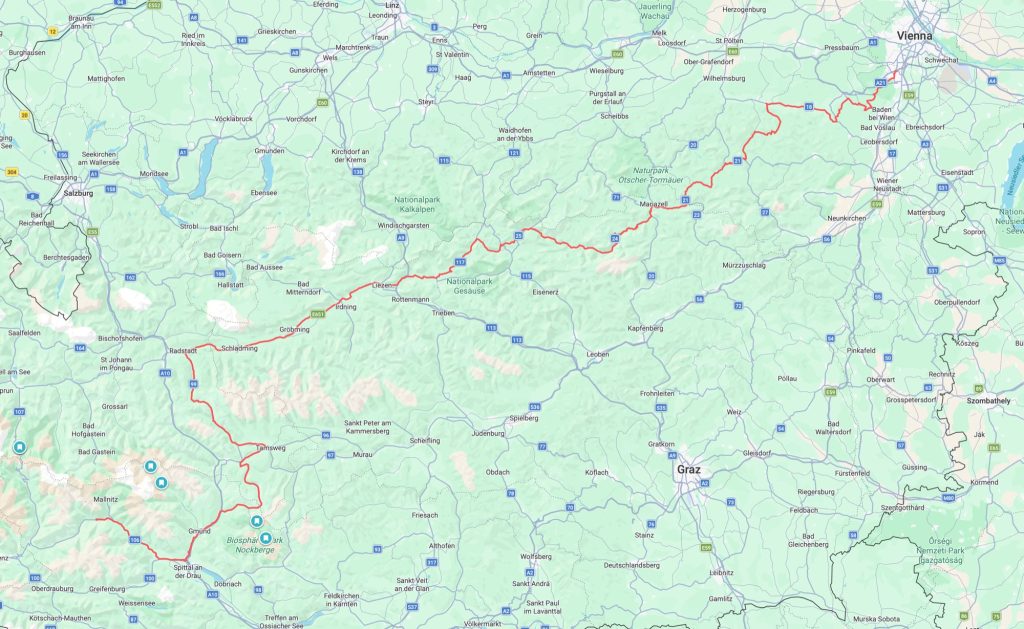 We arrived in Flattach at around eight o’clock. The entrance to the apartment building was open, but there was nobody at reception. We looked around for a while, tried to work out whether we’d received any instructions about our arrival, and eventually started making phone calls. Meanwhile, we also discovered that instead of the originally planned 440 kilometres, we’d ridden 472. Not that the extra 32 kilometres mattered particularly. In the Alps, you’re quite happy to take much longer detours if they lead you onto a good road.
By this point in the evening, we were getting hungry. The stuffed potato we’d eaten in the afternoon was a distant memory, we had ambitious plans for the following day, and we were still standing outside the apartment waiting to check in. Fortunately, we discovered a nearby restaurant on the map where someone appeared to be slicing ham, and it looked as though pizza was available too. It was only a four-minute walk away. Eventually, we managed to find our host, and pizza made its way onto the table as well, which finally restored everyone’s peace of mind.
So the first day had turned out rather well. The weather had certainly tried to make things difficult, but we’d ridden some fantastic roads, started getting to know our two Kawasakis, and reached the region where we hoped to enjoy the best experiences of the coming days. I still had plenty to learn about the Ninja, but even after those first 472 kilometres, I already had a feeling that this was going to turn into something very special.
Watch the first episode of the motorcycle touring series here: