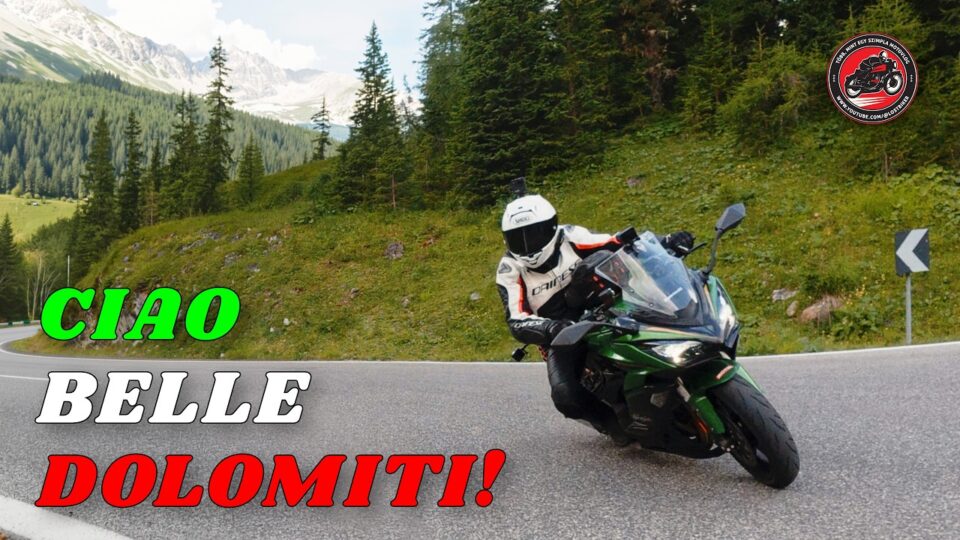
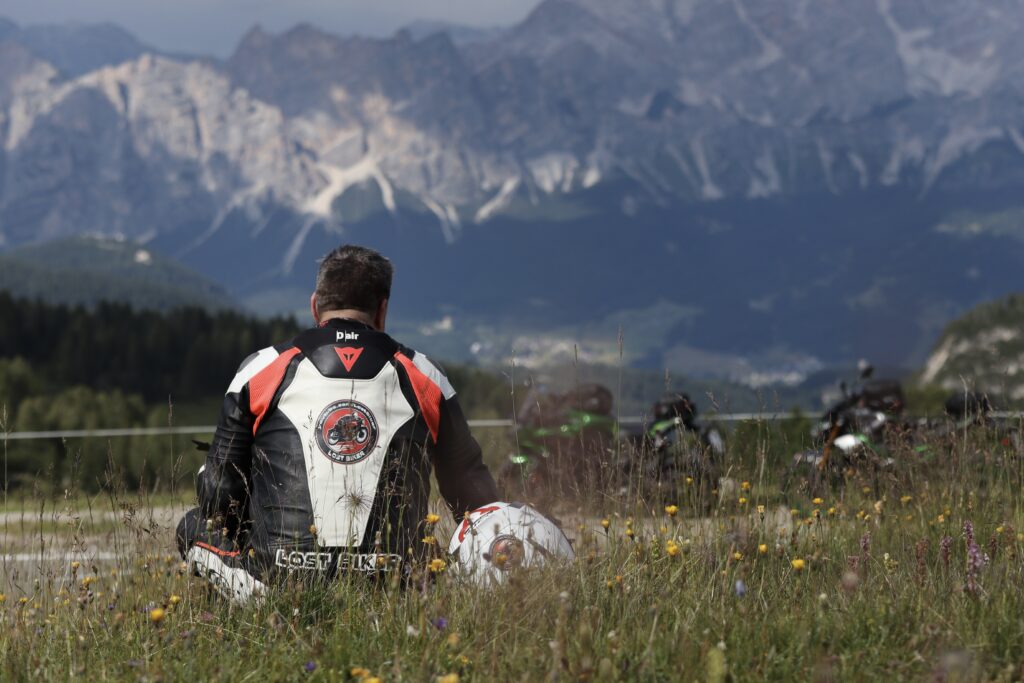
There are places I want to visit at least once in my lifetime. These are the destinations we usually put on our bucket lists, and when we finally manage to visit them, we happily tick another item off. But the Dolomites belong to an entirely different category for me. I don’t want to visit them just once; I want to return again and again. I think these mountains offer one of the best explanations of how motorcycling can develop from a simple form of transport into a way of life. And when I also happen to have a motorcycle that seems to have been designed specifically for these winding mountain roads, the result can easily become one of the best riding days of my life. That’s exactly what happened on the second day of our four-day Kawasaki tour, when Soma and I set off from Austria towards Italy. I was still riding the Ninja 1100 SX SE, while Soma followed on the Z900 SE. After the previous day’s ride through Lower Austria, we were now heading for the legendary mountain passes of the Dolomites, and I already knew that morning that something special was waiting for us.
An Espresso That Changed My Motorcycling Life
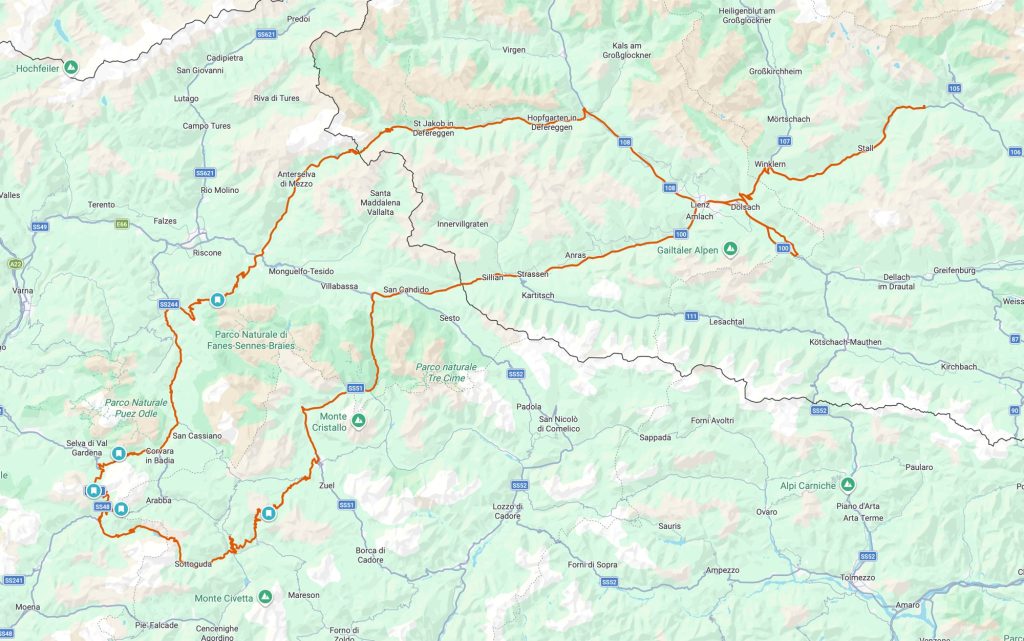
We left our accommodation in the morning, stopped at a petrol station for a breakfast of toasted sandwiches, and then headed south. The plan was simple: cross the Austrian–Italian border via the Staller Sattel, visit some of my favourite roads in the Dolomites, and naturally discover a few places I hadn’t explored before. Staller Sattel holds a particularly special place in my heart, partly because of the rather unusual story of how I first discovered it.
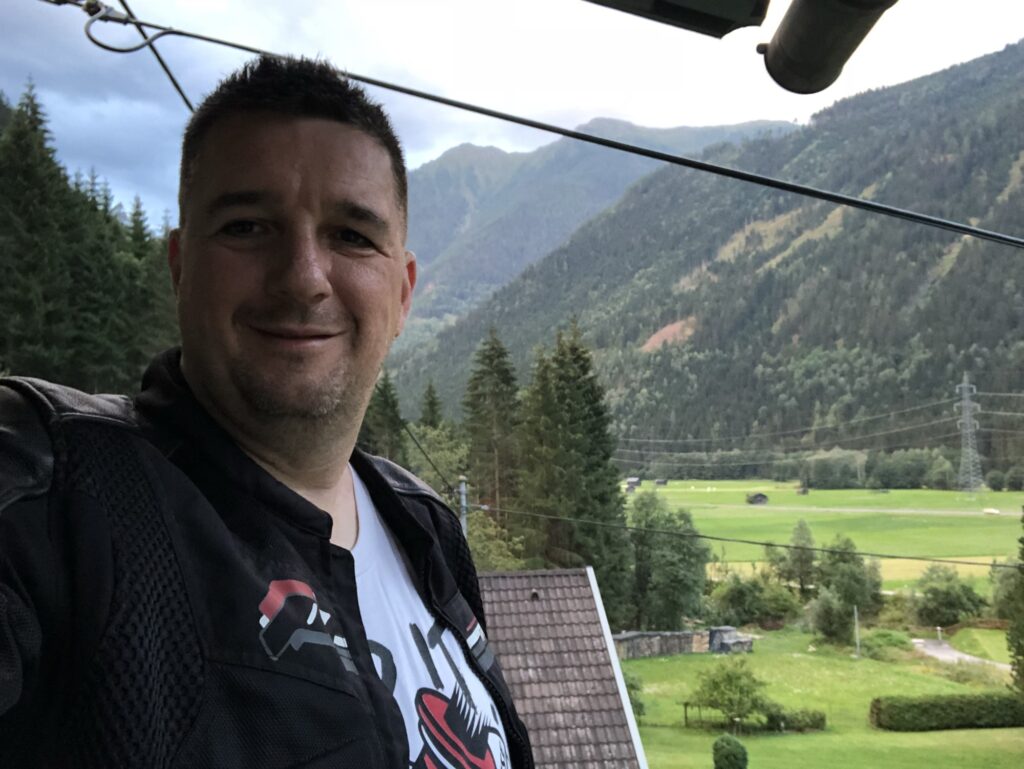 A few years earlier, I was staying in an Austrian village called Stall, where breakfast included coffee from a vending machine. But I don’t like starting my day with bad coffee, so I opened the map and looked for somewhere I could get a proper espresso. It turned out that Italy was only eighty kilometres away. Well, I had a motorcycle and some time to spare, so the solution was obvious: I’d pop over to Italy for a coffee! I found a petrol station just across the border, enjoyed my perfect espresso, and then set off back towards Austria, because I still wanted to conquer the Grossglockner that day. However, I didn’t want to return along the same road, so I looked for another crossing a little further north. That’s how I discovered Passo Stalle, which has since become one of my favourite Alpine passes. In a way, I owe that discovery entirely to my love of coffee.
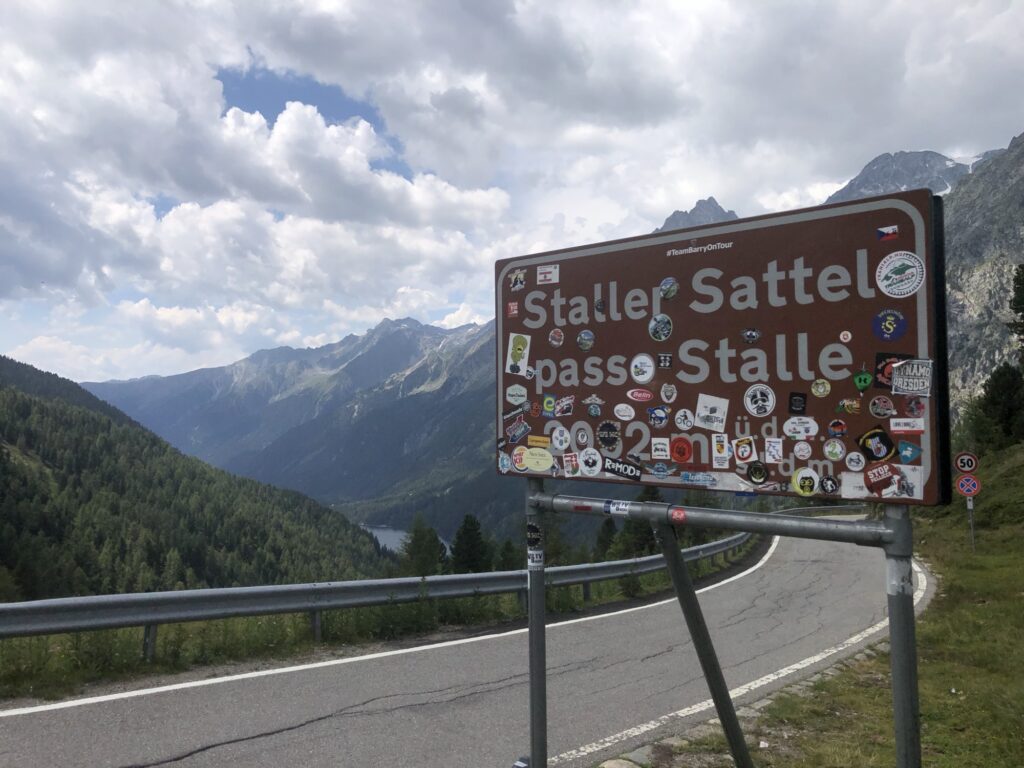 Staller Sattel, known as Passo Stalle in Italian, connects the Defereggen Valley in Austria’s East Tyrol with the Anterselva Valley in Italy. What makes this pass particularly interesting is the extremely narrow road on the Italian side, which is barely wide enough for a single vehicle in places as it descends towards Lago di Anterselva. Traffic is controlled by signals, allowing vehicles to travel in only one direction during designated time windows. This means you don’t have to spend the entire descent trying to squeeze past oncoming cars, which is especially pleasant on a motorcycle. The pass is also seasonal, closing during winter because of the snow, so the summer months provide the best opportunity to visit. We arrived a few minutes before one of the departure windows opened, giving us just enough time to join the queue. Ahead of us were German Ducatis, Austrian KTMs and BMWs, followed by two Hungarian Kawasakis. As the barrier was about to open, you could almost feel the excitement among the riders. Then we were off, and the whole thing turned into a cheerful, slightly mad Alpine rollercoaster ride.
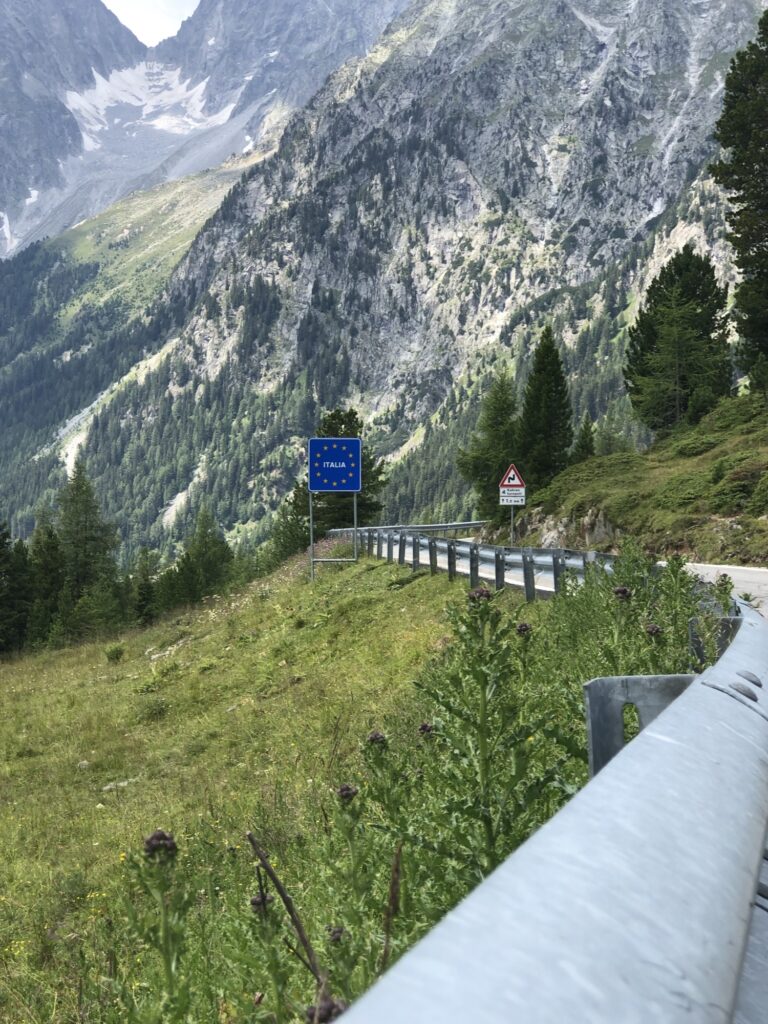 The tarmac on Staller Sattel is nowhere near racetrack quality, and the road layout is downright crazy in places. Tight hairpins, unexpected curves and steeper sections follow one another, and you constantly have to pay attention to what’s waiting around the next corner. Yet that’s precisely what makes it so charming. I love roads with a character of their own, roads I can still remember years later, and roads that make riding several hundred kilometres worthwhile just to experience them. Staller Sattel is one of those places. On previous visits, I’ve sometimes crossed it alongside complete strangers, only for us to stop on the other side, exchange high-fives and celebrate the shared experience with a few words. This time, Soma and I enjoyed every corner before descending towards Lake Anterselva on the Italian side. Once again, the pass didn’t disappoint: rough tarmac, completely mad corners and that special atmosphere that keeps drawing me back.
At the Gateway to the Dolomites
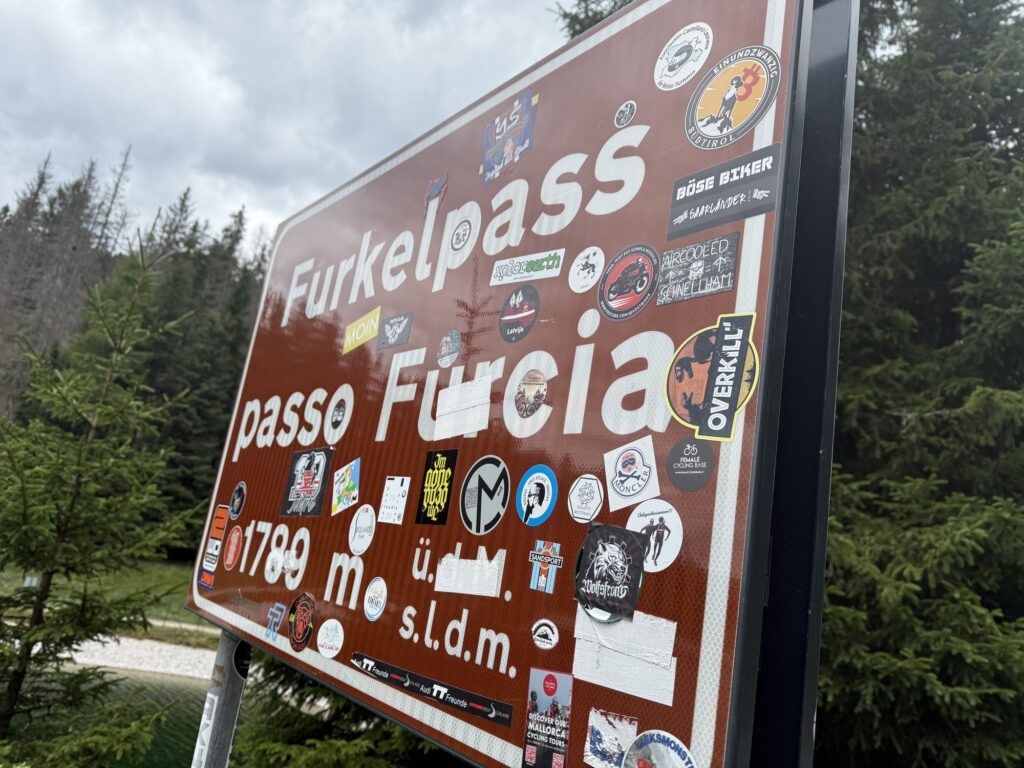 After Staller Sattel came Passo Furcia, known in German as Furkelpass, which shouldn’t be confused with the Furka Pass in Switzerland. The road surface here wasn’t particularly good either, but the scenery more than made up for it. The mountains were absolutely spectacular, and once again I found myself wishing I could stop at practically every corner to take photographs. In my opinion, Furcia is particularly interesting for riders who want to enjoy the scenery as much as the riding itself, because the views on both sides of the pass are magnificent. From there, we continued along the SS244 through Val Badia, following the Gadera River. This region is also fascinating from a cultural perspective, as it’s home to the Ladin people, who have preserved their own language and mountain traditions to this day. I first became aware of them when I noticed a third, unfamiliar language appearing on road signs alongside the German and Italian place names. Ladin remains a living part of Dolomite culture, and it’s particularly interesting to see how these three different local heritages coexist.
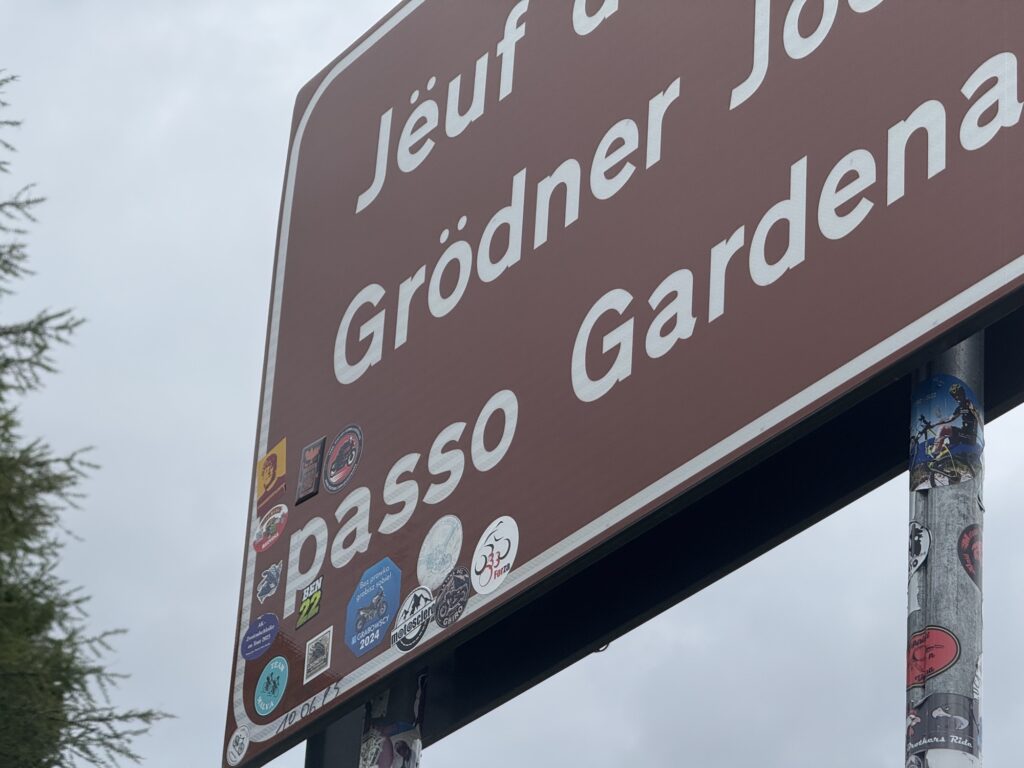 We turned right off the SS244 onto the SS243 to begin the Sella Ronda from Passo Gardena. The Sella Ronda is one of the best-known routes in the Dolomites, circling the Sella massif via four mountain passes. If someone has only a single day to explore the Dolomites, I think this is the route they should start with. It offers such a concentrated collection of the region’s most beautiful scenery that it’s almost impossible to take it all in. The four passes are Gardena, Sella, Pordoi and Campolongo, and the roads connecting them provide a fantastic motorcycling experience in their own right. What’s more, in 2025 we found the tarmac in surprisingly good condition.
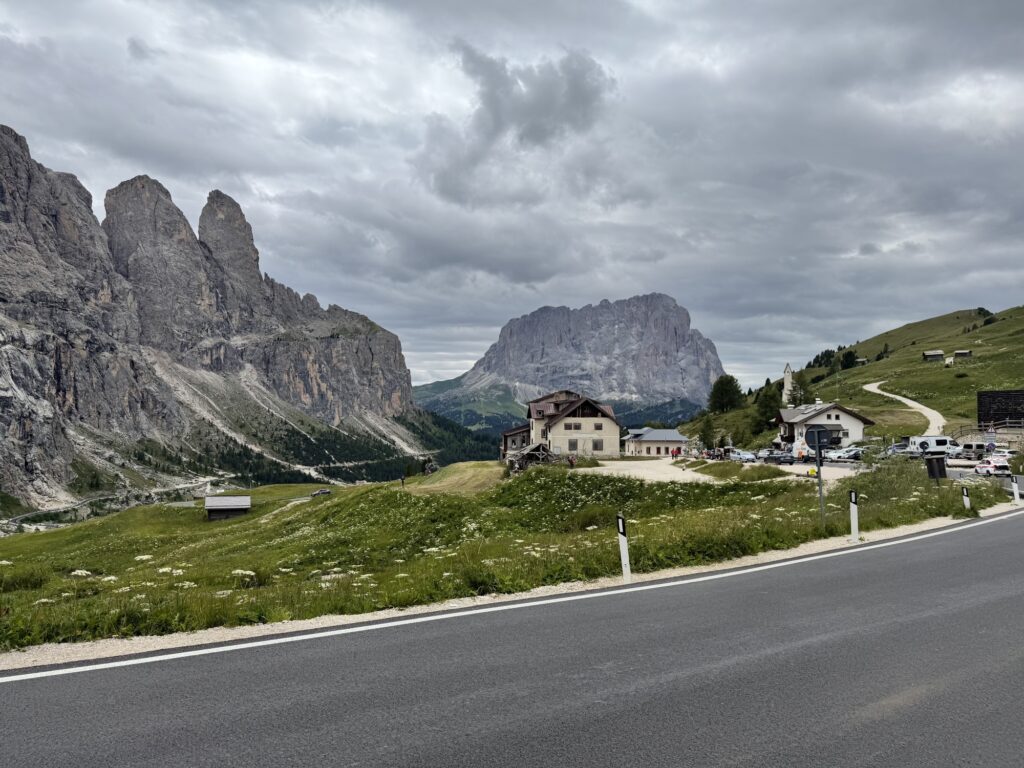 I remembered several rougher sections from previous visits, but this time the corners seemed to become increasingly smooth and clean. As we climbed towards Passo Gardena at 2,121 metres, I was also becoming more and more comfortable with the Ninja 1100 SX SE. After the cautious introduction of the previous day, I was now leaning confidently from one corner into the next, increasingly feeling that this motorcycle was exactly where it belonged.
Two German Riders and a Lost Mirror
On the climb towards Passo Gardena, we encountered two German motorcyclists, and somehow a playful little riding contest developed between us. I found myself riding with a red Honda VTR1000F Firestorm, piloted by someone who was clearly an experienced rider. I overtook him and tried to put a little distance between us, but he simply refused to disappear. Despite the Ninja having approximately twenty horsepower more on paper, that old litre-class V-twin was in very capable hands. We had a brilliant time, and the encounter was so memorable that we still follow each other on Instagram. Meanwhile, Soma was enjoying a similar ride with the other German motorcyclist and got so carried away that he managed to clip a roadside marker post in one of the corners. His right-hand mirror paid the price. Well, sometimes motorcycling pride comes with a very tangible cost. Fortunately, nothing more serious happened, so we continued our adventure along one of the Dolomites’ most spectacular stretches of road.
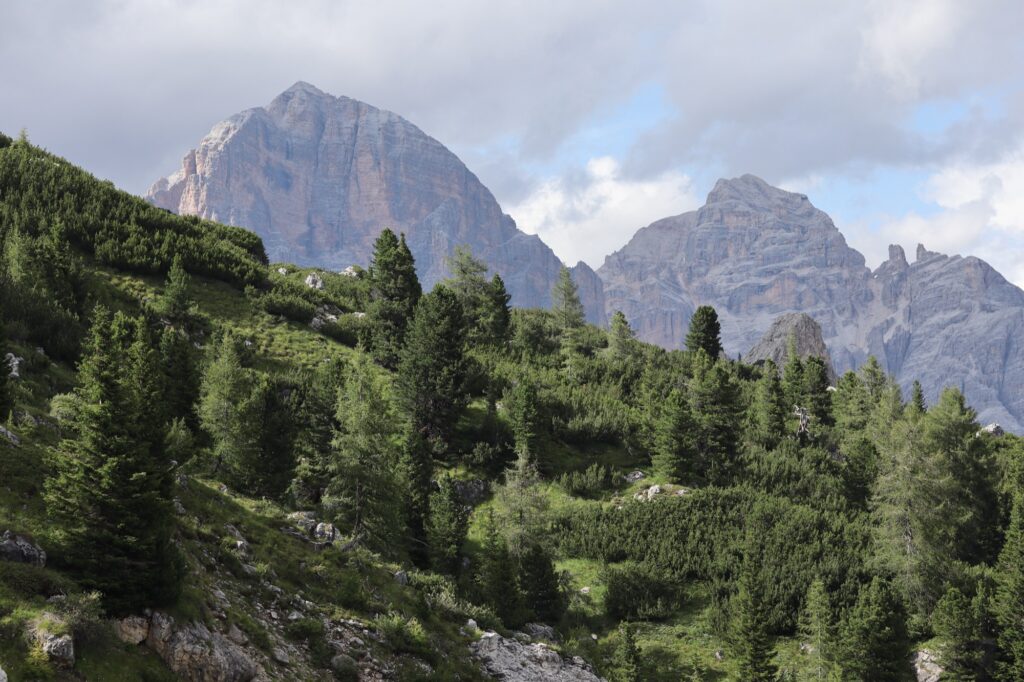
At the summit of Gardena, where the pass opens between the Sella and Puez mountain groups, we were surrounded by towering rock pinnacles and steep stone walls. The Brunecker Turm stood to our left, while the peaks of the Cir group rose to our right, revealing themselves from a new angle around every corner.
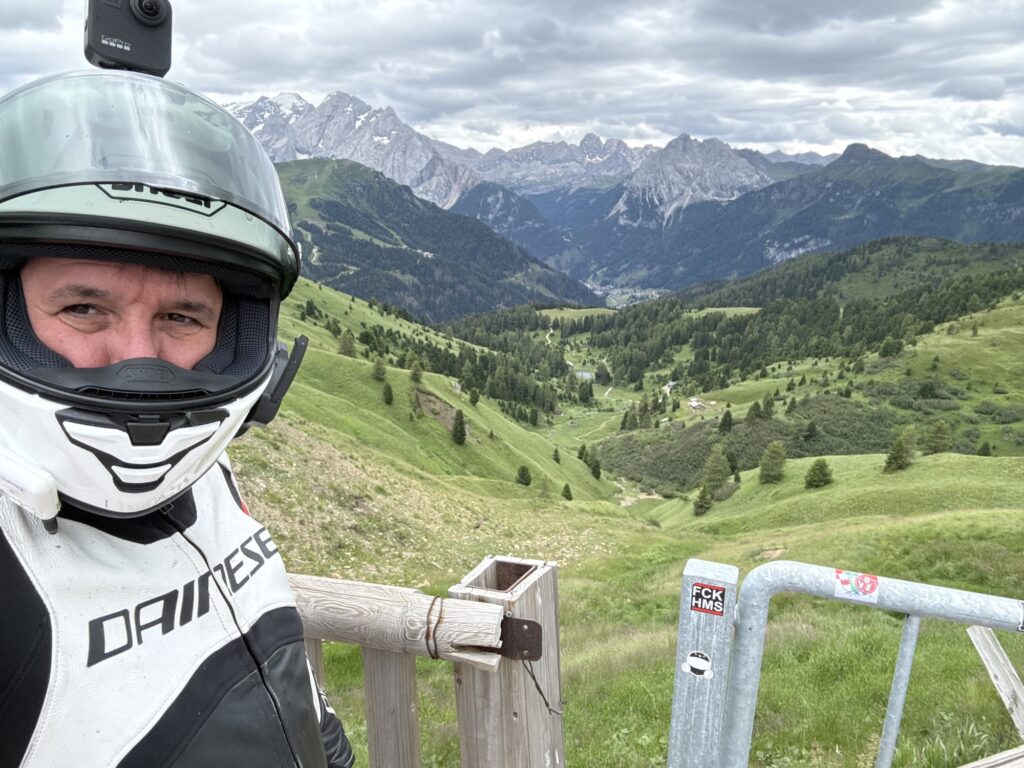 After Gardena, we began descending towards Plan de Gralba when we suddenly found ourselves among a rather unusual group of cars. The participants in some kind of classic rally were travelling ahead of us, driving wonderful old sports cars and vintage vehicles. Naturally, we immediately started trying to identify the various models. My favourite was a tiny 850cc Abarth. Encounters like this fit the atmosphere of the Dolomites perfectly, where almost every kilometre seems to offer another interesting surprise. Our next pass was Passo Sella, which, at 2,244 metres, is the highest crossing on the Sella Ronda. The pass lies between the three distinctive peaks of Sassolungo and the enormous rock mass of the Sella massif. From here, there’s an almost uninterrupted panorama of the surrounding rock towers, ridges and valleys. If you’re visiting the Dolomites for the first time, this is the kind of view that will probably convince you that you’ll be coming back. I simply call it the gateway drug to the Dolomites.
Rain Clouds over Pordoi
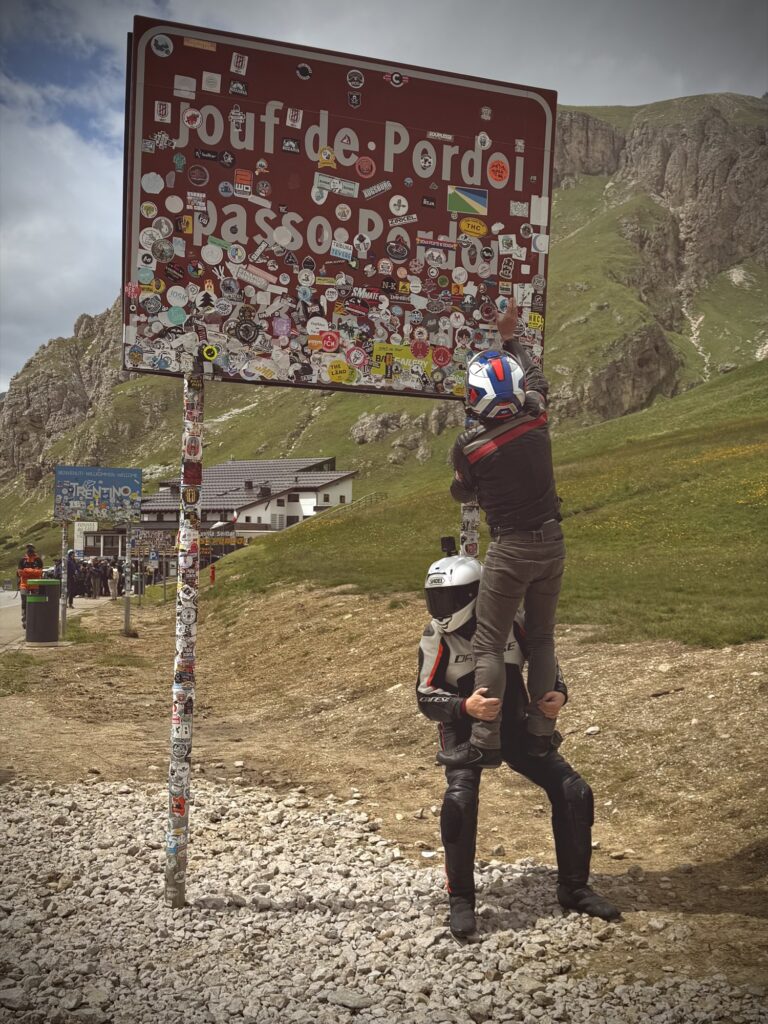 After Passo Sella, we headed towards Passo Pordoi at 2,239 metres, just five metres lower than Sella. On one side of the pass rises Piz Boé, the highest peak of the Sella massif, while in the other direction the enormous bulk of Marmolada dominates the skyline. From Pordoi, a cable car takes visitors up to the Terrazza delle Dolomiti viewpoint, offering an extraordinary panorama of the surrounding mountains. The region also played an important role during the First World War, and a local museum preserves the history of that period. This time, however, we’d primarily come to ride motorcycles. Our plan was to descend the other side of Pordoi towards Arabba and complete the Sella circuit via Campolongo. Unfortunately, light rain began to fall, and when we reached the summit, we discovered a serious thunderstorm waiting on the other side. Looking down at the road we were supposed to take, it was perfectly clear that it was raining heavily down there.
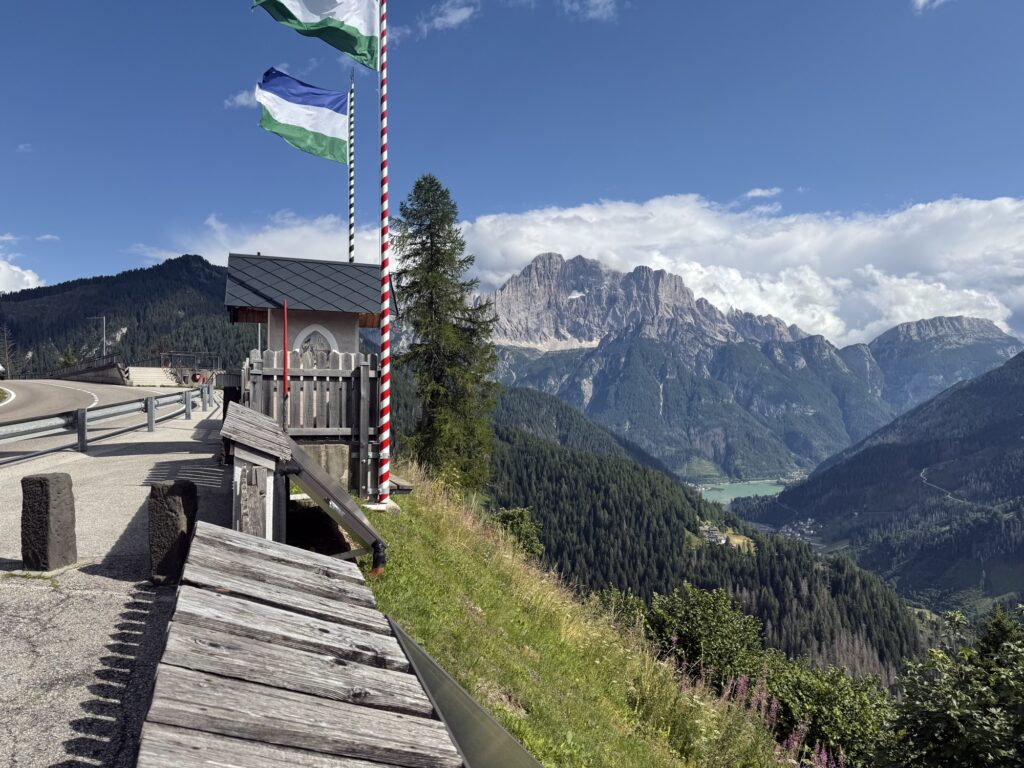 I had no desire to spend such a beautiful motorcycling day struggling through pouring rain on one of my favourite mountain roads, so we made a sudden change of plans. We turned around and headed back down the other side of Pordoi, deciding to bypass the massif through a neighbouring valley. Our complete Sella Ronda therefore became more of a Sella semicircle. For me, the biggest disappointment was missing the section between Pordoi and Arabba, which I’d particularly enjoyed on previous tours. It’s a wonderful succession of hairpins with good visibility and fantastic views, and when there’s no oncoming traffic, choosing the right line through the corners can be especially enjoyable. The tarmac hadn’t been perfect in the past, and unfortunately we couldn’t check whether it had improved. Missing Campolongo bothered me considerably less, as I find it the least exciting of the four Sella passes. So we descended from Pordoi and searched for another route among the neighbouring mountains. One of the best things about the Dolomites is that when you miss one mountain pass, you can almost immediately find three others.
Passo Fedaia, Which I Forgot to Film
Our next destination was Passo Fedaia, near Marmolada. We soon found more excellent corners on the approach, and the Ninja was increasingly in its element. The pass itself isn’t among my personal favourites, although the surrounding rocky peaks and views of Marmolada are naturally magnificent. The descent on the other side, however, offers absolutely superb motorcycling. Tight hairpins, beautifully flowing lines and a wonderful variety of corners follow one another, and the Kawasaki felt so natural beneath me that the distinction between motorcycle and rider almost disappeared. There was just one small problem: I managed to record practically no usable video footage of the entire section. At some roadworks, while waiting at a red light, I switched off all my cameras and became so absorbed in the riding that I didn’t remember to turn them back on until after the pass. So if you’d like to see Passo Fedaia, you’ll have to go there yourself this time. Consider it a little encouragement for your next trip to the Dolomites.
But something far more important happened to me on the winding roads after Fedaia. I’d ridden here before on both my Honda and BMW F900R, and I’d thoroughly enjoyed these roads on both motorcycles. On the Ninja 1100 SX SE, however, the experience reached an entirely different level. The bike changed direction effortlessly, almost as though responding to my thoughts. The suspension followed the tarmac with complete composure, while the four-cylinder engine accelerated out of every corner with such power and smoothness that I simply couldn’t get enough. This was when a thought first seriously occurred to me: could I have found my next motorcycle? On the first day, I’d been getting to know it cautiously, searching for the right riding position, observing how the suspension responded and trying to understand its character. Now everything felt completely natural. The Ninja did exactly what I wanted, and I increasingly felt that it really had been designed for roads like these. The riding was so good that by the middle of the day, I could barely imagine getting back onto my own BMW.
Mountain Pass Confusion and an Unexpected Discovery
After Fedaia, somewhere in the maze of Dolomite roads, I’d completely lost track of exactly where we were. The navigation was running on Soma’s Z900 SE because we’d managed to fit the Quad Lock phone mount to it. The Ninja’s handlebar design would have required a different mounting solution, and we didn’t have the appropriate adapter, so I mostly just followed Soma. One moment I thought we were heading towards Passo Falzarego, the next I thought it was Staulanza, but in the end it was neither. There are so many mountain passes and winding roads packed together in the Dolomites that it’s extremely easy to lose your bearings, particularly when you’re paying more attention to the enjoyment of riding than to following the precise route. Eventually, we began climbing towards another pass that seemed unfamiliar to me at the time. Soma told me it was Passo Giau and mentioned that there was a speed camera somewhere near the summit, whose existence he’d previously discovered through a rather expensive personal experience.
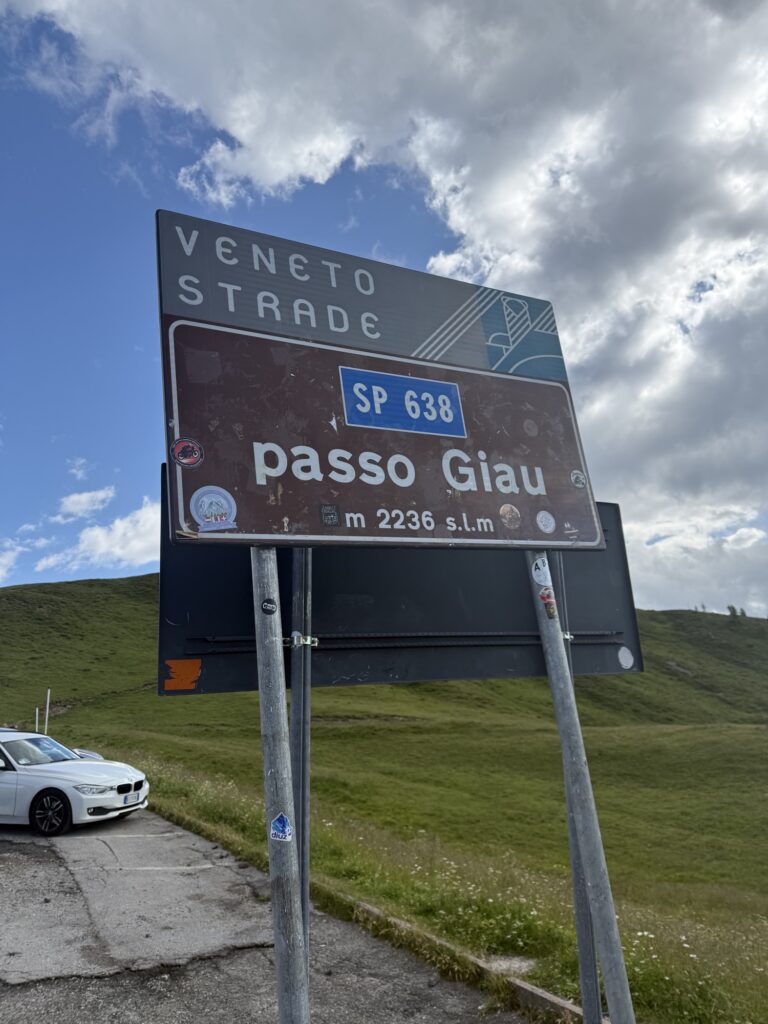 The name Passo Giau didn’t initially ring any bells, and I assumed I’d probably never been there before. Later, however, I checked my old records and discovered that I’d already climbed this pass on my Honda in 2018. It’s extraordinary how anyone could forget a place like this, because Giau is undoubtedly one of the most beautiful mountain passes in Italy, and perhaps even in all of Europe. The SS638 climbs from Colle Santa Lucia towards the summit at 2,236 metres before descending towards Cortina d’Ampezzo. The climb itself is fantastic, but when the road finally crosses the mountain ridge, an absolutely breathtaking landscape opens up. The narrower, steeper mountainside suddenly gives way to an enormous open Alpine meadow, surrounded on every side by towering rock pinnacles and steep stone walls. It feels as though you’ve arrived in a gigantic natural amphitheatre.
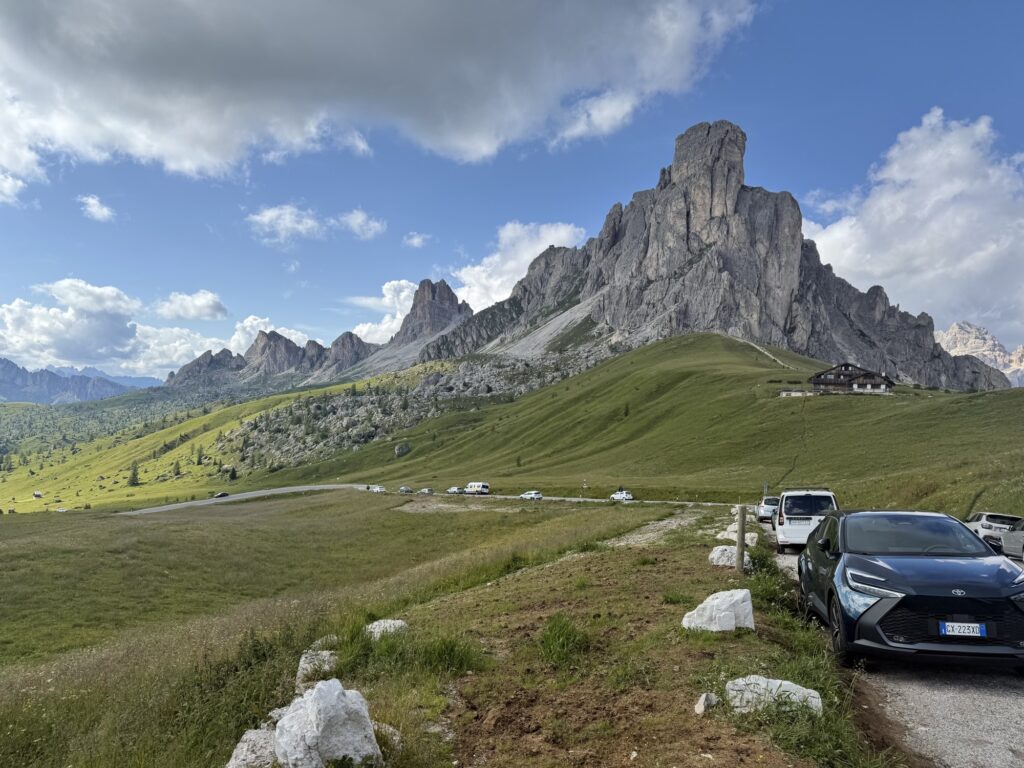 Above the pass rises the distinctive, cap-shaped peak of Ra Gusela, with the rocky masses of Nuvolau and Averau beside it. Further away, the enormous rock wall of Monte Formin and the peaks surrounding Cortina define the horizon. The landscape is simultaneously monumental and somehow remarkably welcoming. Despite having visited countless beautiful places, I spent several minutes just standing there, trying to take it all in. Naturally, the drone eventually came out too. It would almost be a crime to show a place like this exclusively from ground level, because the true scale of Giau can only really be appreciated from above. The motorcycles looked fantastic against this backdrop as well, so we captured some particularly beautiful footage of our two Kawasakis. The Ninja’s elegant sports-touring design and the Z900 SE’s aggressive naked-bike character both looked magnificent in front of the towering rock faces. By this point, I was beginning to feel that everything had come together perfectly that day: the motorcycles, the roads, the weather and the locations.
The Best Riding All the Way to Cortina
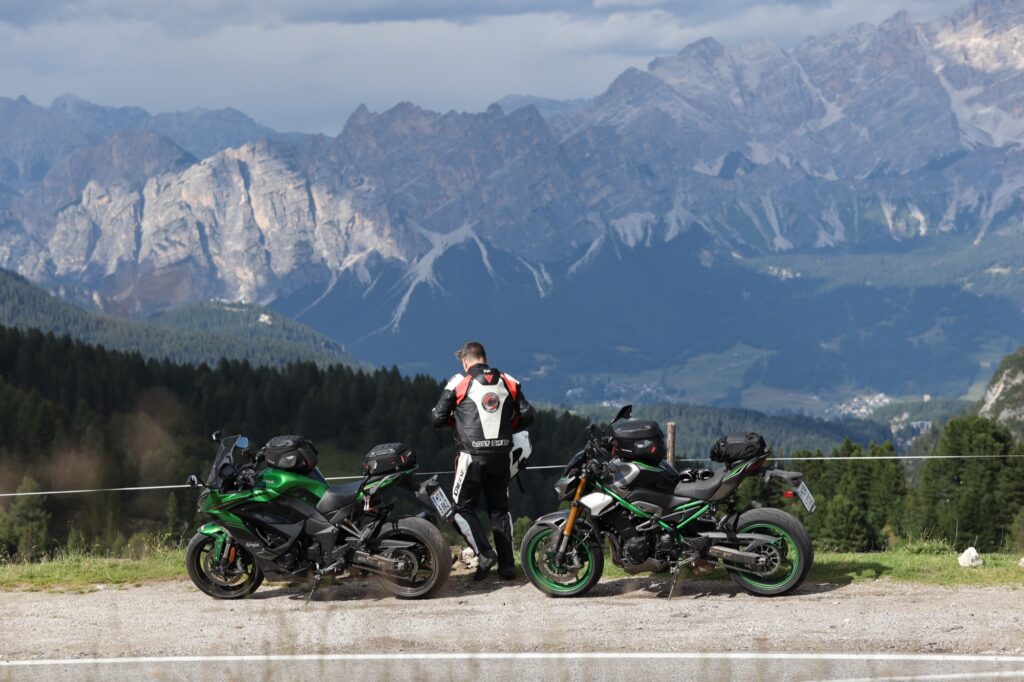 From the summit of Passo Giau, we headed towards Cortina d’Ampezzo, and the descent became the perfect finale to an extraordinary day. The tarmac was excellent, the rhythm of the corners was fantastic, and by now the Ninja was working completely in harmony with me. There was no trace of the uncertainty I’d felt while getting acquainted with it the previous day. I knew exactly how far I could lean, how the suspension would respond to rapid changes of direction and when to begin accelerating out of a corner. Of course, on a motorcycle like this, it’s easy to forget common sense, because it travels so naturally and effortlessly that your perception of speed often falls well short of your actual pace. But what gave me the greatest pleasure was how well I was beginning to understand the motorcycle, linking corners together almost without conscious thought. Kawasaki’s 1100cc four-cylinder engine, the beautifully controlled electronic suspension and the exceptionally well-judged ergonomics combined to deliver an experience I’ll remember for a long time.
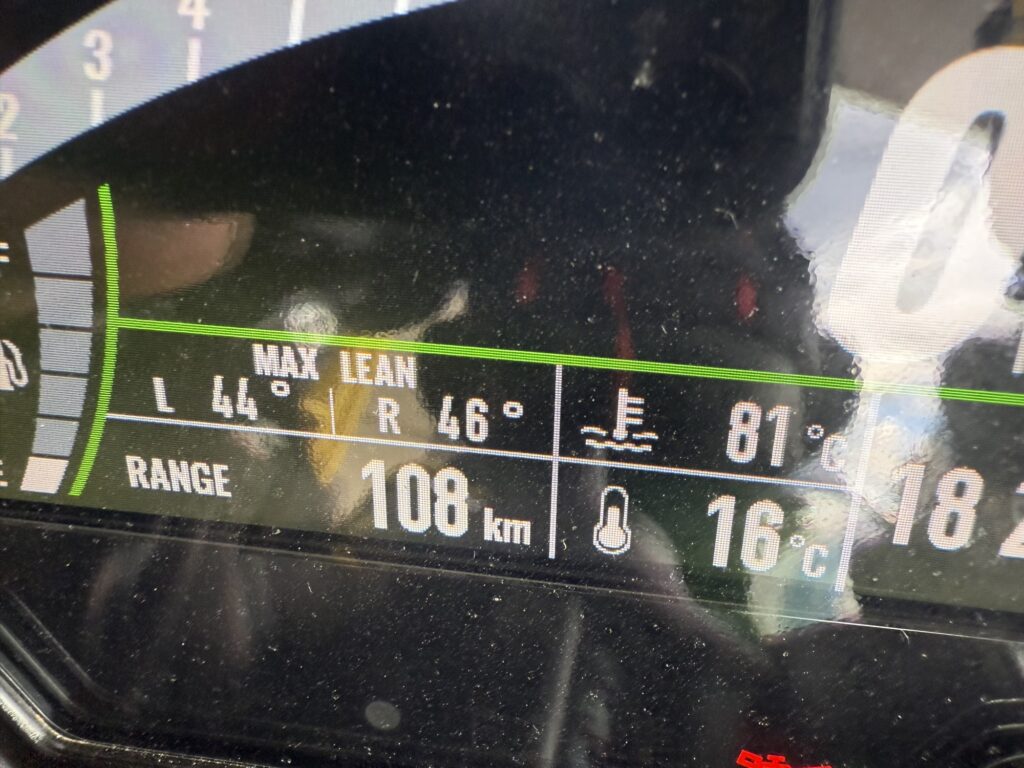 Then I discovered that the Ninja’s dashboard also displayed lean angles. Naturally, I immediately shared this discovery with Soma, who had access to the same information on the Z900 SE. Looking back, I realise that was a mistake. Before long, we’d developed an utterly childish competition, trying to beat each other’s lean angles by a few degrees after every corner. I know perfectly well how ridiculous it is to compare the lean-angle figures displayed on motorcycle dashboards, but at the time we considered it a matter of enormous importance. By the end of the day, the highest recorded figures were 44 degrees to the left and 46 to the right. The funniest part is that the winner managed to achieve exactly the same result on the other Kawasaki the following day, when we swapped motorcycles. So perhaps the differences between bikes aren’t always as great as the technical specifications might lead us to believe. By the time we reached Cortina, we’d enjoyed ourselves so much that we even forgot to stop at my favourite panoramic viewpoint.
A Day That Left Me Not Wanting to Get Off the Ninja
 After Cortina, all that remained was the return journey to Austria, approximately 135 kilometres away. The weather gradually deteriorated, and although we still encountered some beautiful corners and spectacular mountains along the way, neither of us was particularly interested in another major adventure. After a day like that, all you really want is to ride home peacefully, have dinner and reflect on everything you’ve experienced. The Ninja remained a pleasant companion even on the longer, less exciting sections, and at the end of the day we returned to our accommodation in a beautiful sunset. Throughout the journey, I’d become increasingly convinced that there was something very special about this Kawasaki. It delivers the excitement of a sportbike while remaining a comfortable, refined and genuinely capable long-distance touring machine. On the winding roads of the Dolomites, it felt more natural to ride than almost any motorcycle I’d experienced before.
 Unfortunately, one thought cast a considerable shadow over that idyllic sunset. The following day, Soma and I were supposed to swap motorcycles. He would take the Ninja 1100 SX SE, while I would move onto the Z900 SE. Naturally, I was very interested in the Zed too. After all, it’s a serious naked bike and an extremely exciting machine in its own category. But after spending a day in the Dolomites, I somehow couldn’t bring myself to part with the Ninja. It’s rare for me to develop such a strong attachment to a test motorcycle in such a short time, but that’s exactly what had happened. The cautious introduction of the previous day had developed into genuine harmony, and by the time we returned to Austria, I almost felt as though I was riding my own motorcycle. We still had the Grossglockner ahead of us, more fantastic Alpine roads and, of course, the opportunity to experience the Z900 SE over the following two days. But that evening, I was absolutely certain of one thing: I really didn’t want to hand the Ninja 1100 SX SE over to Soma.
Watch the second episode of the motorcycle touring series here: