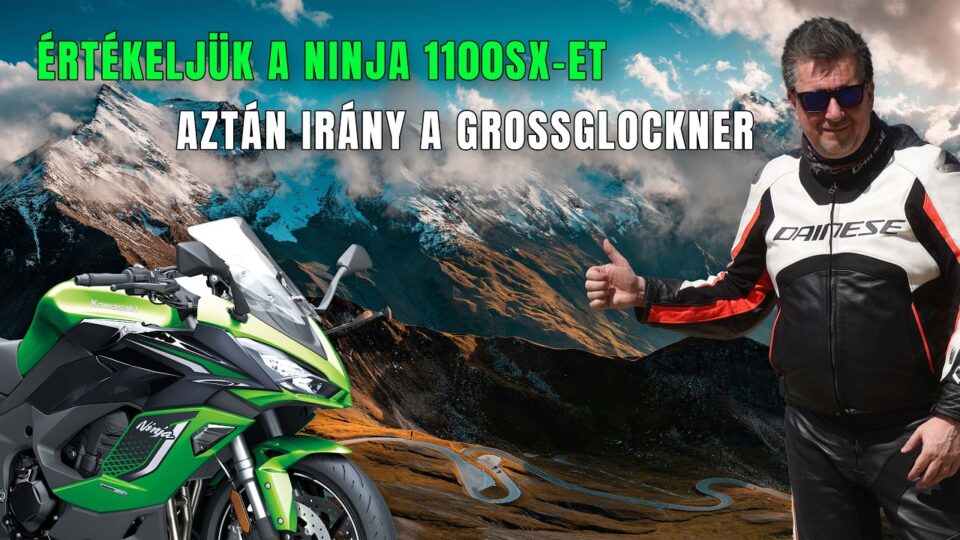
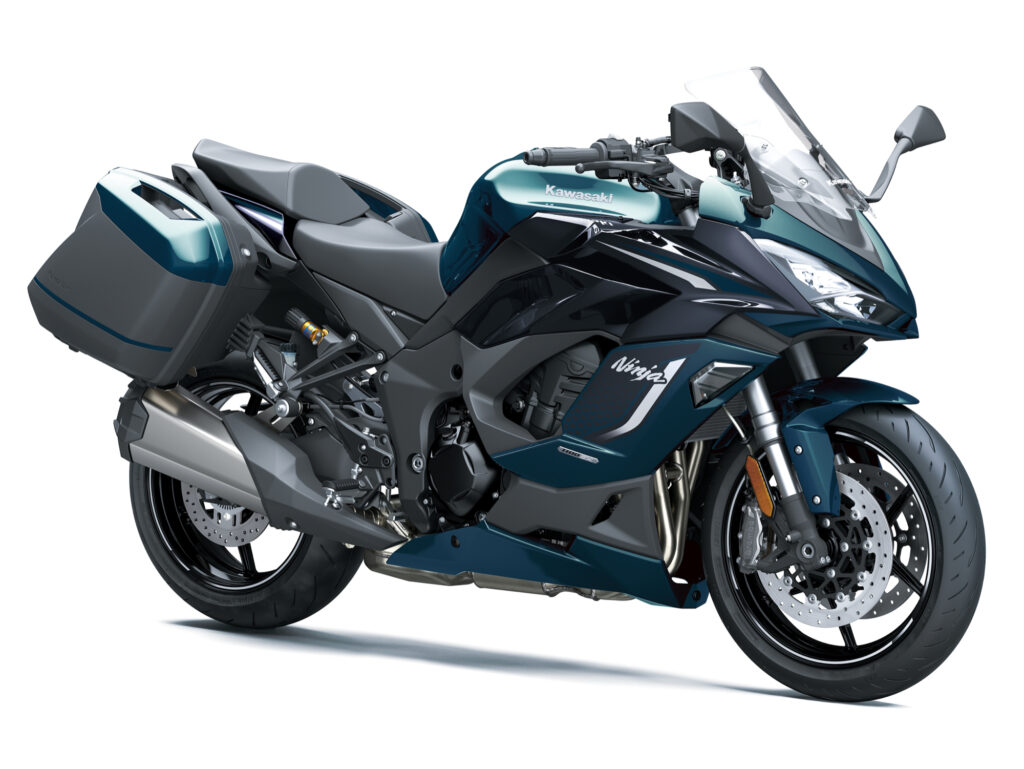
 We’d already spent two days riding the winding roads of the Eastern Alps and the Dolomites, and I was falling more and more deeply in love with the Kawasaki Ninja 1100 SX SE. During the previous day’s ride through Italy, we’d developed a truly special connection. The Ninja was comfortable, handled corners fantastically, provided excellent wind protection, and even in the evening, after hundreds of kilometres, I was still riding as enthusiastically as though I’d only just set off from home. Unfortunately, halfway through our four-day test came the moment I’d been dreading: Soma and I had to swap motorcycles. He would take the Ninja 1100, while I’d move onto the Z900 SE. Ironically, we had to do this on the very morning we were planning to conquer Austria’s most famous panoramic road, the Grossglockner Hochalpenstrasse. It’s not that I wasn’t looking forward to the Z900, but I certainly handed over the Ninja’s key with a rather heavy heart.
The Ninja That Became an Even Better Touring Bike Than the Versys
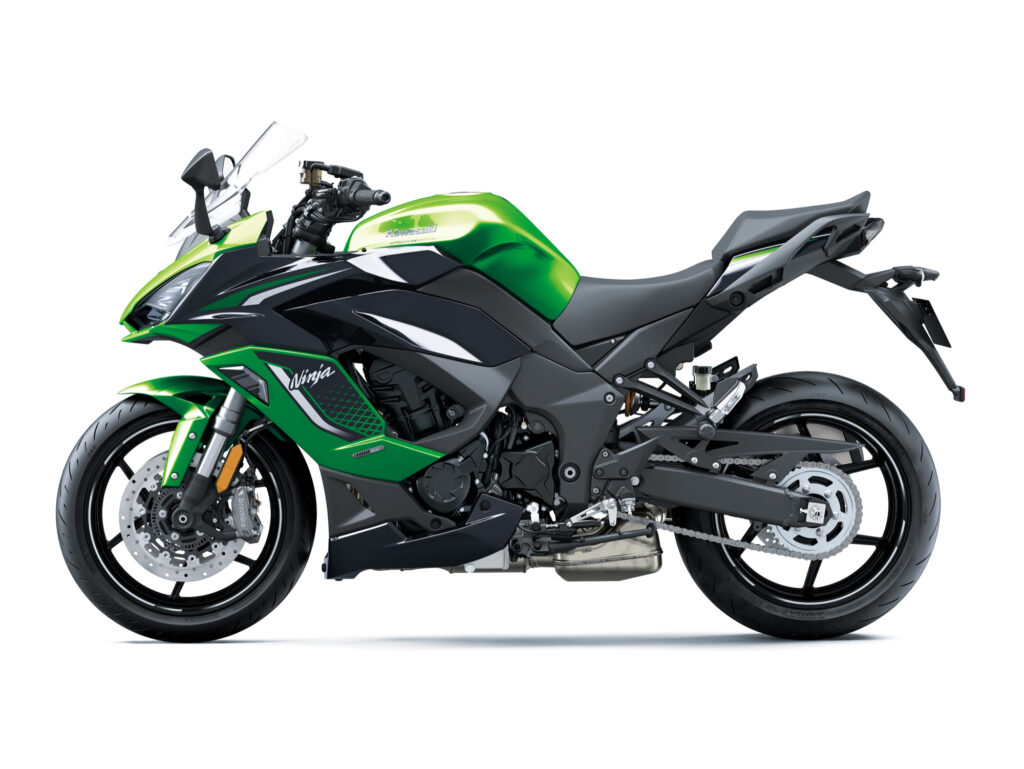 Before finally saying goodbye to the Ninja, I wanted to summarise my impressions after two days and approximately 850–900 kilometres. A rather unusual comparison came to mind: for me, the Ninja 1100 SX SE is essentially a very well-executed Kawasaki Versys. I know that sounds a little strange at first, since one is a sports tourer and the other is a tall crossover, but when it comes to my particular riding habits, the Ninja offers almost everything I appreciate about the Versys while avoiding several compromises I’ve encountered with taller touring motorcycles. It’s comfortable, suitable for long journeys, offers plenty of luggage capacity with the appropriate cases, and has an excellent rider’s seat. During the first two days, I covered more than 400 kilometres each day without once experiencing any serious discomfort from the seat or riding position. And believe me, I’m particularly sensitive to these things.
The Ninja’s handlebar arrangement is interesting too. Although it looks like a sports motorcycle with clip-on handlebars at first glance, the clip-ons are actually mounted on fairly tall risers. This places the grips much closer to the position you’d expect on a comfortable sports tourer than on a genuine superbike. My upper body leans slightly forwards, but there’s absolutely no need to lie over the tank, and my wrists aren’t subjected to the same strain as they would be on a motorcycle designed for the racetrack. I like this position because, compared with the completely upright posture of tall touring motorcycles, it makes me feel more involved in controlling the bike while remaining comfortable over long distances. Of course, standing up while riding isn’t particularly practical, but the seat is so good that I never felt the need to stand up and stretch anyway. What’s more, the stability and precision of its lower-set chassis gave it a noticeable advantage over taller crossovers in my opinion.
I have to give the wind protection a special mention, because this is where the Ninja completely won me over. The windscreen has just two positions, but both do exactly what they’re supposed to. In the higher position, I get excellent wind protection, and with the appropriate riding posture, I can comfortably tuck in behind it even at high speeds. In the lower position, however, it allows clean, consistent airflow around my helmet without unpleasant turbulence. That’s exactly what I prefer when riding sportily. I’ve ridden countless touring motorcycles with windscreens that can be adjusted centimetre by centimetre, yet I’ve still struggled to find an ideal position. By contrast, the Kawasaki’s two carefully chosen settings suited my needs perfectly.
Naturally, this raised the question of whether I’d actually buy this motorcycle. The answer was an unequivocal yes. Among my favourites of the year, the Kawasaki Z900RS, Moto Guzzi V100 Mandello and Honda CB1000 Hornet had been leading the field, but the Ninja 1100 SX SE made such a strong impression on me that it went straight into first place. What was particularly telling was that, even after a full day of riding in the Dolomites the previous evening, I still didn’t want to stop enjoying the corners. Soma even remarked that I was riding as though we’d only just started the day. And that’s exactly how I felt. The Ninja simply wouldn’t let me go.
Swapping Bikes – Now It’s the Z900 SE’s Turn
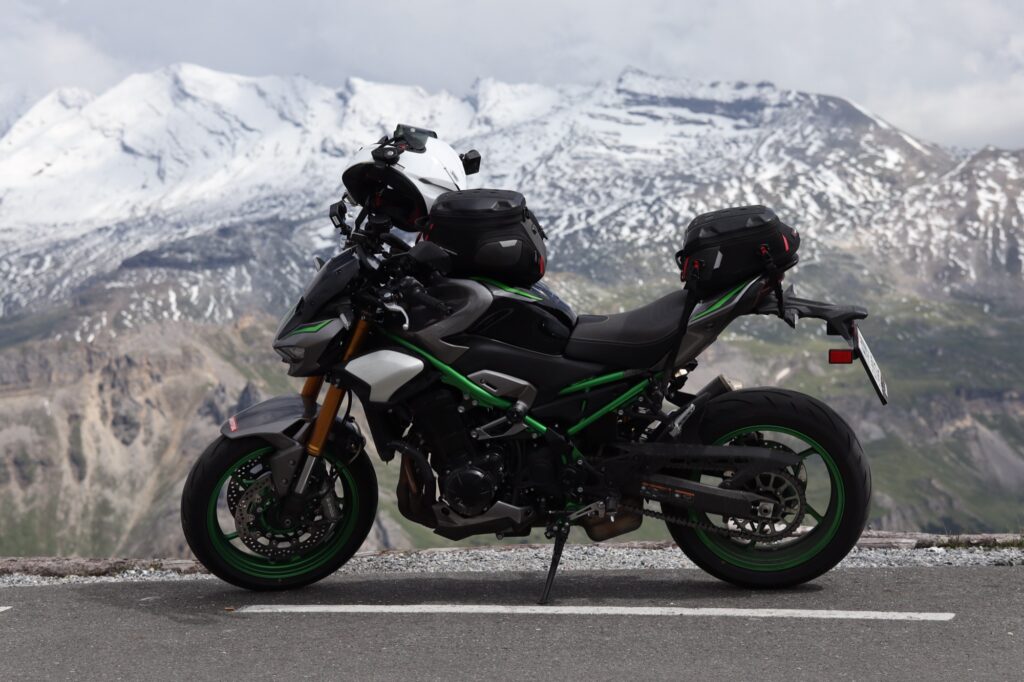 Soma had spent the first two days riding the Kawasaki Z900 SE, and he was extremely pleased with it too. He found the rider’s seat comfortable, the suspension stable and predictable, and the motorcycle’s character thoroughly enjoyable. He expected the Ninja’s greater wind protection and sports-touring design to provide a different riding experience, but he wasn’t anticipating an enormous difference in performance between the two bikes. The Ninja is slightly more powerful, but it’s also heavier, so in practice the performance difference might not be particularly noticeable. I, meanwhile, knew I needed to make a mental adjustment, because it wouldn’t really be fair to compare these two motorcycles directly. The Ninja is a refined sports tourer, while the Z900 SE is a sporty naked bike that needs to prove itself in a completely different area of use.
Eventually, we exchanged keys. Soma took the Ninja 1100, while I climbed onto the Z900 SE and tried to put the memories of the previous two days behind me. It wasn’t easy. I was moving from a motorcycle I’d found almost perfect to one I barely knew. What’s more, we’d fallen slightly behind schedule on the third day of the tour. I’d spent the previous evening copying and archiving the enormous amount of video footage we’d recorded, while the morning had been taken up with transferring cameras and various accessories from one motorcycle to the other. By the time we’d finished everything, it was already around midday on Saturday. We decided not to attempt an excessively long route that day, but instead to explore the Grossglockner panoramic road thoroughly. As we approached the toll gate, I was already beginning to forget how much I missed the Ninja. One of the Alps’ best-known mountain roads was rising ahead of us, and beneath me was a 900cc Kawasaki four-cylinder engine. I couldn’t exactly complain.
Grossglockner Hochalpenstrasse – One of the Great Pilgrimage Routes of Alpine Motorcycling
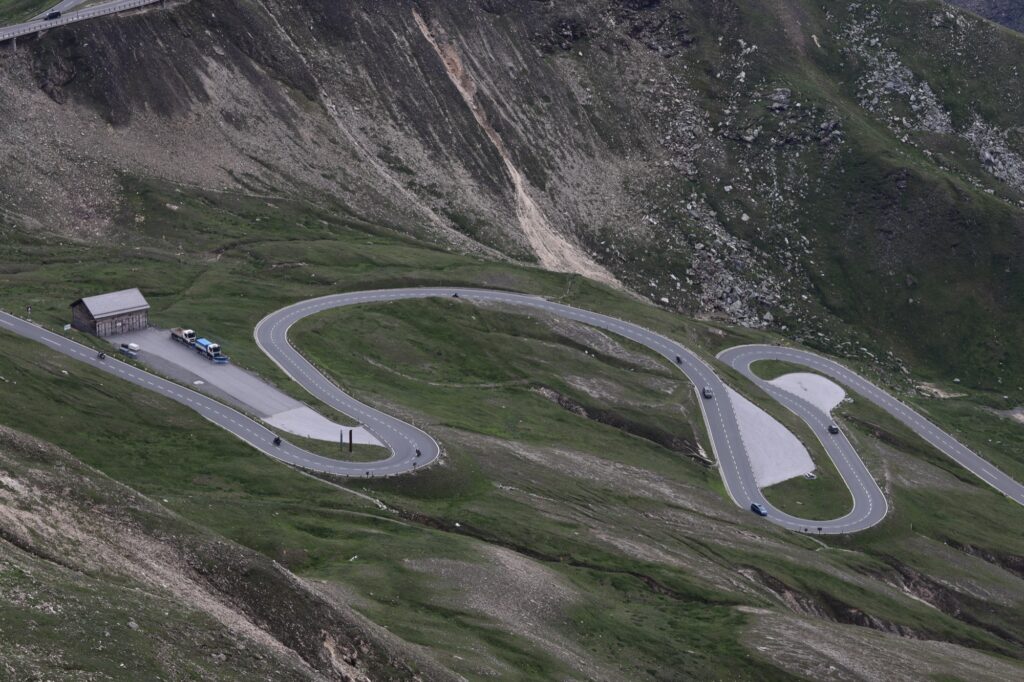 The Grossglockner Hochalpenstrasse is Austria’s best-known panoramic road, connecting the state of Salzburg with Carinthia through the Hohe Tauern mountains. It was built between 1930 and 1935, specifically to make the high Alpine landscape accessible to tourists. Since then, it has become one of the symbols of Alpine driving and motorcycling. The main route climbs to 2,504 metres near Hochtor, but a branch of the panoramic road takes us even higher, to the Edelweißspitze at 2,571 metres. The mountain that gives the area its name is the 3,798-metre Grossglockner, Austria’s highest peak. Together, the mountains, glaciers, steep valleys and almost perfectly engineered winding roads create a spectacle that few places in Europe can offer in such a concentrated form.
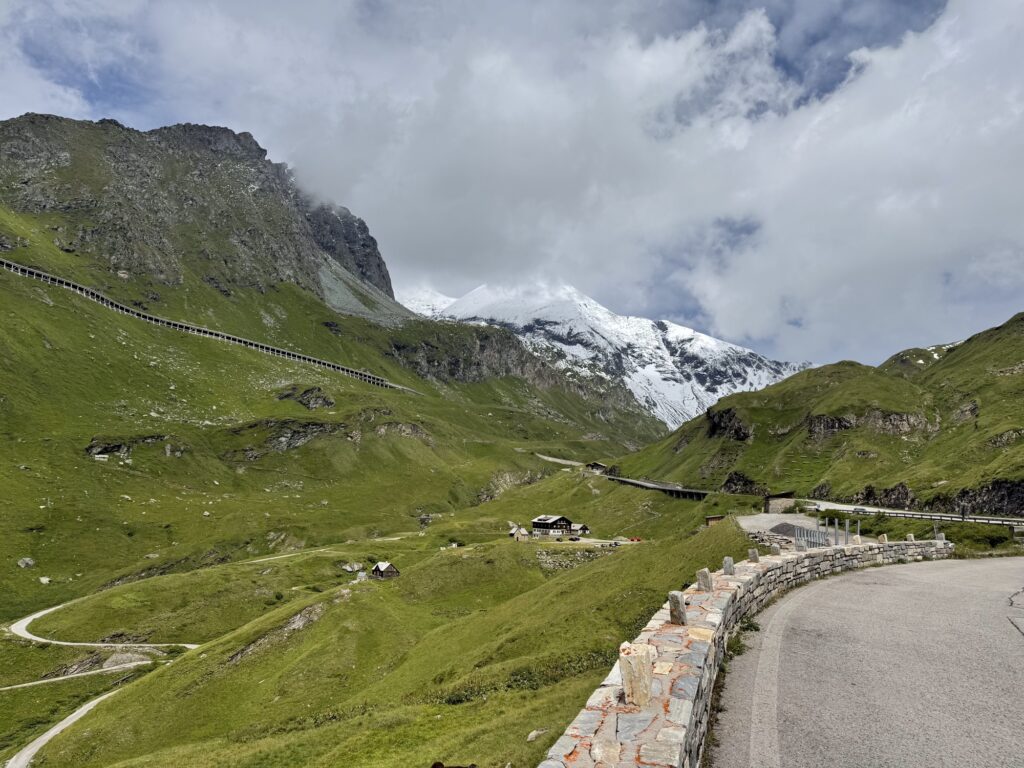
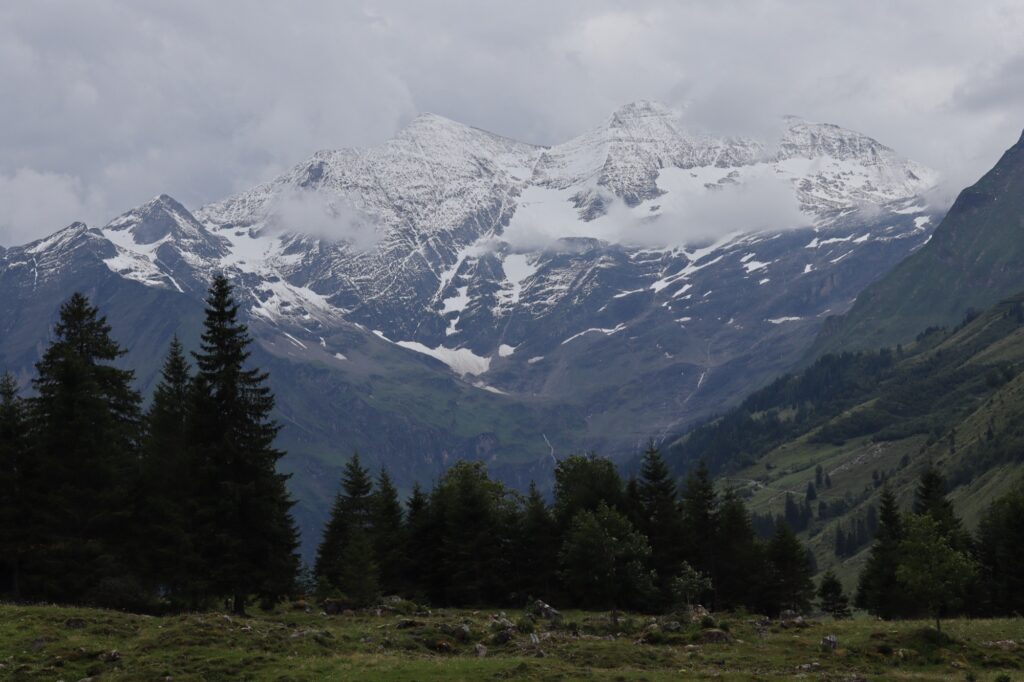 I bought two motorcycle tickets at the toll gate, and we began climbing. Initially, the road passes through forests of conifers, but as the altitude increases, the trees gradually disappear, replaced by bare rock faces, Alpine meadows and mountainsides dotted with patches of snow. The rhythm of the corners is quite extraordinary. The engineers clearly weren’t simply looking for the shortest route through the mountains; they designed a road that also showcases the landscape. Beautifully visible hairpins, longer sweeping bends, steep climbs and descents follow one another, while every kilometre reveals another magnificent panorama. Riding the Z900 SE, this was a completely different experience from what I’d enjoyed on the Ninja the previous day. On the naked bike, I felt much more directly connected to the wind and my surroundings, while its light handling and lively four-cylinder engine were particularly well suited to these mountain roads.
Kaiser-Franz-Josefs-Höhe: Motorcycles, Marmots and a Shrinking Glacier
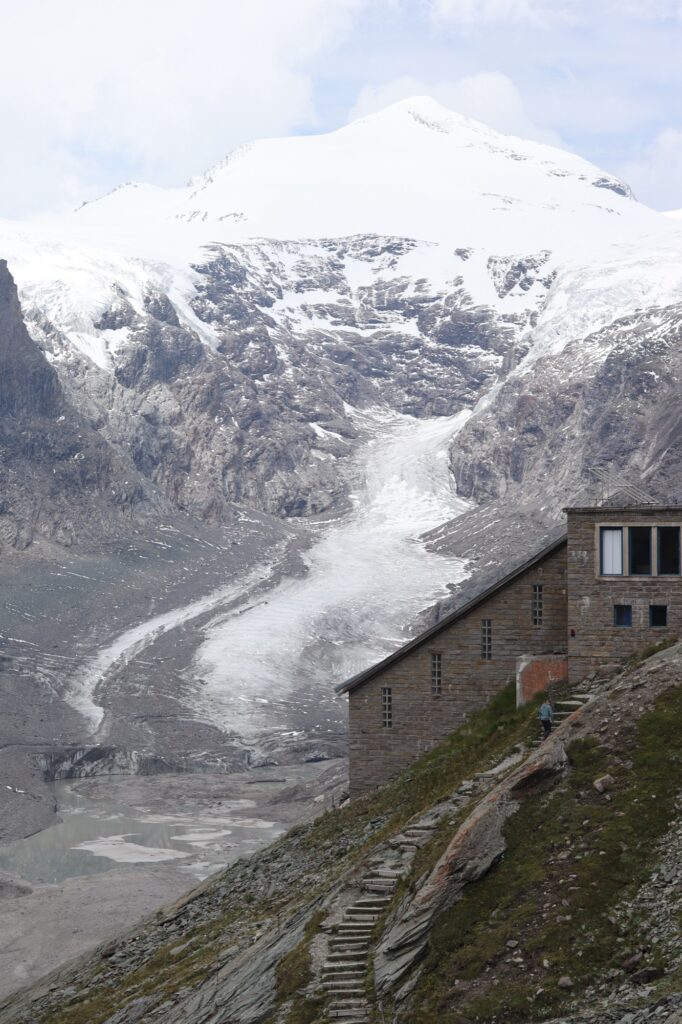 We chose Kaiser-Franz-Josefs-Höhe as our first major stop. Located at 2,369 metres at the foot of the Grossglockner, this viewpoint is one of the panoramic road’s most important attractions, offering direct views of the mountain’s summit and the Pasterze Glacier. As soon as we arrived in the car park, it became obvious that we weren’t going to have the place to ourselves on a Saturday during the peak summer season. Motorcycles everywhere, arriving and departing tourers, tourists taking photographs and motorists admiring the scenery filled the area. The whole atmosphere reminded me of a large motorcycle gathering, except that instead of Budapest’s Citadella in the background, we had Austria’s highest mountain towering above us.
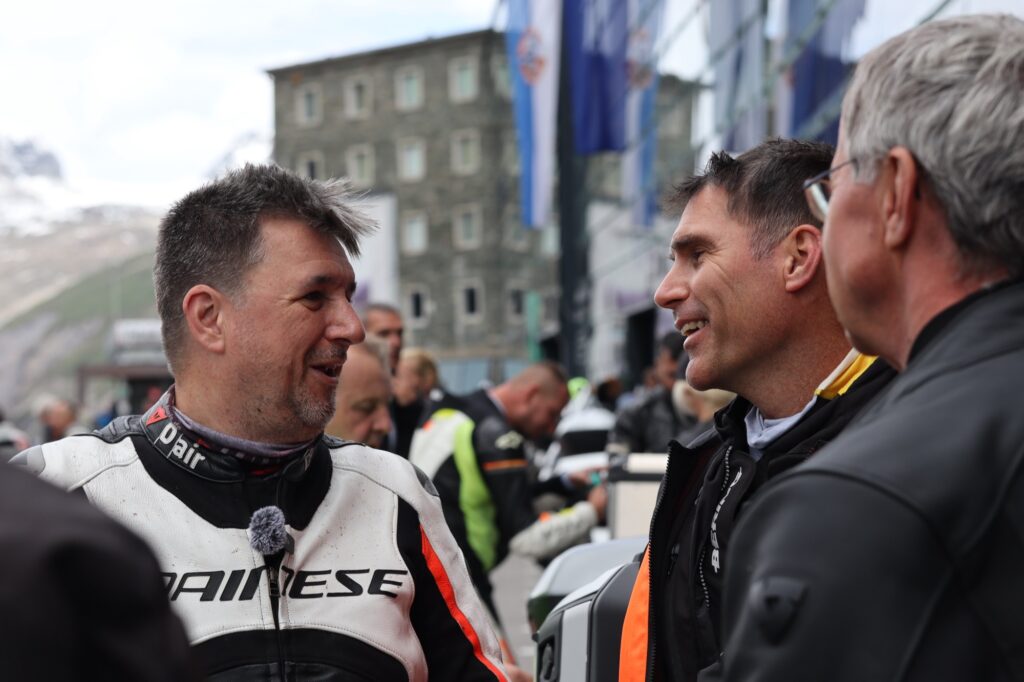 As we wandered around the car park, we came across all sorts of fascinating motorcycles. Triumphs, Ducatis, adventure bikes and sports motorcycles stood side by side, and it was almost impossible to walk among them without stopping to admire a few particularly interesting machines. We also unexpectedly bumped into one of the Rhino Tours motorcycle groups, whom we’d met and had lunch with two days earlier. We chatted for a while and learnt that they’d been riding here the previous day, when it had rained almost continuously. We’d been in Italy, exploring the Dolomites, where the weather had been far more pleasant. Apparently, we’d made the right choice of route.
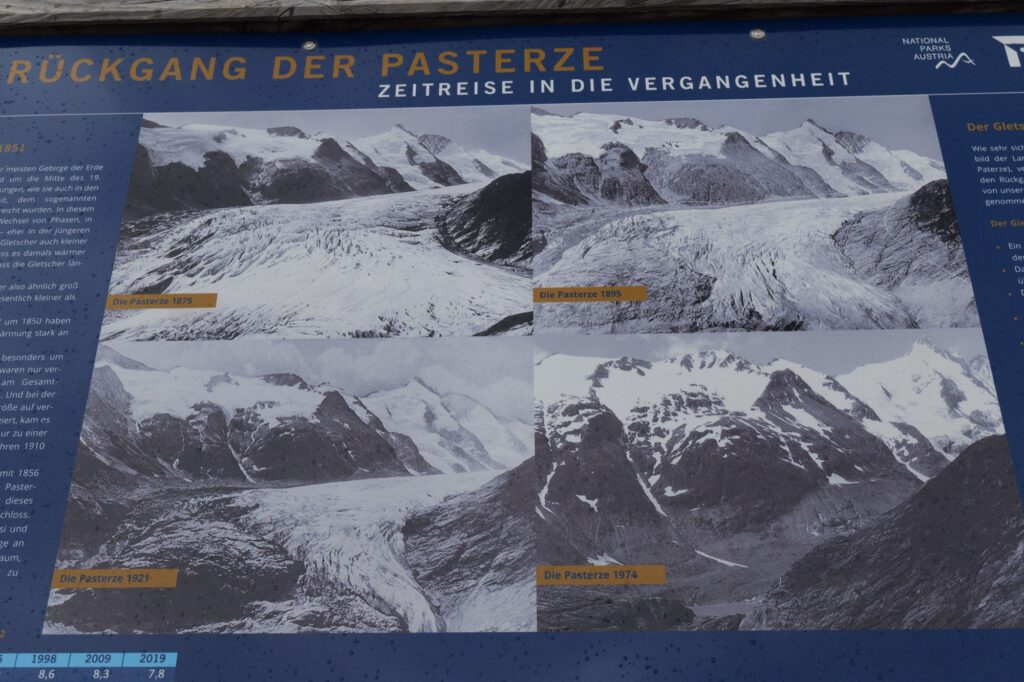
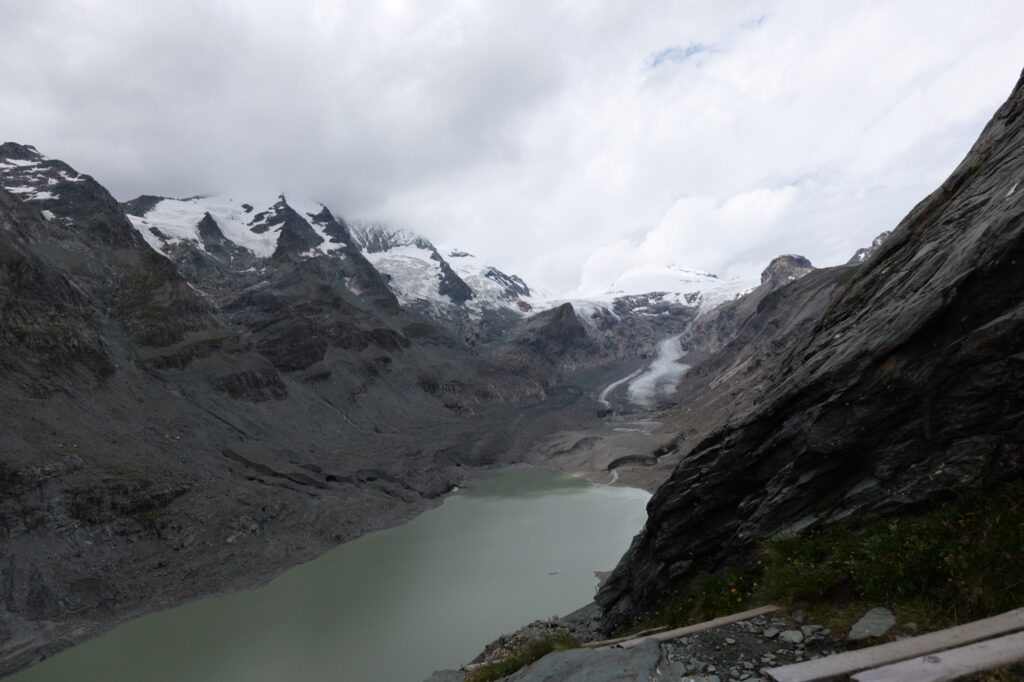
At the panoramic viewpoint, however, our attention shifted away from the motorcycles. Far below us on the mountainside, we noticed tiny moving figures: tourists descending towards the glacier. From up here, they looked like ants crawling across the landscape. The Pasterze was once an enormous river of ice, but it has retreated dramatically over recent decades. Older descriptions referred to a glacier approximately nine kilometres long, with an exceptionally thick layer of ice in places. Today, however, the landscape clearly reveals how much of its former extent has disappeared. As the ice has retreated, the walk to reach the glacier has become increasingly long. The glacier railway that once operated here no longer provided the same direct access, leaving visitors facing hundreds of steps and a substantial walk. We admired the scenery from the upper viewpoints, because we still wanted to spend plenty of time riding that day.
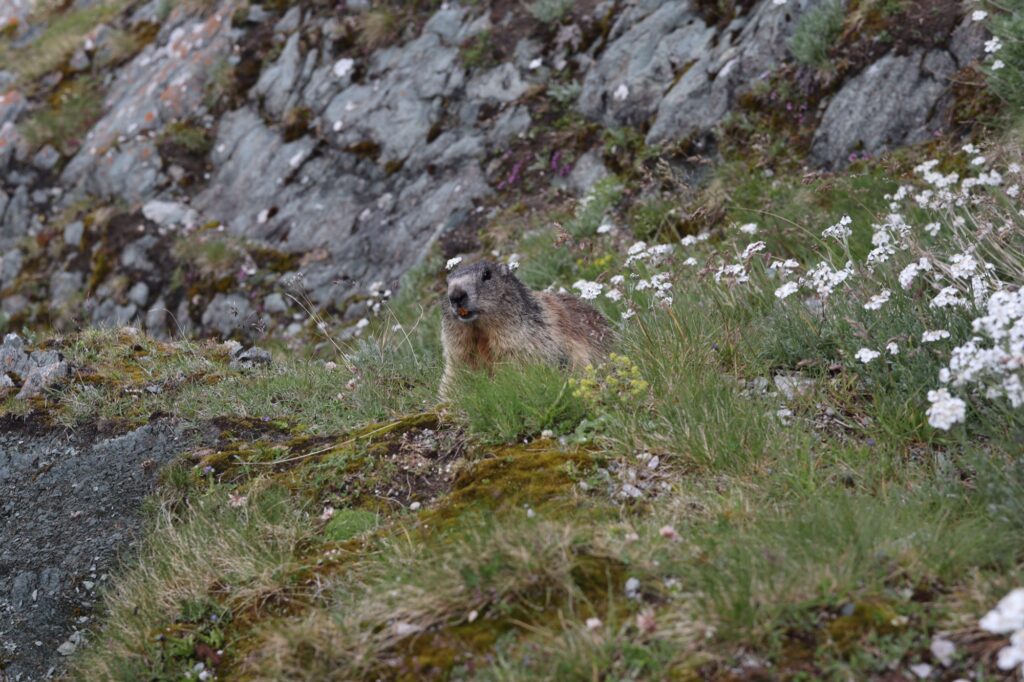 We also spotted some marmots near the glacier, among the best-known animals of the Grossglockner region. One appeared quite close to us, giving us a good opportunity to watch it for a while. Then lunchtime gradually approached, and since we were in Austria, we thought it only right to sample some of the local cuisine.
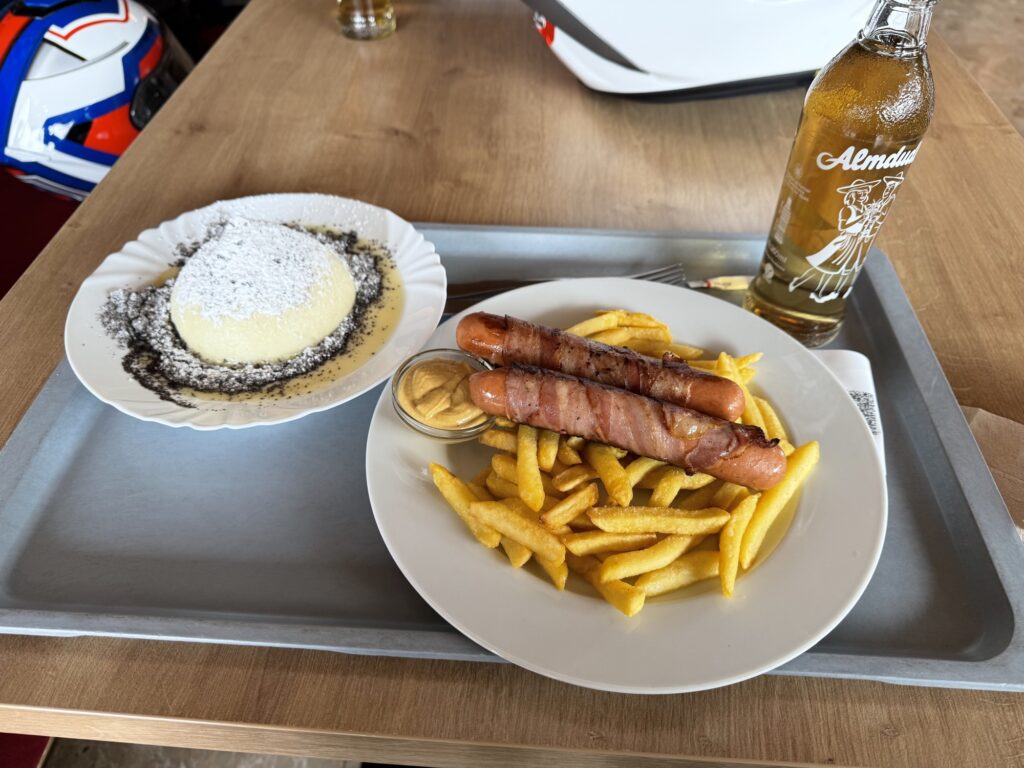 I ordered Berner Würstel with chips and an Almdudler, then tackled a blueberry-filled steamed dumpling with poppy seeds and, naturally, vanilla sauce for dessert. Soma wasn’t taking any chances either, and happily immersed himself in a serving of Kaiserschmarrn. Meanwhile, through the restaurant’s enormous windows, we could admire the mountains and glacier throughout our meal. Having lunch with a panorama like that is hardly an everyday experience, although I must admit that after such a substantial meal, I briefly entertained the idea that perhaps it was time for a rest.
A Place I’d Somehow Managed to Miss for Years
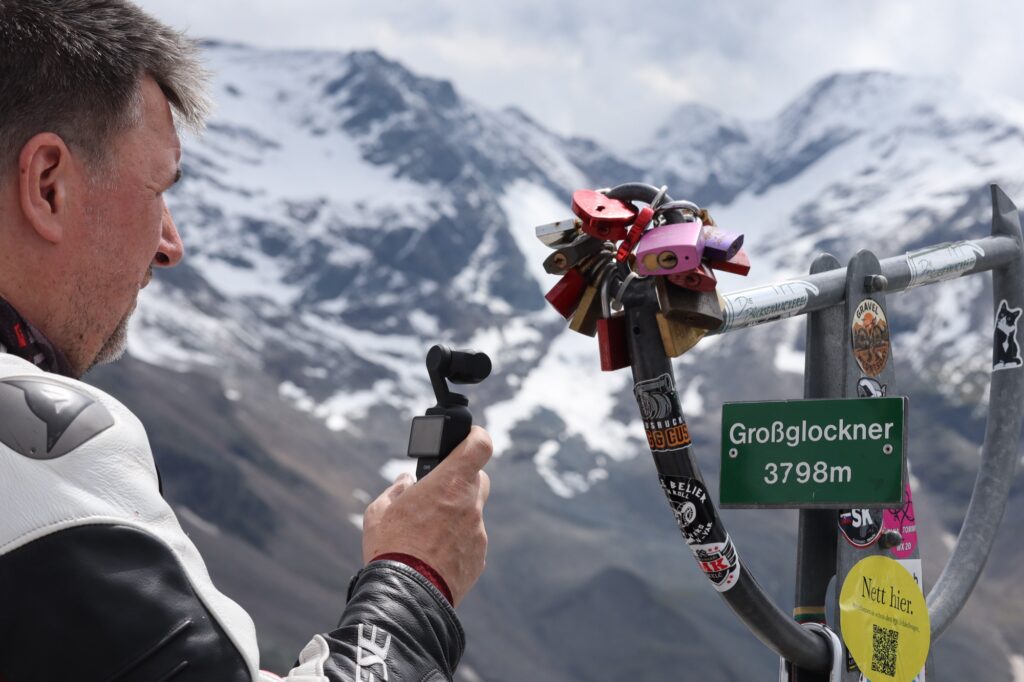 After lunch, we set off towards another legendary Grossglockner viewpoint, the Edelweißspitze, whose name refers to the Edelweiss flower. This is the highest point on the panoramic road accessible by vehicle, reached via a distinctive cobbled serpentine. Strangely enough, I’d visited the Grossglockner several times before, yet I’d never made it up here. Not because I wasn’t interested, but because somehow I’d always overlooked the turning that leads to it. This time, I was determined to discover what I’d been missing all these years.
Along the way, I finally worked out why. On my previous tours, I’d usually approached the panoramic road from the north, and from that direction, the junction leading to the Edelweißspitze could easily go unnoticed. And I’d simply ridden past it for years. It was a slightly frustrating realisation, because this view alone would be worth making a special trip for. So my advice to anyone planning to ride the Grossglockner is to check this short side road on the map beforehand and make absolutely sure you don’t repeat my mistake. It’s rather annoying to discover five years later that you’ve repeatedly ridden within a few hundred metres of one of the most beautiful viewpoints without realising it.
 The road to the Edelweißspitze is one of the panoramic route’s most distinctive features. The almost two-kilometre climb is paved with traditional cobblestones and winds up the mountainside through tight hairpins. The character of this old surface is completely different from riding on the wide, smooth tarmac of the main Grossglockner road. Here, you need to be a little more careful with the throttle and brakes, particularly when the stones are wet. At the top, visitors are greeted by a relatively small car park, although fortunately it’s easier to find a space on a motorcycle. As soon as we arrived, I understood why everyone recommends this place. From its 2,571-metre summit, there’s an almost complete 360-degree panorama of the Hohe Tauern mountains, and in clear weather, dozens of peaks over 3,000 metres can be seen.
Edelweißspitze: The Whole Alpine World in a Single Glance
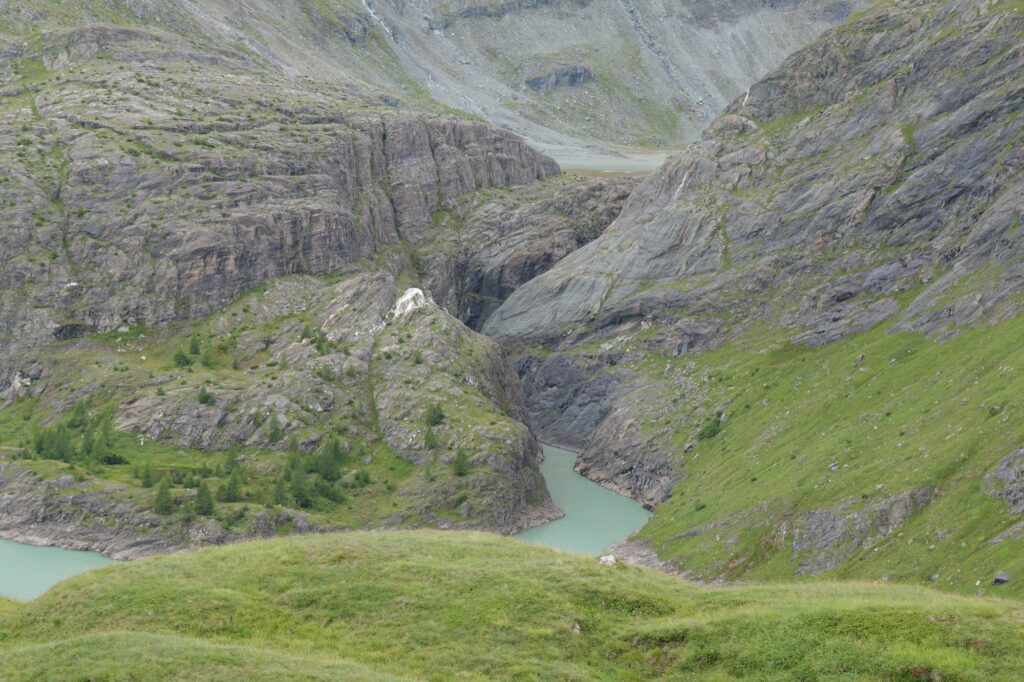
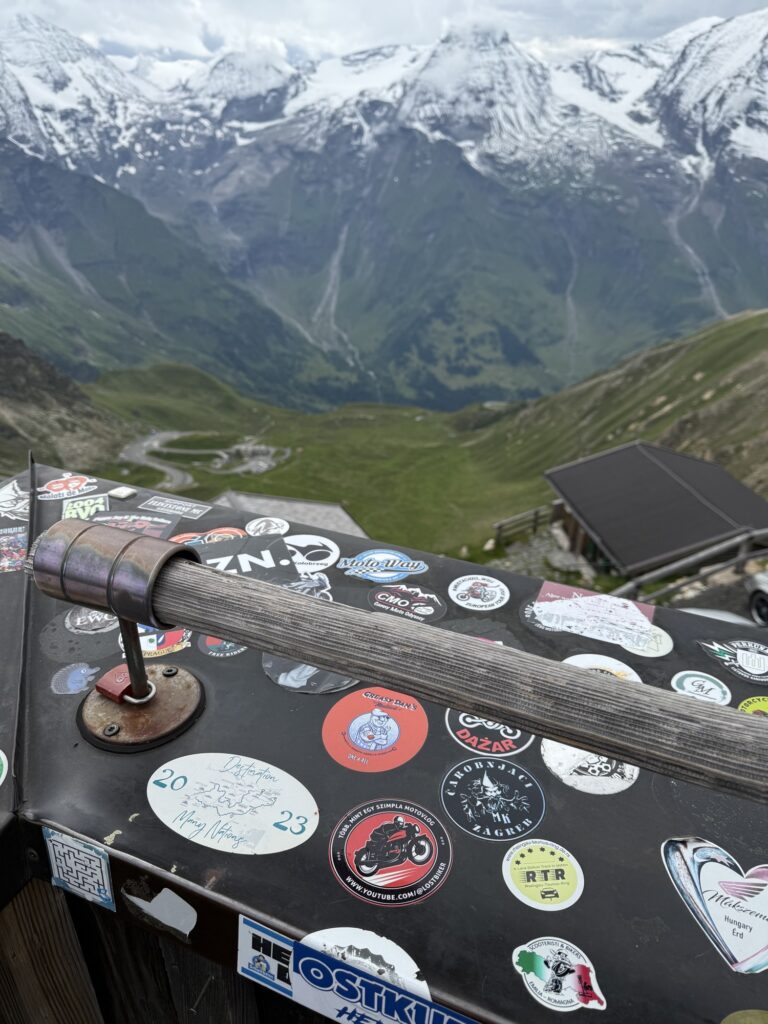 The view really was incredible. In one direction rose the 3,798-metre summit of the Grossglockner, while elsewhere we could see the mountains around Grossvenediger, Hoher Sonnblick and Hocharn. Far below lay the Nassfeld reservoir, while further away we could make out the Margaritze reservoir and its dam, together with the valleys carved by glaciers. In another direction, the Hochtor tunnel came into view, and looking north, we could see all the way towards Zell am See. From here, the Grossglockner revealed a completely different side of itself compared with the view from Kaiser-Franz-Josefs-Höhe, and it was particularly interesting to compare the perspectives of the two viewpoints.
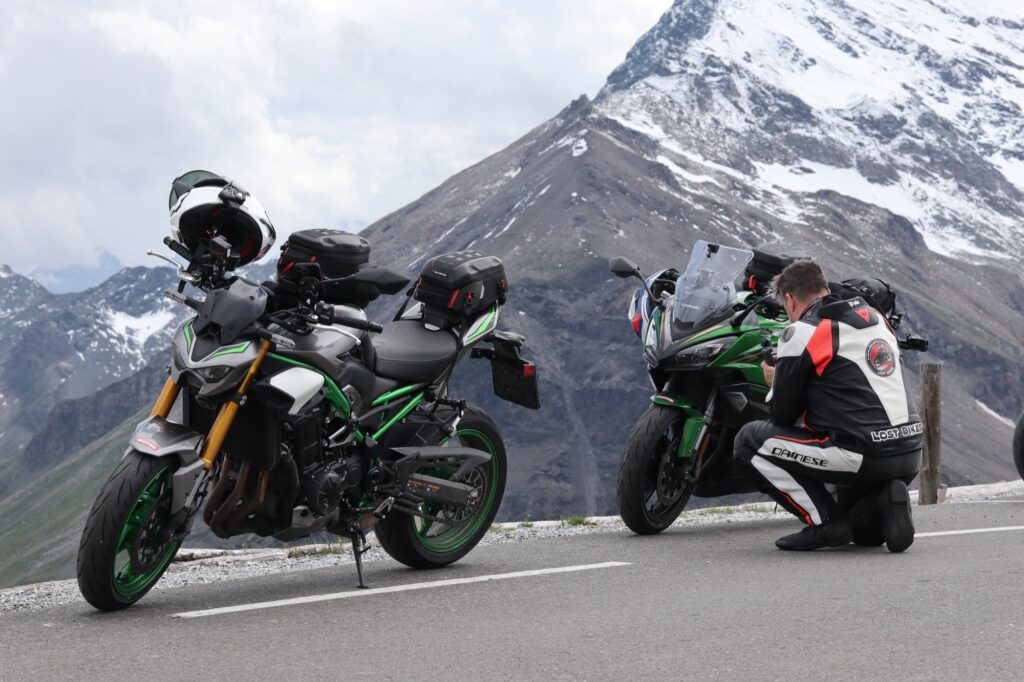 Naturally, the cameras came out again at the summit, because it would have been a shame not to capture such a magnificent panorama. And once again, we bumped into people we knew. Among them was Ádám Hauber, whom I know through his work with Alpinestars motorcycle airbags. The motorcycling world can sometimes feel surprisingly small: you travel hundreds of kilometres, ride up to an Alpine summit more than 2,500 metres above sea level, and suddenly find yourself face to face with a familiar Hungarian motorcyclist.
There’s also an interesting legend associated with the Edelweißspitze. According to the story, enough money remained in the budget after construction of the Grossglockner panoramic road to build an additional access road and viewpoint. It’s difficult to say exactly how much truth there is in the tale, but the cobbled road leading to the summit is certainly one of the most distinctive features of the entire route. After thoroughly enjoying the views, we descended back to the main road and continued north. The scenery remained breathtaking, and the corners continued to suit the Z900 SE perfectly.
Riding the Grossglockner Both Ways, Because Once Isn’t Enough
 One of the best things about the Grossglockner panoramic road is that riding the same stretch in both directions gives you almost two completely different motorcycling experiences. What was a long climb on the outward journey becomes a descent on the way back. Right-hand bends turn into left-handers, a corner with excellent visibility in one direction can look completely different when approached from the other side, and the mountains reveal themselves from new perspectives too. That’s why I always recommend that anyone who’s already paid the entrance fee and has enough time shouldn’t settle for riding through just once.
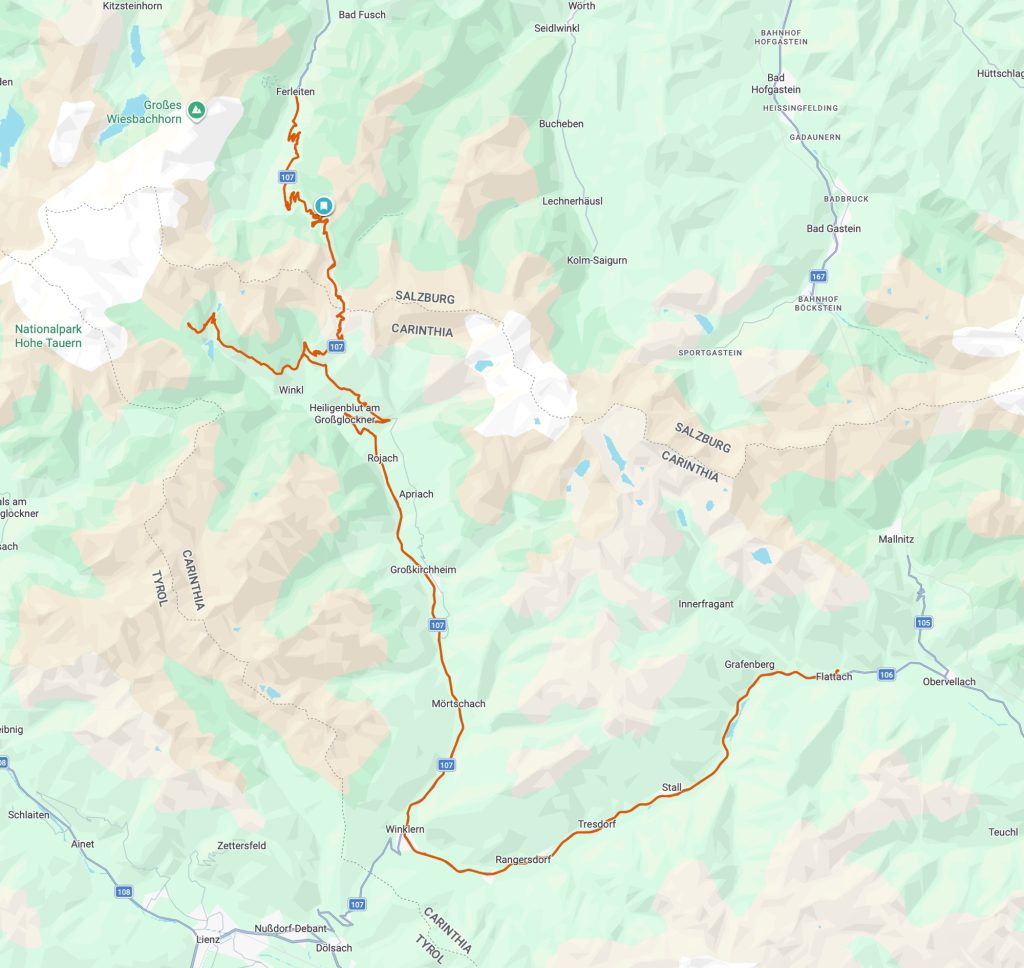
The main route between the two toll gates is approximately thirty kilometres long, but including the detours to Kaiser-Franz-Josefs-Höhe and the Edelweißspitze, there’s around 48 kilometres of mountain road to explore. If you ride the whole route in both directions and stop at a few viewpoints along the way, you can easily spend several hours here. In fact, I don’t think a full day is too much to devote to the Grossglockner. Hundreds of corners, substantial changes in elevation and countless stopping opportunities await motorcyclists along the panoramic road. Anyone who enjoys hiking, photography, exploring or simply admiring the high Alpine landscape will certainly have no trouble filling their time.
 We rode all the way to the northern gate before turning around and heading south again. It was Saturday afternoon, right in the middle of the peak season, but by around four o’clock, the road had become surprisingly pleasant to ride. Much of the tourist traffic had already left the mountains, allowing us to enjoy the corners much more freely. The Z900 SE was increasingly feeling like an extension of my body, and I was gradually making the complete transition from the Ninja’s refined sports-touring character to the more direct, playful world of the naked Kawasaki. Earlier in the day, I’d constantly been thinking how wonderful it would be to be back on the 1100. By the afternoon, however, I was beginning to appreciate the Z900’s own qualities.
Naturally, you also need to pay attention to speed limits on the Grossglockner. The mountain road’s corners and beautiful tarmac can easily tempt you to ride faster, but speed cameras are positioned at several locations. There are enforcement points on the road towards Kaiser-Franz-Josefs-Höhe and near the Edelweißspitze. We also gained some personal experience of just how seriously the Austrian authorities take these regulations. Let’s just say that, in addition to the entrance fee, we made a small involuntary contribution to the local budget. The lesson is clear: on the Grossglockner, it’s worth paying attention not only to the corners and the views, but also to the speedometer.
A Pilgrimage Destination Every Motorcyclist Should Visit
 The Grossglockner Hochalpenstrasse is generally open from early May until late October, although the actual opening period always depends on the weather. During winter, the road is closed because of the enormous amounts of snow, and in spring, clearing the winding mountain road with gigantic snow blowers is a major undertaking. Temporary closures can also occur during the season because of snowfall, strong winds or other adverse weather conditions. That’s why it’s worth checking the latest conditions on the official panoramic road website before setting off. Mountain weather can change rapidly, and it’s not unusual to experience pleasant summer warmth down in the valley while temperatures at the summit are barely a few degrees above freezing.
 Many people tend to treat the Grossglockner simply as another motorcycling attraction to tick off their list. I think it’s much more than that. There’s a good reason it has become one of Europe’s best-known pilgrimage destinations for motorcycle touring. The excellent tarmac, precisely engineered winding roads, enormous changes in elevation and high Alpine scenery combine to create an experience that simply has to be enjoyed in person. What’s more, the panoramic road offers far more than just motorcycling. With its viewpoints, mountains, glacier and various walking opportunities, it’s worth setting aside an entire day even if you don’t intend to ride every corner over and over again. I was particularly pleased that I’d finally reached the Edelweißspitze and taken the time to explore sections I’d missed on previous visits.
 If you’ve never been here before, I wholeheartedly recommend planning a motorcycle tour to the Grossglockner at least once. Not simply because every motorcyclist talks about it, but because the place genuinely deserves its reputation. It’s worth allowing plenty of time, arriving early or even riding the most beautiful sections again in the afternoon. And whatever you do, don’t miss the two detours to Kaiser-Franz-Josefs-Höhe and the Edelweißspitze. The latter is particularly easy to overlook, as I’ve demonstrated rather convincingly myself.
An Unexpected Encounter at the End of the Day
After descending from the Grossglockner, all we wanted was to return to our accommodation. On the way, however, we stopped at a SPAR supermarket, where we had another interesting encounter. In the car park, we met a Hungarian motorcyclist living in Austria who was also heading home and eventually decided to ride with us. He clearly knew the local roads extremely well and set such a brisk pace that we could barely keep up. I didn’t want to immediately ask him to slow down a little, as he was obviously enjoying himself, and in the end we made it back remarkably quickly.
 And so the third day of our four-day Kawasaki tour came to an end. That morning, I’d reluctantly said goodbye to the Ninja 1100 SX SE, but by the afternoon, I was thoroughly enjoying the Grossglockner’s winding roads on the Z900 SE. Yet my greatest discovery of the day wasn’t another motorcycling experience, but the Edelweißspitze, which I’d ridden past for years without realising what I was missing. The Grossglockner had once again proved that some places are simply impossible to grow tired of. We still had one final big day of riding on the Kawasakis ahead of us, but that evening, I was already certain that this four-day tour would remain in my memory for a very long time.
Watch the third episode of the motorcycle touring series here: